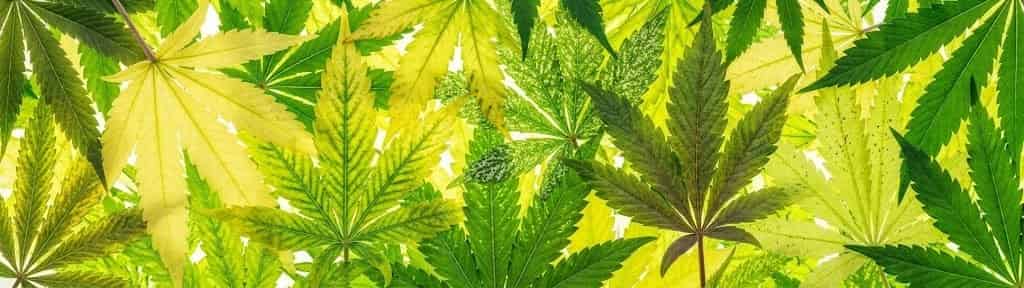
Light burn is basically a sunburn for your plant. It happens when the leaves closest to the bulb take in more light than the tissue can handle — and the , the pigment doing the heavy lifting in , breaks down under the assault. The damage is strictly proximity-based: only the leaves physically nearest the light get hit, while everything below stays untouched.
Light burn shows up after you've raised the wattage on a fixture, your plant has stretched into the bulb's intensity zone, or you've installed a new high-output light without ramping it up gradually. It can also follow defoliation that suddenly exposes previously shaded leaves to full intensity. The signature is distinct from , which curls leaves up but doesn't bleach them, and it's nothing like an iron deficiency, which targets new growth no matter where the light hits. One easy diagnostic trick: light-burned leaves stay firm and resist plucking, while nitrogen-deficient yellow leaves practically fall off on their own.
✓Gradually acclimate plants when increasing intensity
Plant Overview
How it appears across the plant
Light burn paints a sharply localized picture. Only the top fraction of the gets hit, and there's a clean horizontal boundary between the damaged and undamaged parts of the plant. Anything more than a few inches below the worst leaves looks completely normal. From across the room, a light-burned plant has a pale or bleached cap on top while the rest of the canopy still looks healthy and green.
Early. The top leaves angle upward toward the light — that's the classic "praying" posture — and their edges may start curling up into a shallow taco. The very tops take on a paler green wash. Lower leaves stay completely unaffected.
Mid. The bleaching spreads to several leaves across the top, not just one or two. The pale green deepens into a distinct yellow. The boundary between the damaged top and the healthy middle is sharp enough that you can almost trace it with a finger. The most exposed points start showing the first small white papery patches.
Late. The top of the plant is bright yellow to near-white, as if someone sprayed bleach from above. The tissue goes dry and papery, and brown crispy patches develop on the worst-damaged areas. If she's flowering, the buds closest to the light bleach too — terpene and THC content degrades, and you may see where new calyxes stack into spiky little spires.
Early — how it first appears on a leaf
Pick up a single top-canopy leaf in the early stage and you'll notice posture before color. The leaf points upward toward the bulb, edges starting to curl into a shallow taco. The has a slightly paler green wash, often most visible at the tip. The typically stay darker than the surrounding tissue, which gives the leaf a faintly outlined look. Touch it — it feels firm, not limp, and it doesn't pluck easily. Compare it to a leaf from lower on the same plant: that one looks completely fine. The difference between them is the diagnosis.
Mid — when bleaching is unmistakable
By the mid stage the same leaf has lost most of its green. The is fully yellow rather than just pale, with the deepest bleaching at the tip and along the upper edge — wherever light exposure was most direct. The taco shape persists. Small white papery patches start emerging on the most exposed spots. The leaf still feels firm and stays attached securely; brush against it and it doesn't drop. That firmness is the key tactile difference from a nitrogen-deficient yellow leaf, which wilts and falls off at the slightest touch.
Late — past the point of recovery
By the late stage the leaf is fully bleached — bright yellow to near-white — with a dry, papery feel and brown crispy patches where the tissue has actually died. It's brittle. But here's the curious thing: it still doesn't pluck away easily. The holds firm even as the blade itself crumbles. A leaf in this state isn't coming back, but the damage doesn't keep spreading either. It stops where the canopy drops out of the high-intensity zone.
Commonly Confused With
Heat Stress
Often co-occur but diagnostically distinct. Light burn causes bleaching and color change on leaf surfaces. Heat stress causes upward curling and structural deformation. Bleaching = light, curling = heat.
Both can affect upper canopy. Light burn bleaches the leaf surface closest to the light. Nutrient burn produces tip-only browning across the entire plant, not just the top.
Both cause yellowing but at opposite ends of the plant. Light burn affects only the top canopy closest to the light. Nitrogen deficiency starts at the bottom and works upward.