Humulene
Both read earthy and hoppy, but humulene is dry and bitter where myrcene is sweet and heavy — and humulene is the one that curbs appetite rather than stoking it.
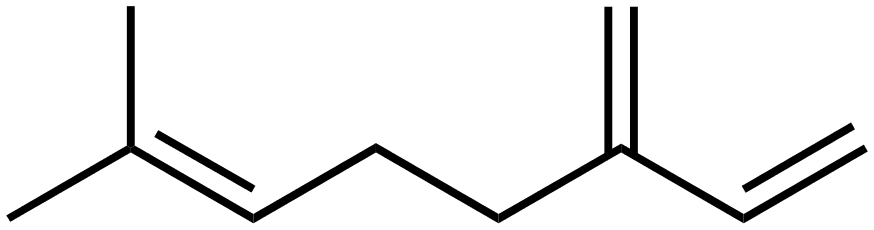
View terpeneYou already know what myrcene smells like. It's the heavy, faintly sweet earthiness of a ripe mango, the back half of a hop flower, the smell of a bay leaf when you crush it between your fingers. In cannabis it's usually the most abundant terpene in the jar — in plenty of strains it's more than half the total terpene load. A lot of what people call "that weed smell" is really just myrcene.
It sits at the heavy, sink-into-the-couch end of the spectrum. Myrcene won't get you high on its own — no terpene will — but it changes the shape of the high THC delivers, pulling it toward the body and away from the head. And the mango trick you've heard about? Folklore with a grain of truth in it. The myrcene really is in the mango; there just isn't enough of it to move the needle.
That smell is also the first thing you can lose. Myrcene evaporates, and most of the loss happens in the drying room — not in the bowl. A slow, cool dry keeps it. A fast, warm one strips it, and no amount of curing brings it back.
Middling. It survives a careful dry and quietly disappears from a hot one.
Both read earthy and hoppy, but humulene is dry and bitter where myrcene is sweet and heavy — and humulene is the one that curbs appetite rather than stoking it.
View terpeneCaryophyllene bites; you feel it at the back of your nose like cracked pepper. Myrcene never does that — it stays soft and low.
View terpeneStructurally these are near neighbours and both read green-sweet. Ocimene is lighter and more tropical, and it leaves a warm drying room long before myrcene does.
View terpene