Caryophyllene
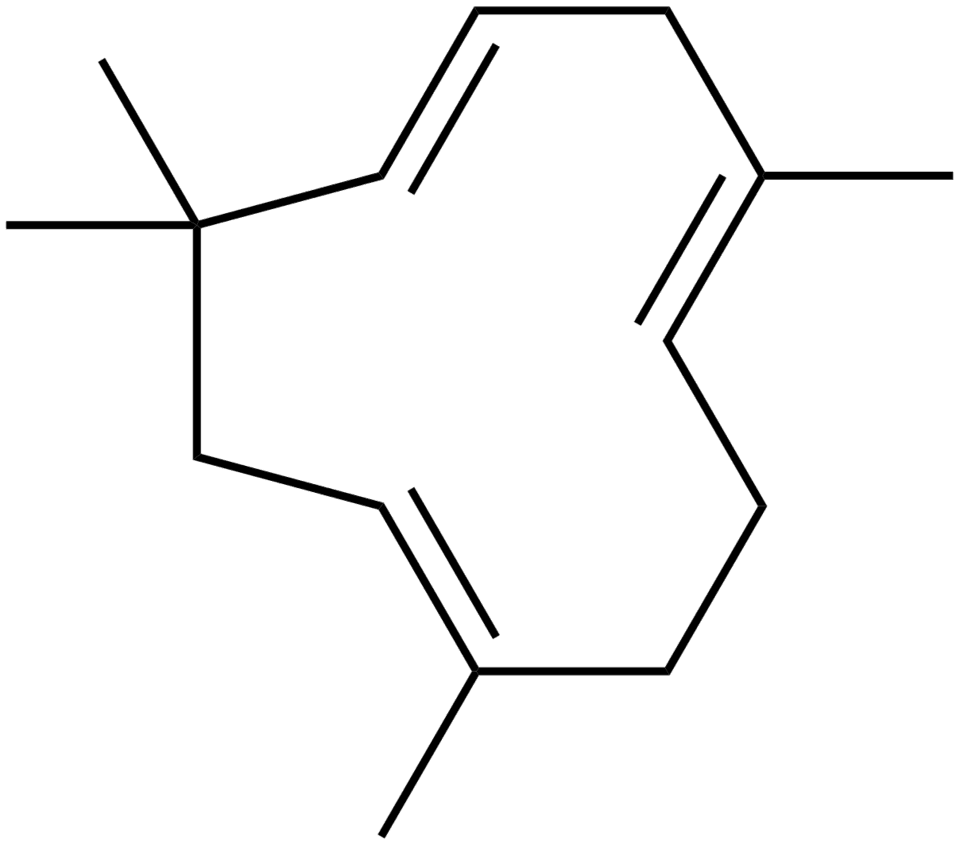
Same molecule rearranged: they are structural isomers. Humulene is the hop — dry, bitter, a little green. Caryophyllene is the peppercorn.
View terpeneIf you've smelled a fresh hop flower, you've smelled humulene. It's named after *Humulus lupulus*, the hop vine, and it's a good part of why cannabis and beer smell like cousins. Sage and ginseng carry it as well. In a jar it's dry, woody and a little bitter.
Humulene doesn't push in either direction, which is why strains built on it tend to feel level rather than up or down. It's also the terpene most often noted for *not* driving appetite — unusual in a plant with the opposite reputation.
Here's the problem: at 106°C / 223°F humulene has one of the lowest boiling points in this library. It is the first thing to leave a warm drying room and there is no getting it back. If you're growing something hop-forward and you want it to still smell hoppy in the jar, the dry is not the place to save time.
One of the first things a warm drying room takes — dry cool and slow, or this is the note you lose.
Same molecule rearranged: they are structural isomers. Humulene is the hop — dry, bitter, a little green. Caryophyllene is the peppercorn.
View terpeneBoth earthy, but myrcene is sweet and heavy where humulene is dry. Myrcene sinks you into the couch; humulene is the one that takes your appetite away.
View terpeneCamphene brings camphor — cold and medicinal. Humulene is warmer and drier, closer to a hop pellet than a chest rub.
View terpene