Humulene
These two are the same molecule rearranged — genuine structural isomers. Caryophyllene is peppery and hot; humulene is dry, bitter and hoppy.
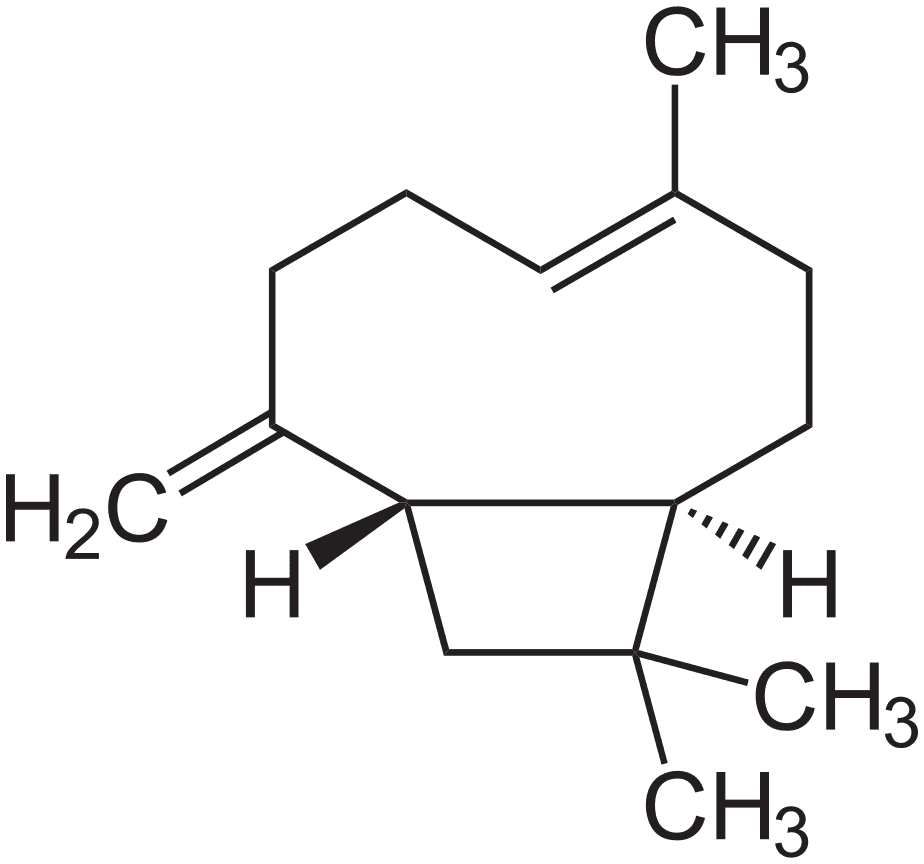
View terpeneCrack black peppercorns and lean over the grinder — that hot, dry bite in your nose is caryophyllene. It's in cloves, cinnamon, oregano and basil: the spice-rack terpene. In cannabis it's why some strains smell less like fruit and more like something cooking.
Caryophyllene is the genuine odd one out. It's the only terpene known to bind directly to a cannabinoid receptor — CB2, the one tied to the body rather than the head — which technically makes it a cannabinoid as well as a terpene. It won't get you high; CB2 doesn't work that way. But it does mean caryophyllene is doing something the others aren't.
At 130°C / 266°F it has one of the lower boiling points here, so it's an early casualty of a warm dry. The upside is that it's a heavier, stickier molecule than the citrus terpenes — what survives the first week tends to stay through a long cure. Get it past the dry and it keeps.
One of the first things a warm drying room takes — dry cool and slow, or this is the note you lose.
These two are the same molecule rearranged — genuine structural isomers. Caryophyllene is peppery and hot; humulene is dry, bitter and hoppy.
View terpeneMyrcene is the soft, sweet earth underneath a lot of strains. Caryophyllene is the spice on top of it — clove, pepper, something cooking.
View terpeneBoth carry spice, but caryophyllene's is hot — cracked pepper — and eucalyptol's is cooling. One bites, the other opens your sinuses.
View terpene