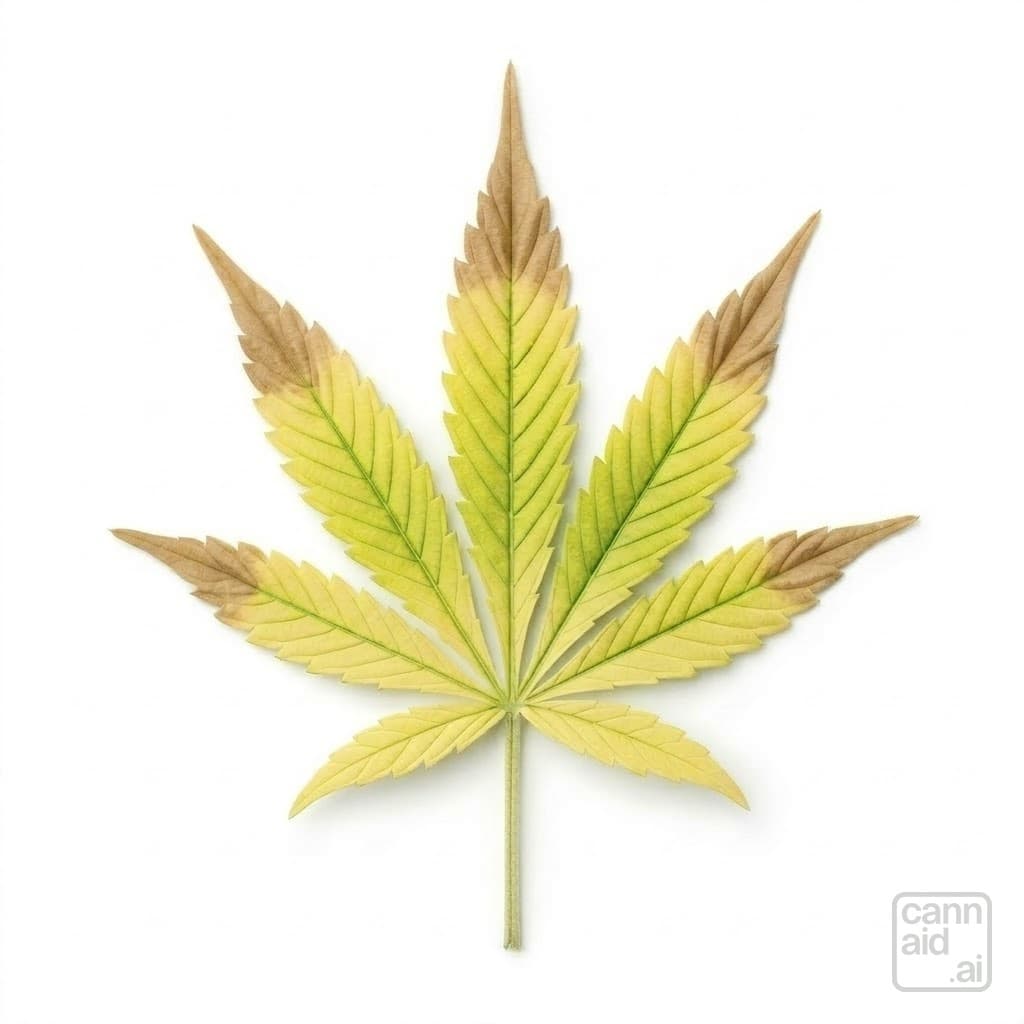
Iron is the metal that sits right at the center of production — chlorophyll being the green pigment your plant uses to turn sunlight into food. Without enough iron, she can't build chlorophyll, and sputters. Fe also drives a long list of enzyme reactions for energy transfer and for processing nitrate and sulfate (so it ties into how nitrogen and sulfur get used too). She only needs a tiny amount of it, but that tiny amount is non-negotiable.
Iron deficiency in cannabis is almost always a problem, not an actual shortage in the medium. Above pH 7.0 in soil (6.5 in coco, 6.1 in hydro), iron converts to a form the roots just can't absorb — even when there's plenty of it sitting right there. Excess zinc, manganese, or copper can also muscle iron out at the root and it up through antagonism. Cold root zones, , poor drainage, and excess phosphorus all reduce Fe availability too. Because iron is immobile, the deficiency hits new growth first — the top of the canopy goes pale while older leaves below stay deep green. The diagnostic against manganese (which is also immobile and also produces interveinal chlorosis): iron produces no spots at any stage, just clean yellowing or whitening of the tissue between veins. Mn produces tan or brown necrotic spots scattered through the yellow tissue. The cleanness of Fe is what tells them apart. One small consolation: Fe-deficient leaves can actually re-green from the tips inward once you fix the pH — rare among nutrient deficiencies, and a strong confirmation you nailed the diagnosis.
Solutions
✓Lower pH — iron locks out above 7.0 in soil, 6.5 in coco, 6.1 in hydro. This is the fix in most cases
✓Add chelated iron supplement (Fe-EDDHA is the most stable across pH ranges)
✓Check for calcium, zinc, manganese, or copper excess — these compete with iron uptake
✓Improve drainage and avoid overwatering — waterlogged roots can't absorb iron properly
✓Foliar spray with chelated iron for quick response while root zone corrections take effect
✓Keep root zone warm — cold temperatures reduce iron availability
✓Watch for re-greening from leaf tips inward — this confirms iron deficiency, not Mn or Zn
Plant Overview
How it moves through the plant
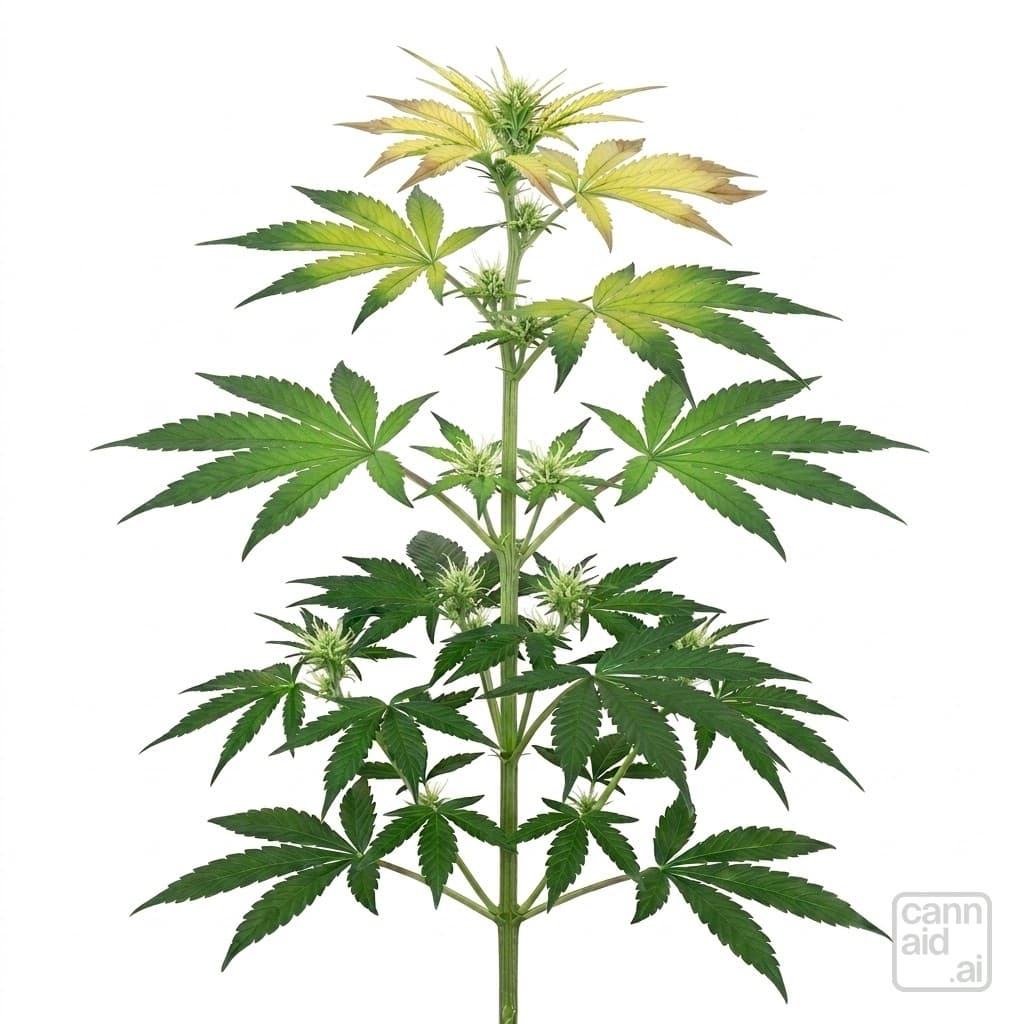
Iron is immobile — once she's used it to build chlorophyll in a leaf, it stays there. She can't pull it back out and ship it up to the new shoots. So when iron supply runs short, the new growth at the top of the canopy is the first to suffer; older leaves below stay perfectly fine. The signature is interveinal : pale yellow tissue between veins, with the veins themselves staying sharply dark green — clean stripes, like a fishbone pattern. The detail to remember: iron makes no spots. That's what separates it from manganese, which makes the same striped pattern PLUS tan or brown necrotic specks in the yellow tissue.
Early. Just the top one or two new are off — they've come in noticeably pale compared to the deep-green older foliage below. The contrast between the lighter top and the darker bottom is the earliest cue you'll catch. Growth at the apex has slowed a little. The lower canopy still looks vibrant and untouched.
Mid. The pale-yellow wave has spread to several leaves at the top of the . From a few feet away, the contrast between the dark-green older growth and the pale-yellow new growth is unmistakable — like the plant is wearing two different colors. The lower canopy still looks completely normal. Growth at the apex has visibly slowed; the affected zone looks stalled while the bottom keeps growing.
Late. The top of the canopy has gone bright yellow or close to white, while the lower canopy stays green. The contrast is dramatic from across the room. Growing tips may die back outright. New growth has stalled severely; what does push out comes in thin and weak. If you let this run into flower, bud development at the top of the plant takes a real hit.
Early — how it first appears on a leaf
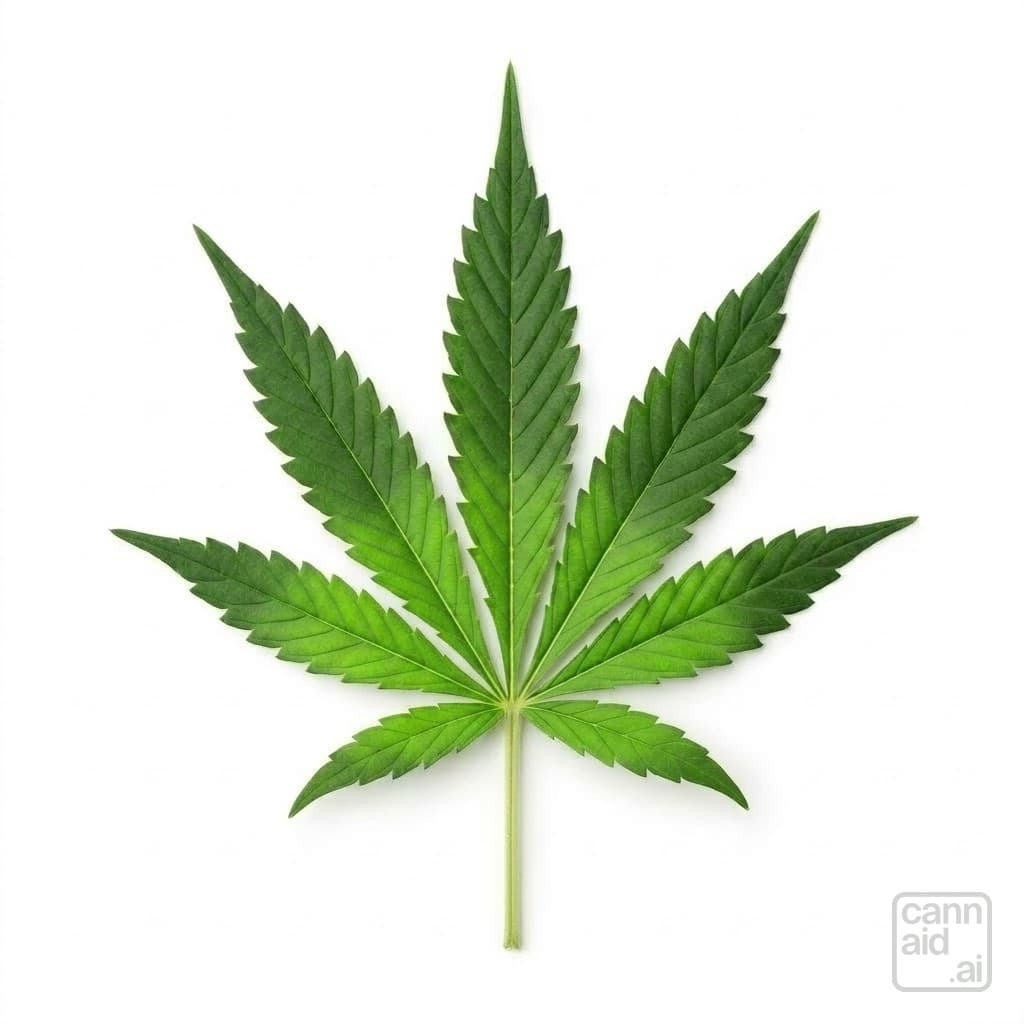
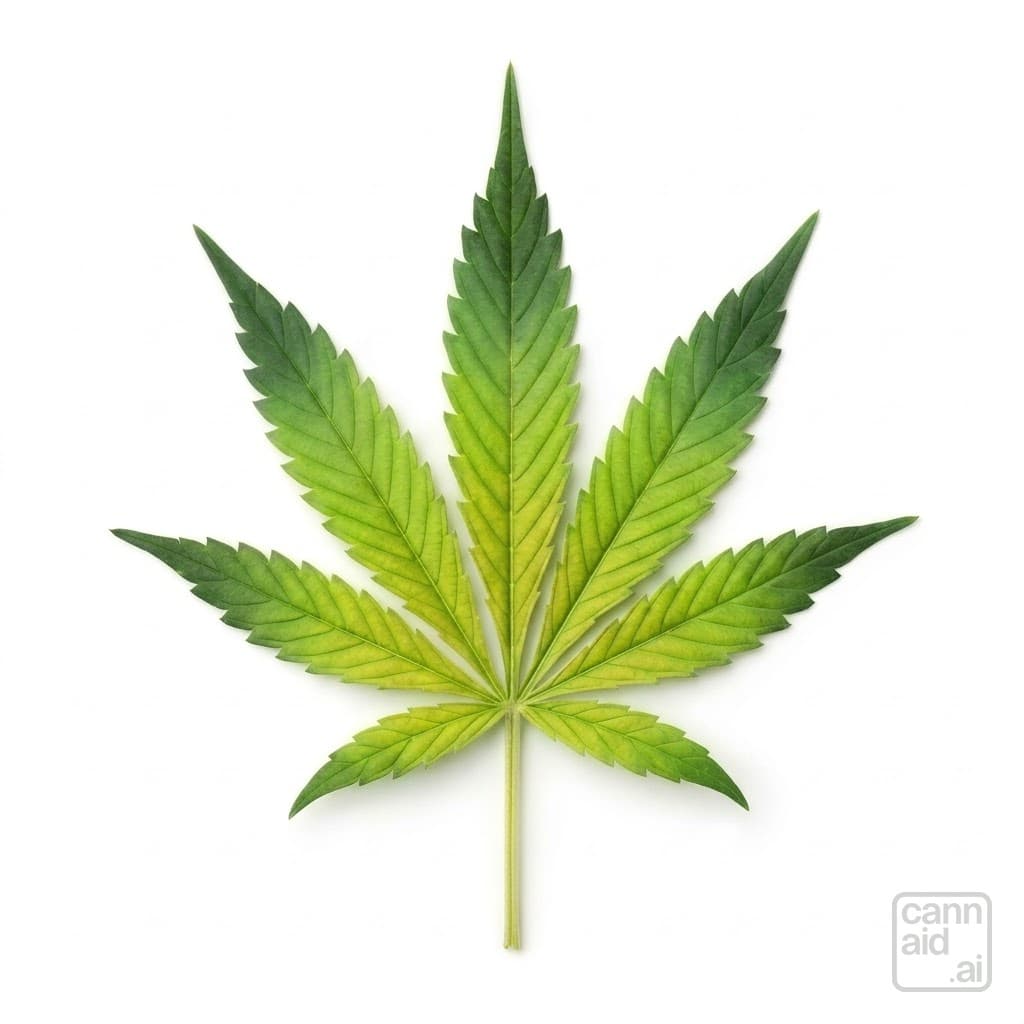
Pick up a new upper leaf in the early stage and you'll see it's pale green or light yellow while older leaves stay deep green and healthy. Easy to mistake for normal new growth at first — but a healthy new leaf darkens within a few days and stays uniformly light. Fe-deficient leaves develop a distinct interveinal pattern that doesn't resolve. Yellow shows up between the on the while the veins themselves stay noticeably darker. The pattern starts subtle and sharpens over days. Crucially, the surface stays clean — no spots, no specks, no rough patches. That cleanness matters.
Mid — when the fishbone pattern sharpens
By the mid stage, that same leaf has sharpened into a clean fishbone pattern — pale yellow tissue between dark-green veins, the contrast getting more pronounced every day. Light yellow has deepened to medium yellow across the surface. Run a finger across the blade and there's nothing unusual to feel — no rough patches, no bumps, no specks. That smooth, unblemished surface is part of the diagnostic. Iron doesn't kill tissue at this stage the way manganese does. No spots, no mottling, no surface damage. Just the clean striped pattern, getting brighter.
Late — past the point of recovery
By the late stage the leaf has turned bright yellow or nearly white throughout the inter-vein tissue. The veins stay green, producing the stark contrast that's the classic Fe chlorosis signature. Browning of leaf tips and edges may develop as tissue starts to die. The worst-affected leaves drop. Here's the unusual upside, though: recovery is possible if you fix the underlying pH or root-zone competition. Fe-deficient leaves can actually re-green from the tips inward once the lockout breaks — that's rare among nutrient deficiencies, and seeing it happen is a strong confirmation you nailed the diagnosis.
Commonly Confused With
Sulfur (S)
Both yellow new/upper leaves. Iron keeps veins sharply green (interveinal chlorosis); sulfur yellows the entire leaf uniformly, veins included. Iron yellowing starts at the leaflet base near the petiole and spreads toward tips; sulfur has no clear direction. Flip the leaf — pink or red undersides confirm sulfur, not iron.
Healthy new leaves are naturally pale green but darken within a few days and are uniformly light. Iron-deficient leaves develop a distinct interveinal pattern (green veins, yellow tissue) and won't resolve on their own.