Molybdenum is a trace element — the plant uses almost nothing of it — but what it does, no other nutrient can do. Mo is a cofactor in the enzyme nitrate reductase, which is the enzyme that converts nitrate (the form of nitrogen in your nutrient solution) into ammonium (the form the plant can actually use to build proteins). Without Mo, all that nitrogen you're feeding her just piles up in unusable nitrate form. The pink and red tints characteristic of Mo deficiency are literally that nitrate buildup, showing through in the leaf tissue. Mo also plays smaller roles in sulfur metabolism and plant hormone production.
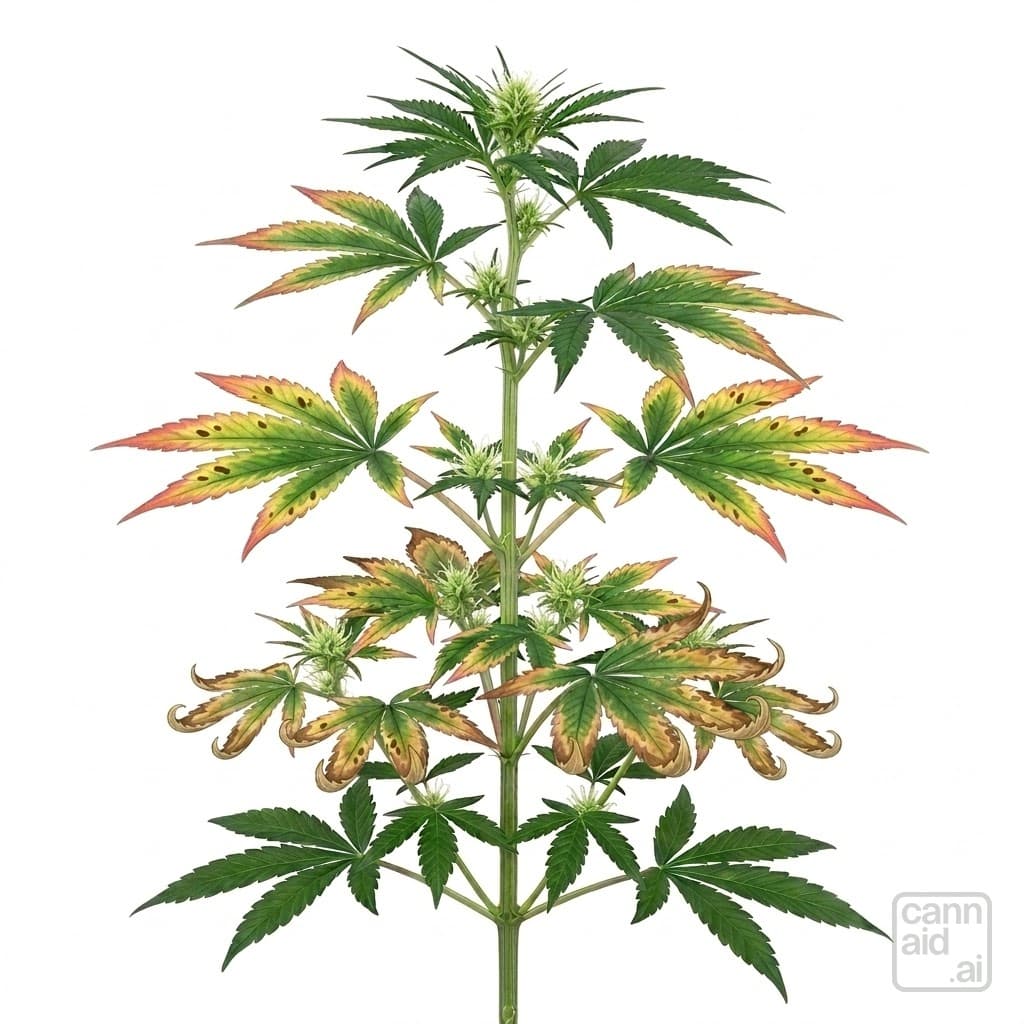
Mo deficiency is rare in cannabis but characteristically sneaky — the plant has plenty of nitrogen in the feed and yet can't touch it. The most common triggers are soil drifting below its 6.3–6.8 target (below 5.8 in coco, 5.5 in hydro) and cold root zone temperatures, both of which Mo out of the uptake window. Here's the diagnostic twist: unlike every other nutrient deficiency (which shows at the very bottom of the plant), Mo uniquely starts in the mid-canopy and spreads upward. That mid-zone position is the single fastest way to tell Mo apart from nitrogen, which otherwise looks similar. Look for marginal yellowing with distinctive orange, pink, or red tints right along the leaf edges.
Solutions
✓Check and raise pH — Mo gets harder to take up as pH falls; bring it back to 6.3–6.8 in soil, 5.8–6.0 in coco, 5.5–6.0 in hydro
✓Add sodium molybdate if confirmed (very small amounts needed)
✓Warm up root zone if temperatures are low
✓Foliar spray with dilute molybdenum solution
Plant Overview
How it moves through the plant
Molybdenum is technically mobile, but the symptom pattern is unusual: it starts in the rather than at the very bottom of the plant, then spreads upward. The signature visual is marginal yellowing with pink, orange, or red tints right along the leaf edges — those tints come from nitrate piling up in tissue that can't process it.
Early. Only the mid-canopy band of leaves is affected — the very bottom looks fine, and so does the top. That mid-zone position is the diagnostic giveaway versus nitrogen, which would start at the very bottom. The affected band cups slightly upward and shows pink, orange, or red tints on the margins. The whole plant has a subtle light-green pallor, like she's hungry for nitrogen even though the feed hasn't changed.
Mid. Mid-canopy yellowing intensifies and the pink-red margins become vivid. The wave climbs upward into newer growth rather than downward — the opposite direction of every other mobile deficiency. From a few feet away the cupped, oddly-colored mid-band stands out against the duller upper and still-green lower foliage. The plant overall looks like she's failing on nitrogen even though the feed is correct — that's the Mo trick.
Late. Both mid-canopy and upper canopy are now affected — the wave has fully climbed into new growth. Leaves are conspicuously thick, shiny, and puffy with severe upward cupping and scorched necrotic margins. From across the room the plant looks twisted and unhealthy. Premature leaf drop hits both older and newer leaves, and growth has effectively stalled even though the nitrogen in the feed has been adequate the whole time.
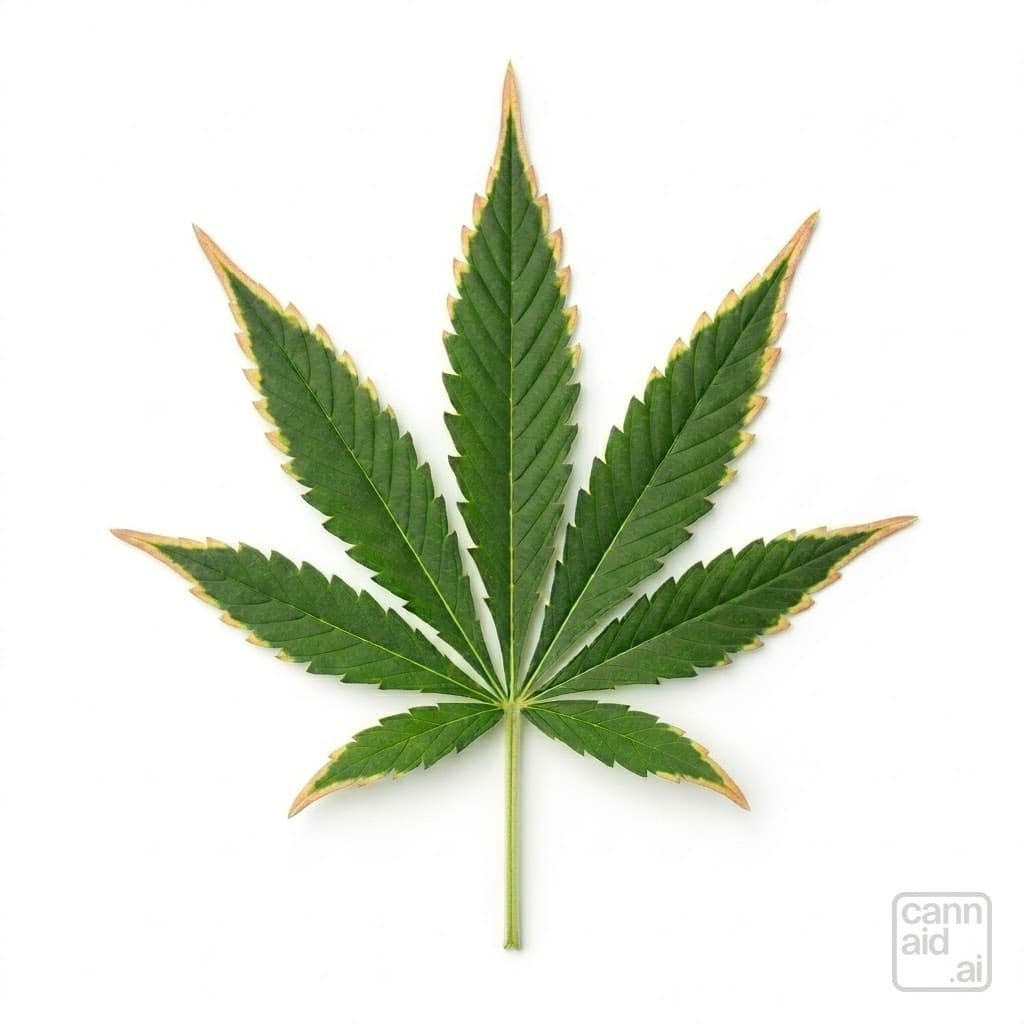
Early — how it first appears on a leaf
Pick up a single mid-canopy leaf in the early stage and the yellowing is marginal — starting at the leaf edges and working inward, not interveinal like magnesium or uniform like nitrogen. The leaf edges begin to cup upward in a mild taco shape. Pink, orange, or red tints appear specifically on the margins — that's nitrate piling up in tissue that can't process it. The rest of the plant often looks slightly light green. Growth slows even though nitrogen levels in the feed are adequate.
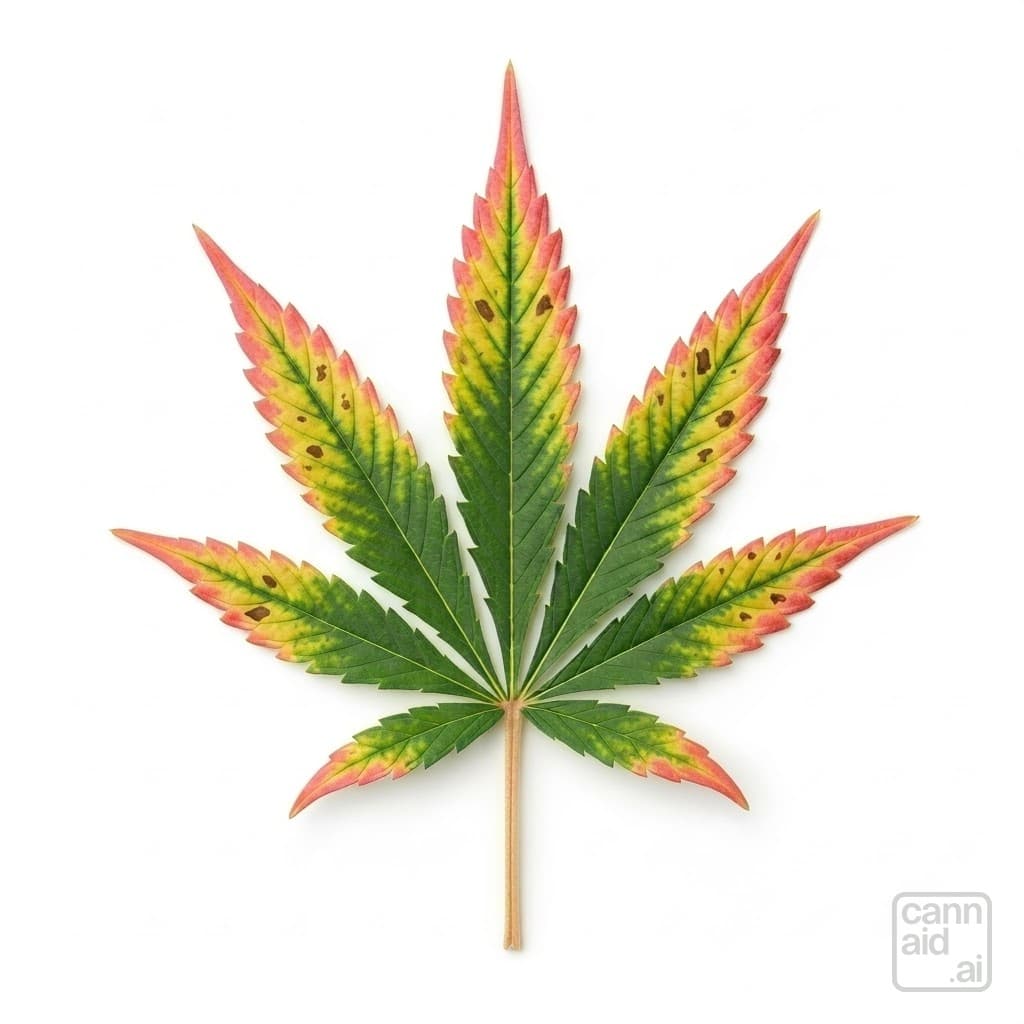
Mid — when the pink margin becomes vivid
By the mid stage on the same mid-canopy leaf, the marginal yellowing has intensified and the pink, orange, or red margin tint has become vivid. The cupping has tightened into a pronounced upward taco. The first dark brown spots start dotting the yellowed tissue. The leaf feels thick and brittle, with a slightly shiny or puffy texture — that puffy feel is a Mo-specific tactile cue that helps distinguish it from N or K deficiency, both of which leave the leaf soft.
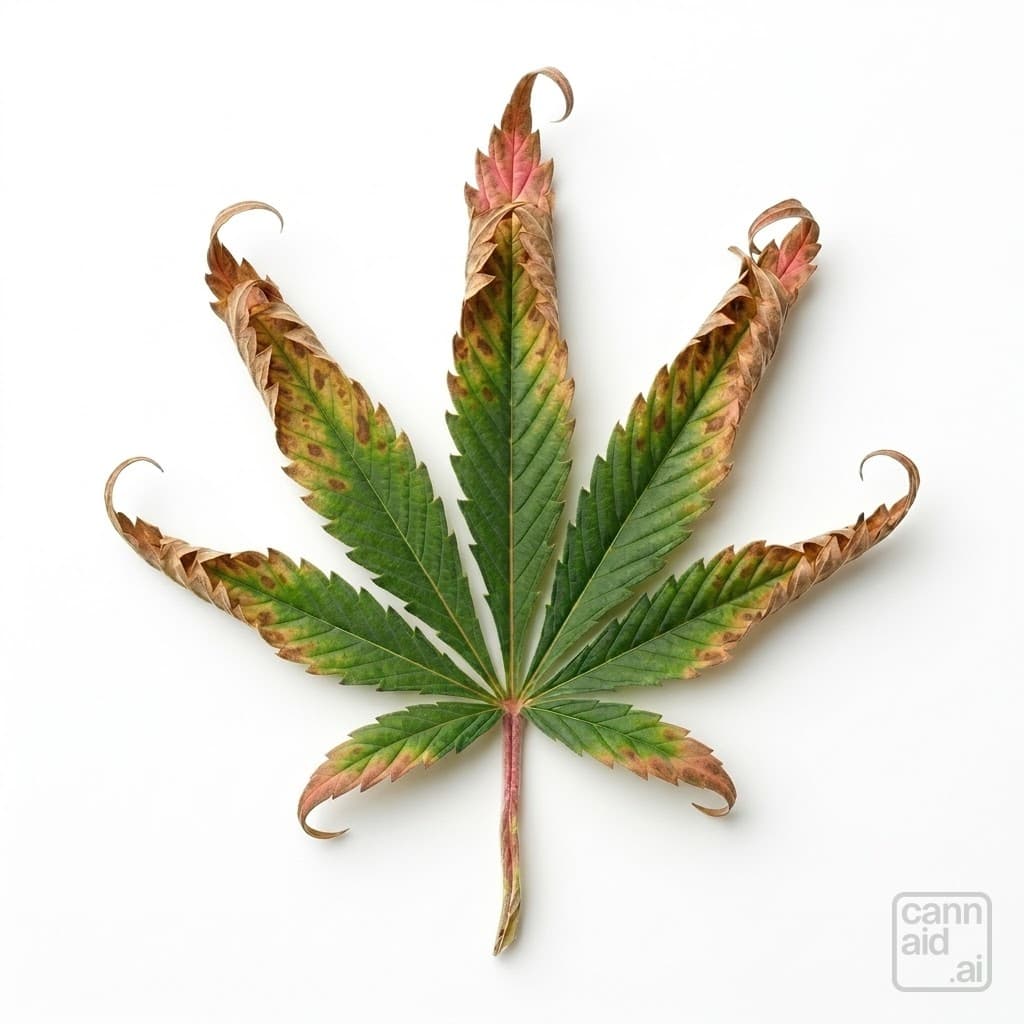
Late — past the point of recovery
By the late stage, the leaf has turned completely yellow and is shifting toward tan or brown. Dark brown spots dot the yellowed tissue. The leaf takes on an elongated, twisted, thick, brittle character with that diagnostic shiny-puffy texture. Cupping and curling are severe. Margins are scorched and necrotic. The leaf may drop prematurely, and the symptom wave continues climbing upward from the mid-canopy into newer growth.
Commonly Confused With
Nitrogen (N)
Molybdenum is needed for nitrogen metabolism, so Mo deficiency mimics N deficiency. The key difference: Mo starts at mid-canopy leaves with an orange or pink margin tint. Nitrogen starts at the very bottom with plain pale yellow.
Both affect leaf edges. Potassium produces brown/tan crispy edges. Molybdenum produces orange/pink-tinted margins with upward leaf cupping. The color tint is the giveaway.
Both can cause upward leaf cupping. Heat stress affects the upper canopy closest to lights and resolves when temps drop. Molybdenum affects lower to mid-canopy leaves regardless of light distance.