Potassium is the plant's water and traffic controller. It runs the stomata (the tiny pores on the underside of leaves that open and close to release water and let CO₂ in), keeps humming, and shuttles sugars and carbohydrates from the leaves down to wherever they're needed — especially developing buds. During flowering, K drives bud density, production, and the overall quality of what you'll smoke later. It also stiffens cell walls, supports the root system, and gives the plant real defense against drought and disease.
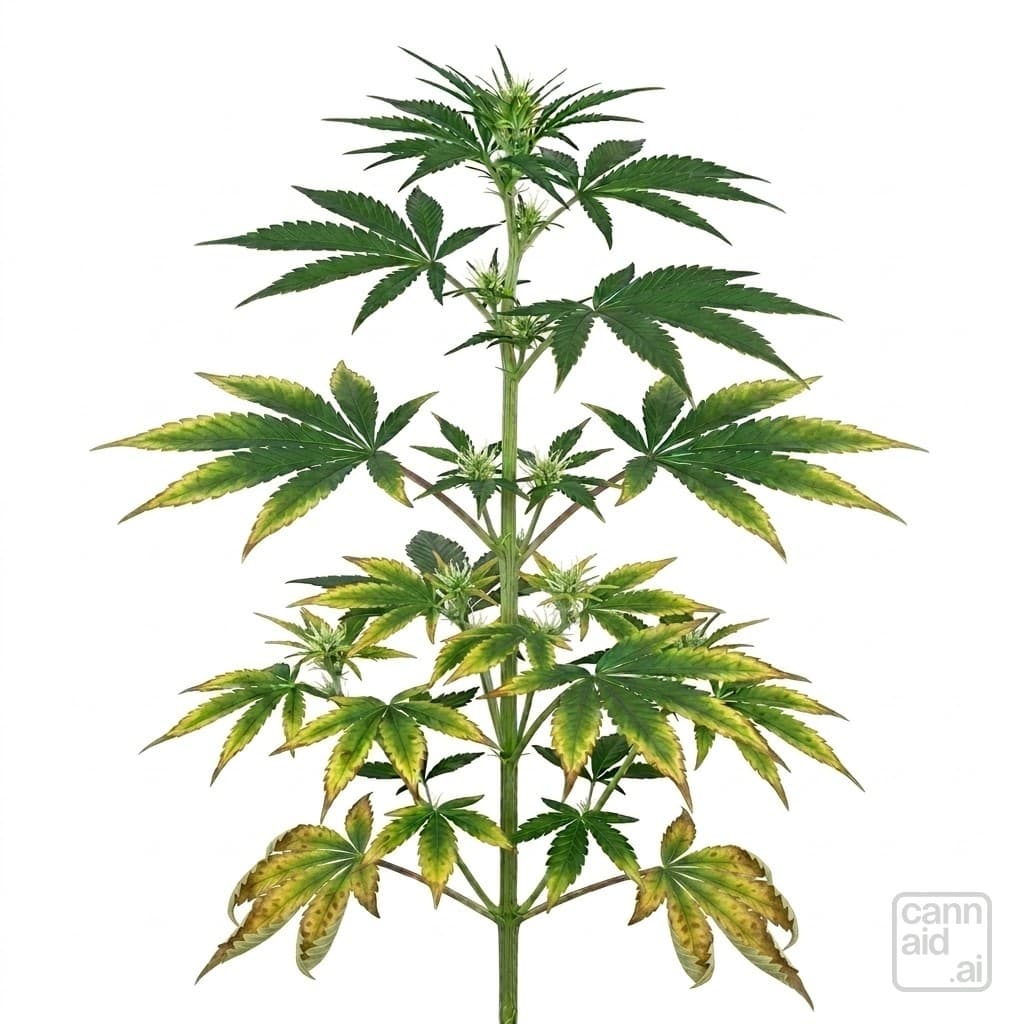
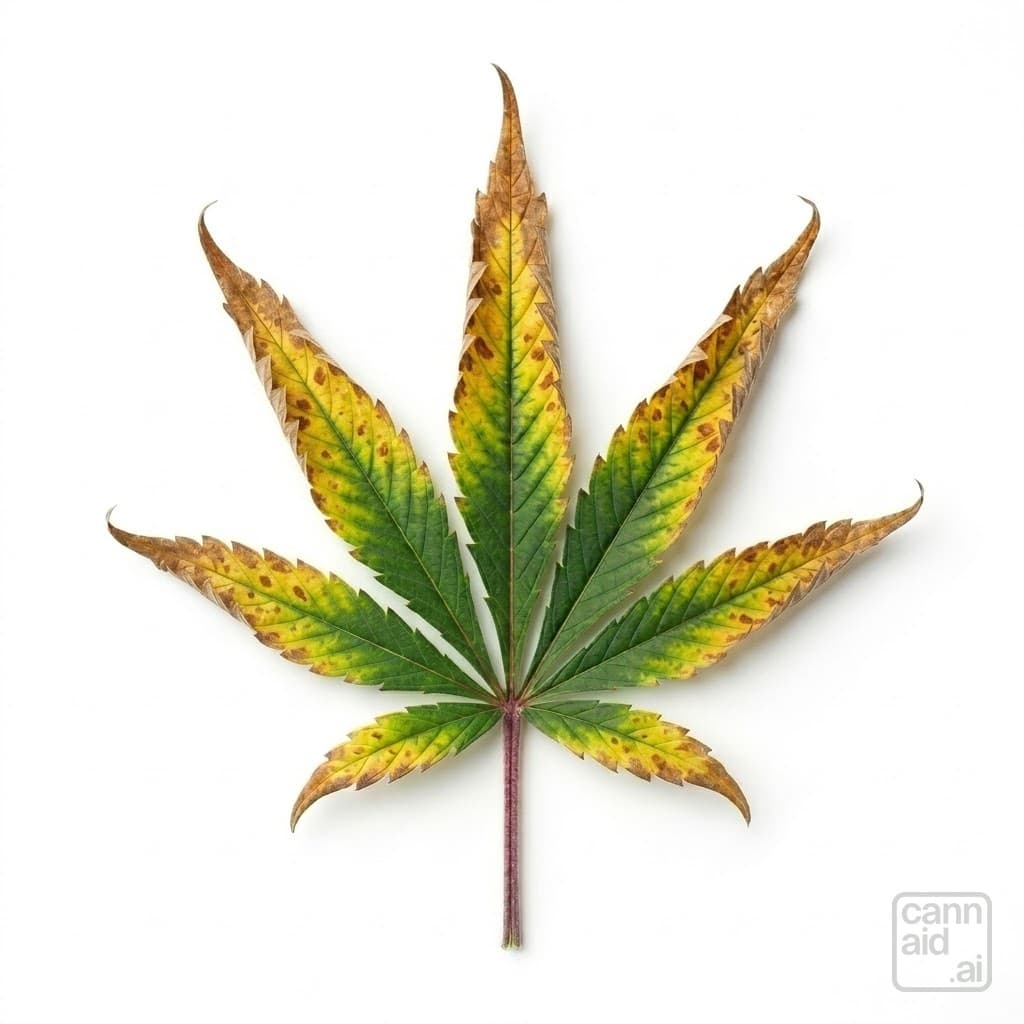
K deficiency tends to show up when something else is blocking uptake — climbing above 8.0 in soil (7.5 in coco, 7.1 in hydro), excess calcium or nitrogen edging K out at the root (classic ), salt buildup, , or a cold root zone. Because potassium is , the plant raids her older lower leaves to keep new growth fed — symptoms always show up at the bottom. The other thing to know is that K demand surges hard during flowering weeks 3–7, so a plant that was perfectly fine in veg can suddenly tank at peak flower if you haven't bumped K with the bloom feed. The signature look is marginal scorching: brown, crispy leaf edges with veins that stay sharp green, working inward from the rim.
Solutions
✓Increase potassium in feeding schedule
✓Check for calcium/magnesium excess (locks out K)
✓Use seaweed extract foliar spray for quick uptake
✓Add wood ash or potassium sulfate to soil
✓Flush if salt buildup is suspected, then resume feeding
Plant Overview
How it moves through the plant
Potassium is , same playbook as N and P. When she runs short, the plant raids older lower leaves to keep new growth fed. That's why K deficiency always walks bottom-up. The signature visual is marginal scorching: yellow and brown that starts at the leaf edges and tips and works inward toward the midrib, while the veins themselves stay sharply green.
Early. Only the bottom one or two show the start of marginal yellowing — pale yellow at the tips and edges, maybe a tiny rust-colored spot between veins. The rest of the still looks normal. The earliest plant-wide cue is unusual stretching: internode spacing (the gap between branch nodes on the main stem) widens beyond what you'd expect for the stage, and stems develop a faint reddish tint along the main stalk.
Mid. The marginal scorch climbs into the lower third of the canopy. From a few feet away, the lower leaves now look like they've been outlined in tan and brown — the classic "burnt frame" starting to form. Most of the upper canopy still reads healthy green. The earlier stretchy growth has plateaued, and overall growth has noticeably slowed.
Late. The lower half of the canopy now wears the full burnt-frame look — brown crispy edges with leaves curling upward at the margins, the worst ones dropping off entirely. From across the room the plant looks tired and brittle. Stems are weak enough that branches lean or bend under their own weight. If you're in flower, buds throughout the plant come in airy with reduced trichome density and noticeably lower potency.
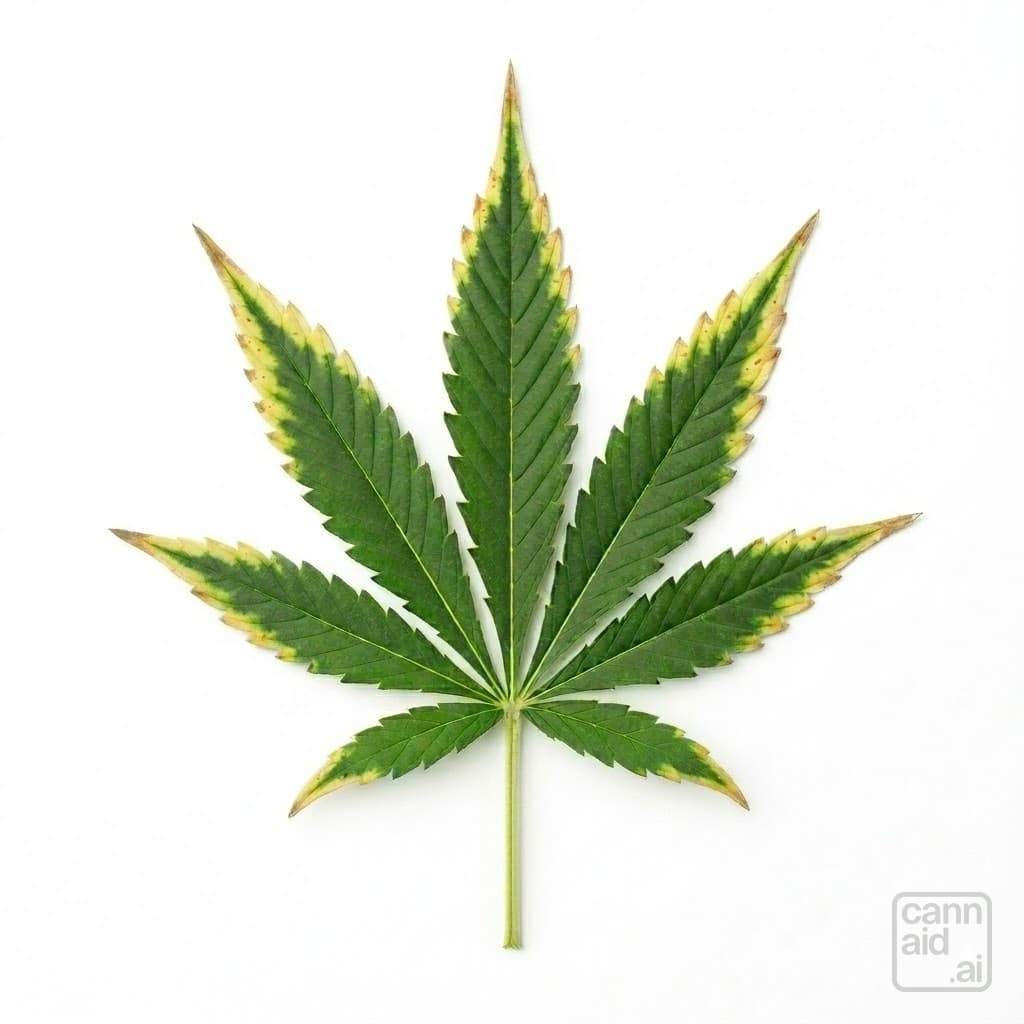
Early — how it first appears on a leaf
Pick up a single lower leaf in the early stage and the first thing you'll see is the rim of the going pale yellow — tips and edges first. There may be a tiny bit of brown right at the very tips, and small rust-colored or brown spots can dot the spaces between the . The yellowing is unmistakably marginal: it starts at the rim and pushes inward toward the midrib, unlike the soft uniform fade you'd see with nitrogen. Texture is still mostly normal — the damage hasn't turned crispy yet, just colored. Stems and may take on a reddish tint.
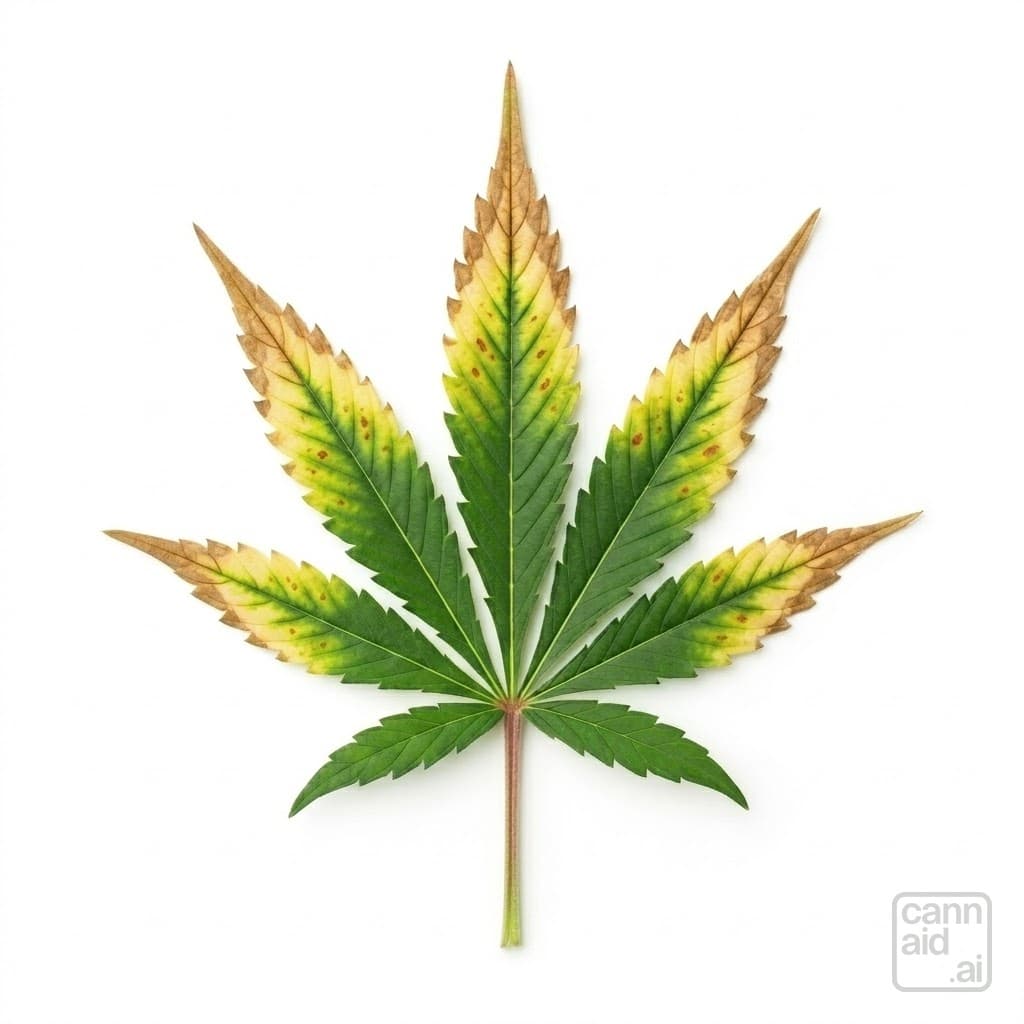
Mid — when the burnt frame forms
By the mid stage on the same lower leaf, the marginal yellowing has intensified and the damage is pushing inward toward the midrib. Tan necrosis runs along the saw-tooth edges of the leaflets — the rim looks scorched now, not just yellow. Brown crispy patches form at the very tips. The damage covers most of the leaf edge rather than just the outer rim, and the margins start curling upward as the dying tissue contracts — like paper held too close to a flame.
Late — past the point of recovery
By the late stage, the leaf wears the unmistakable "burnt frame" look — brown, crispy edges scorching inward toward the midrib. Yellowing fills in from the edges toward the center in a blotchy pattern. The leaf curls upward at the margins (taco-shaped) and may twist or claw inward on itself. Tissue has gone brittle and crumbles between your fingers. Eventually the leaf drops off the plant entirely.
Commonly Confused With
Nitrogen (N)
Both affect lower leaves with yellowing. Nitrogen produces a soft, uniform yellow. Potassium yellows margins first, then develops brown crispy edges that work inward — the texture is papery and brittle, not soft.
Both cause brown tips. Nutrient burn affects just the tips on all leaves throughout the plant. Potassium burns full leaf edges and margins, primarily on lower/older leaves.
Both produce brown spots. Potassium spots appear on lower/older leaves. Calcium spots appear on upper/new growth. Leaf location is the fastest way to tell them apart.
Both are mobile nutrients affecting lower leaves with veins staying green. Potassium damage moves from edges inward toward the midrib. Magnesium yellowing radiates from the center outward between veins.