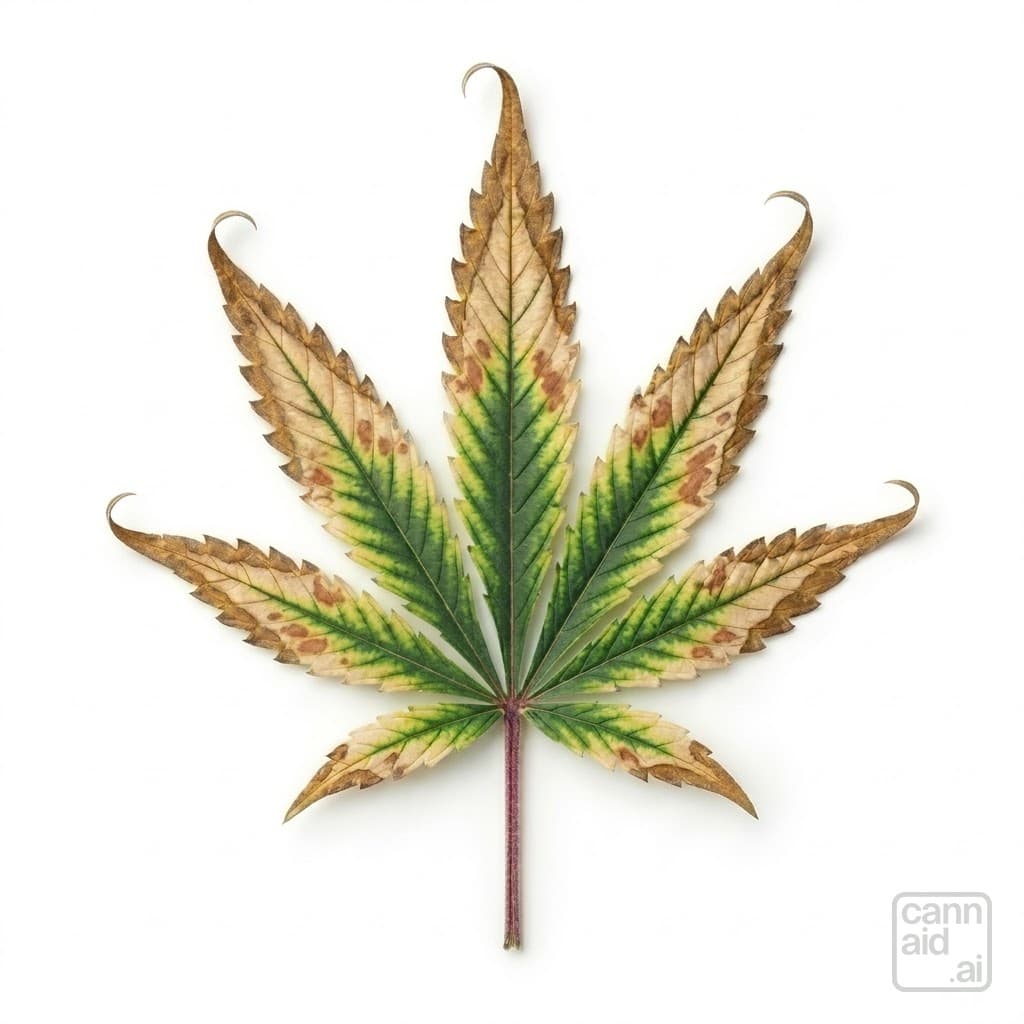
Magnesium is the atom at the heart of every chlorophyll molecule — the green pigment cells use to capture light energy. No magnesium, no green; no green, no . Beyond that, Mg activates more than 300 enzymes the plant uses for energy transfer and the metabolism of carbohydrates, and it helps her actually make use of the nitrogen, phosphorus, and sulfur you're feeding her. Mg also supports cell division — so new growth needs adequate Mg to come in clean.
Magnesium deficiency is honestly one of the most common nutrient issues you'll encounter — especially if you're growing in coco coir or running LED lights. LEDs produce less infrared heat than the old HPS bulbs, which means the plant transpires less, which means less Mg gets pulled into the roots along with the water she drinks. Cold root zones below 64°F / 18°C also cut Mg uptake hard. Because magnesium is , she raids older lower leaves to keep new growth supplied — symptoms always start at the bottom. Deficiency tends to worsen during flowering, when developing buds act like a nutrient sink. The signature look is interveinal : yellow tissue between veins while the veins themselves stay sharp dark green, giving the leaf a marbled or arrowhead-patterned appearance.
Solutions
✓Add Epsom salt — 1 teaspoon per liter of water
✓Use cal-mag supplement regularly
✓Check pH — optimal 6.3–6.8 in soil, 5.8–6.0 in coco, 5.5–6.0 in hydro for Mg uptake
✓Reduce potassium if excessive (competes with Mg)
✓Foliar spray with Epsom salt for quick relief
Plant Overview
How it moves through the plant
Magnesium is , same playbook as N, P, and K — when she runs short, the plant raids her older lower leaves and ships the salvaged Mg upward to new growth. That's why Mg deficiency always walks bottom-up. The signature visual is interveinal chlorosis: yellow tissue with dark-green veins still showing through, forming an arrowhead or marbled pattern. The yellow spreads from the leaf margins inward toward the central vein.
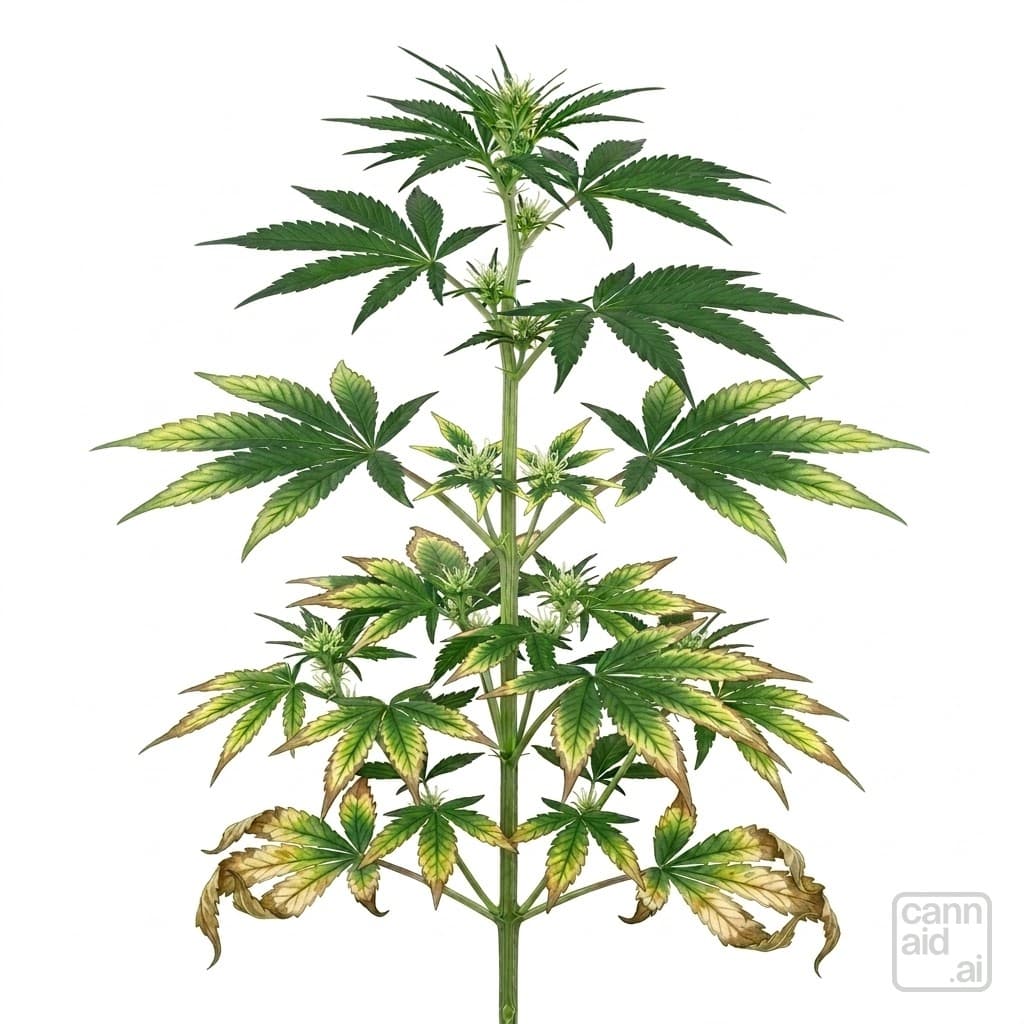
Early. Only the bottom one or two show the start of the marbled pattern — yellow patches between veins that stay dark green, giving the leaf a faintly arrowhead-like look. The rest of the still reads vibrant. The earliest plant-wide cue is the and lower stem picking up a purple or reddish-purple tint.
Mid. The interveinal pattern has spread across most of the bottom third of the canopy. From a few feet away the lower fan leaves now read as yellow with a green vein network laid over them — distinctive enough you can spot it from across the tent. The upper canopy still looks normal. The worst lower leaves start showing rust-colored spots in the most yellowed zones, and edges may be curling slightly upward as the tissue dries.
Late. The bottom of the plant is shedding leaves — they yellow, curl crispy, and drop in sequence, the wave working upward. Rust spots and reddish-brown tints cover the dying tissue. From across the room you can see the plant losing its lower scaffolding while the top tries to keep going. New growth at the top looks spindly and weak. If you're in flower, buds come in airy and low on resin.
Early — how it first appears on a leaf
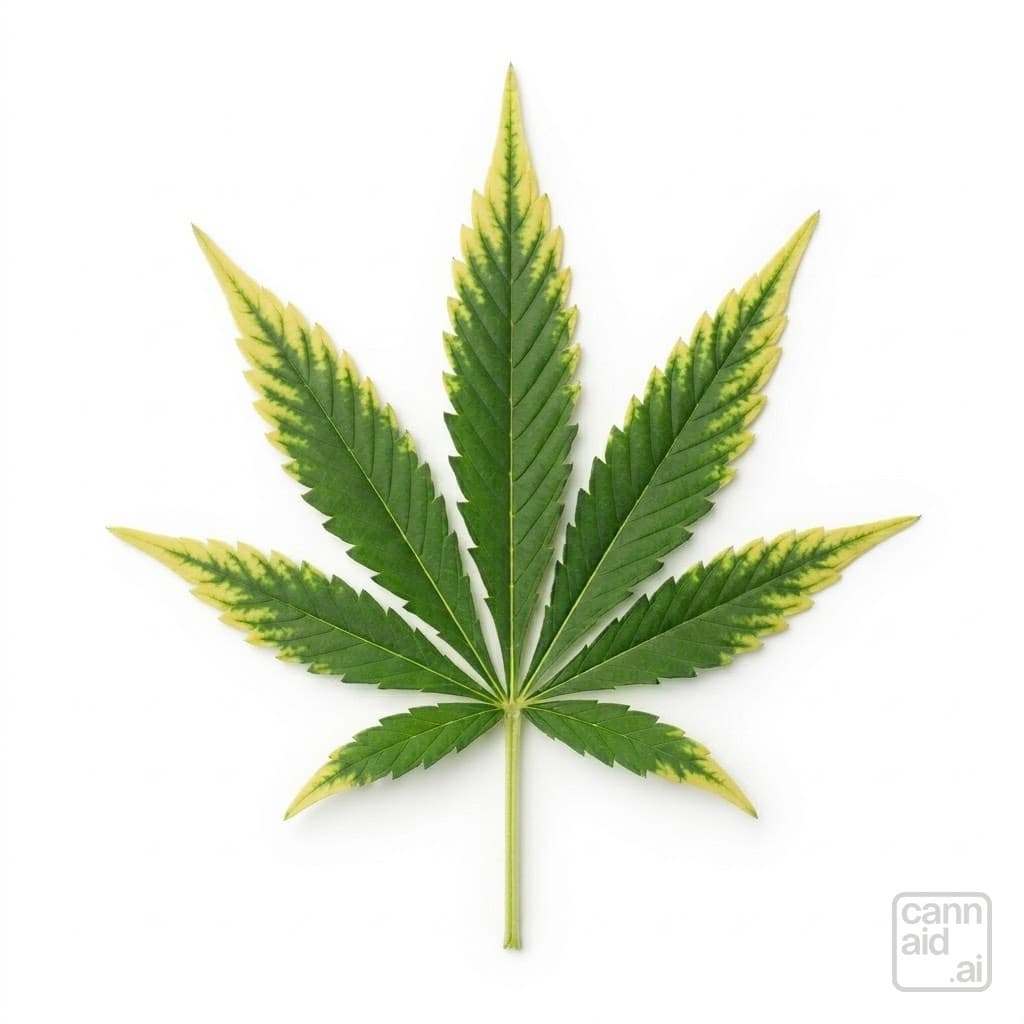
Pick up a single lower leaf in the early stage and the interveinal chlorosis is the dead giveaway. Light green or yellow patches develop between the , while the veins themselves stay sharply dark green across the . The overall pattern often resembles arrowheads or marbling — almost decorative if it weren't a problem. The yellowing typically starts at the leaf margins and spreads inward toward the central vein, not the other way around. Edges may curl upward slightly. The and the bit of stem connecting it to the plant may show a purple or reddish-purple tint.
Mid — when interveinal chlorosis is unmistakable
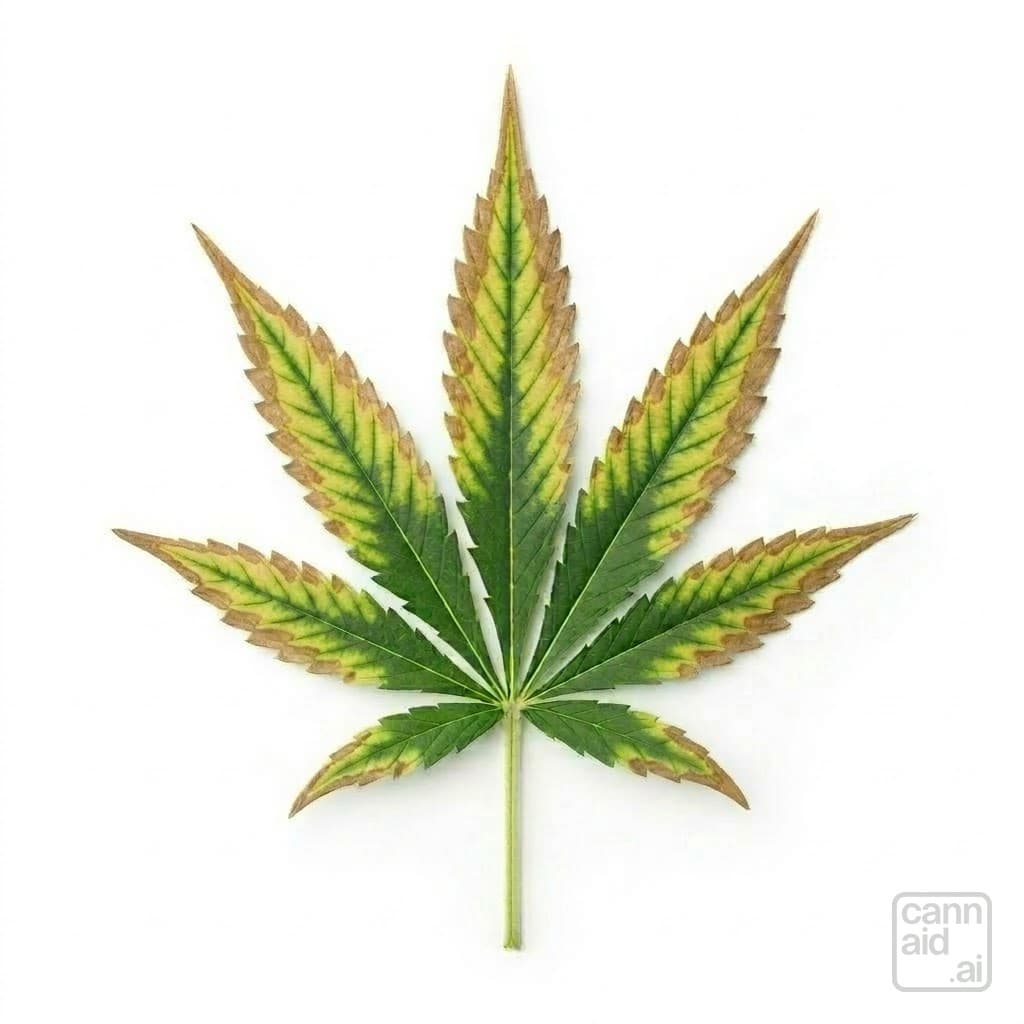
By the mid stage on the same lower leaf, the interveinal chlorosis is unmistakable. The contrast between dark-green veins and yellow inter-vein tissue is sharp — almost like someone painted the veins on. Yellow patches deepen, and the first rust-colored or reddish-brown spots start appearing in the worst-affected zones. Marginal necrosis begins at the tips and edges, and the leaf starts to curl upward slightly as the tissue dries out.
Late — past the point of recovery
By the late stage, the spaces between veins go bright yellow or even close to white — chlorophyll is essentially gone from the tissue. Reddish-brown tints and rust-colored necrotic spots cover the already-yellowed leaves. The leaves curl upward significantly and turn crispy. Edges and tips brown and die. Affected leaves drop off the plant. Severe deficiency reduces bud size and resin production, and any new growth that emerges may come in spindly and weak.
Commonly Confused With
Iron (Fe)
Both cause interveinal chlorosis. Magnesium affects lower leaves (mobile nutrient). Iron affects upper/new leaves (immobile nutrient). Check where symptoms start — bottom means magnesium, top means iron.
Both affect lower leaves. Nitrogen yellows the entire leaf uniformly including veins. Magnesium keeps veins distinctly green while tissue between them yellows. Green veins on yellow leaves = magnesium.
Both are mobile nutrients affecting lower leaves. Magnesium yellowing radiates from center outward between veins. Potassium damage starts at the edges and works inward toward the midrib.