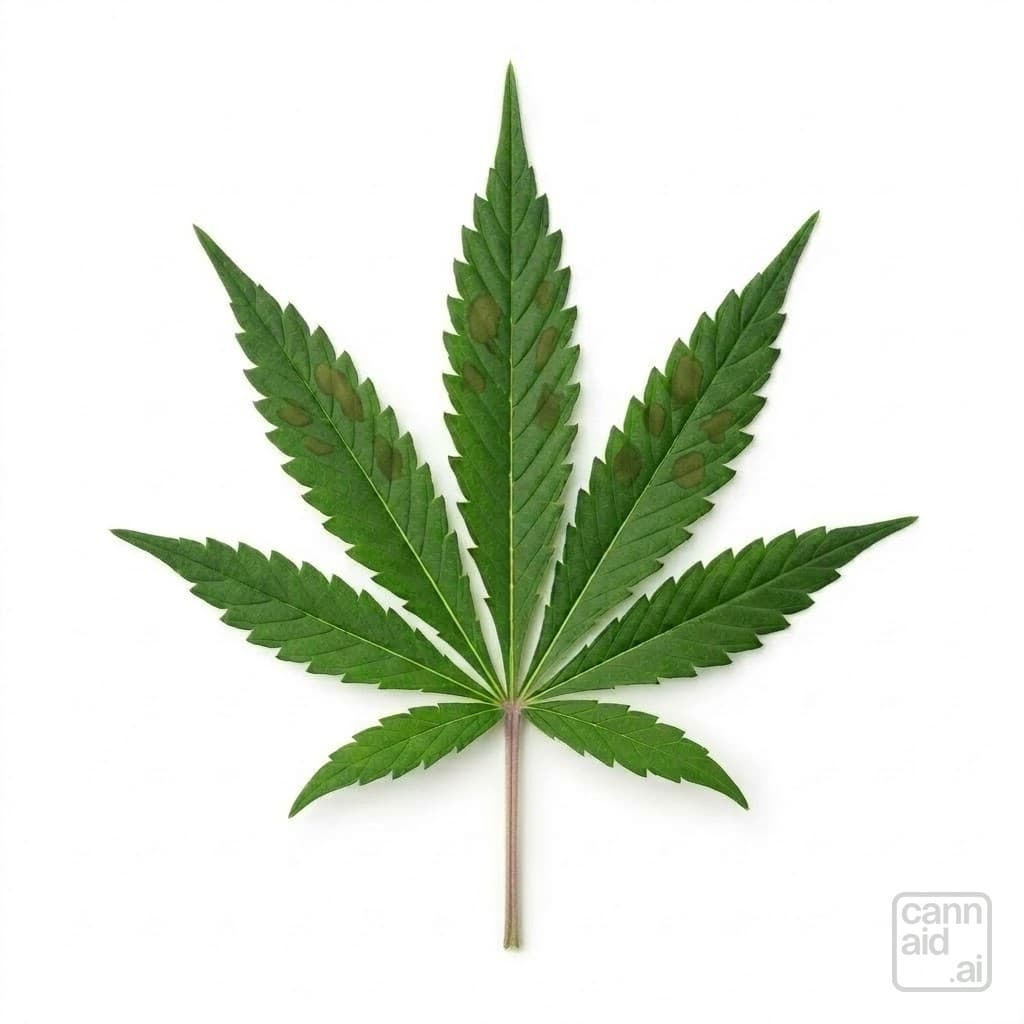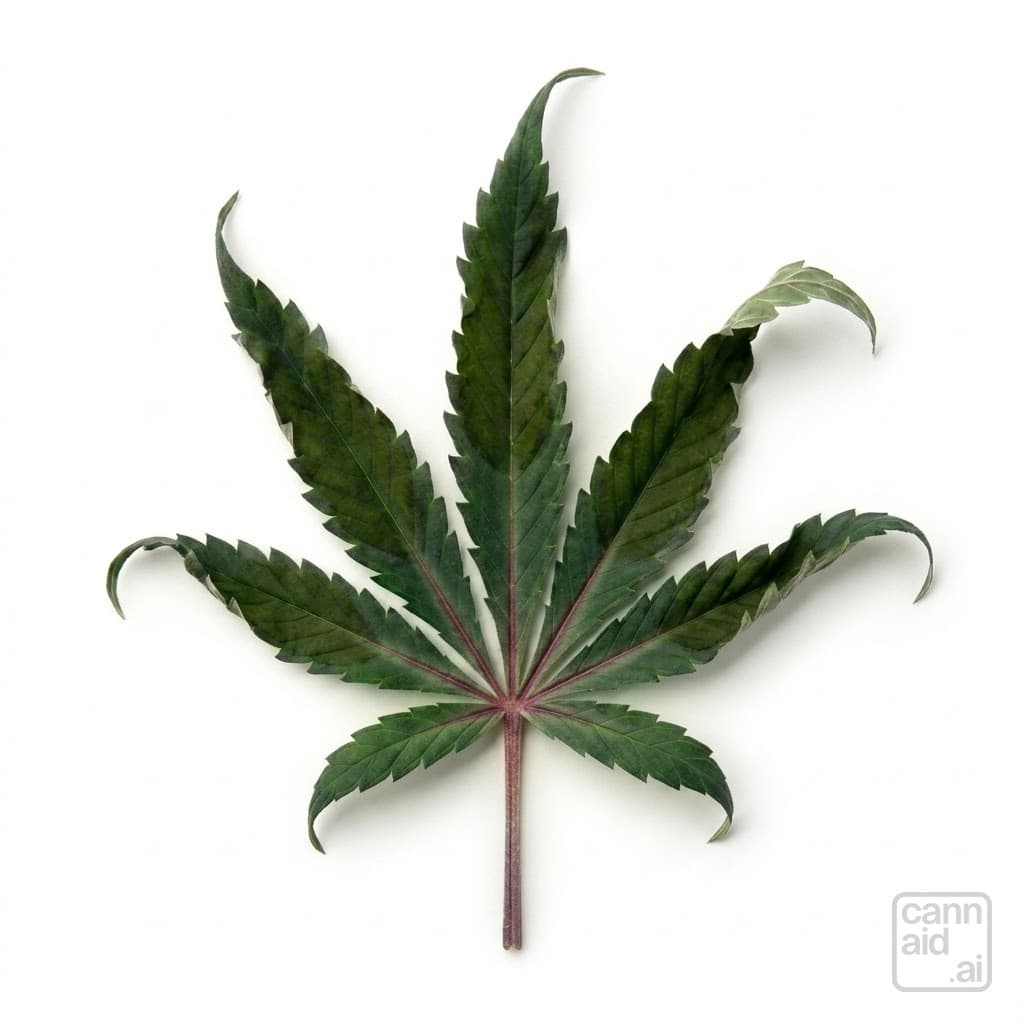
How it moves through the plant
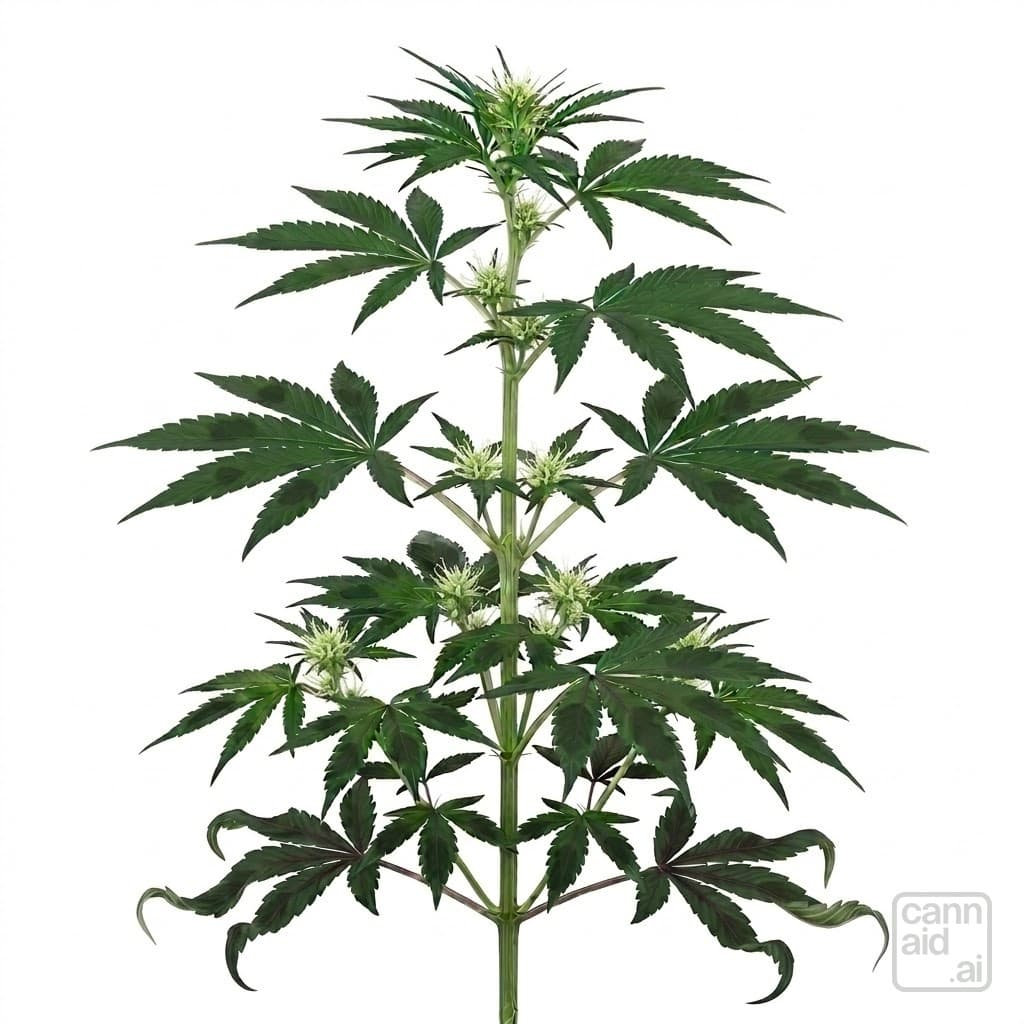
Phosphorus is a nutrient, same as nitrogen — the plant can shuffle P around as needed. When she runs short, she raids the lowest, oldest leaves and ships the salvaged P up to new growth and developing buds. That's why P deficiency always walks bottom-up. Unlike nitrogen, though, the visual signature isn't yellowing — P-starved tissue gets darker, taking on a deep green, blue-green, bronze, or purple cast as anthocyanin pigments build up in the struggling cells.
Early. Only the bottom one or two are affected, taking on a darkened cast — deep green, blue-green, or grayish — while everything above stays vibrant. The on those lower leaves visibly redden. From across the room the plant looks healthy; up close, you can see the discoloration starting at the bottom corner.
Mid. The discoloration climbs into the lower third of the . From a few feet away, those bottom leaves now read as bronze or metallic rather than green, and the contrast against the still-healthy upper canopy is sharp. Stems redden noticeably along the lower portion of the main stalk, and brown necrotic patches start dotting the worst leaves — scattered randomly across the blades, with no edge-inward direction.
Late. The bottom third of the plant looks blackish-purple or covered in dark blotches. Some leaves have already fallen off; others have twisted, dried, and are hanging on by a thread. Mid-canopy leaves are darkening now too. The plant looks visibly struggling — stems thin and weak, growth rate dragging. If this hits in flower, bud size at the bottom of colas is conspicuously smaller than the top, and total yield takes a noticeable hit.