Camphene
Camphene is the damp one — wet fir needles and camphor. Pinene is dry and resinous, the smell of a cut branch rather than the forest floor.
View terpene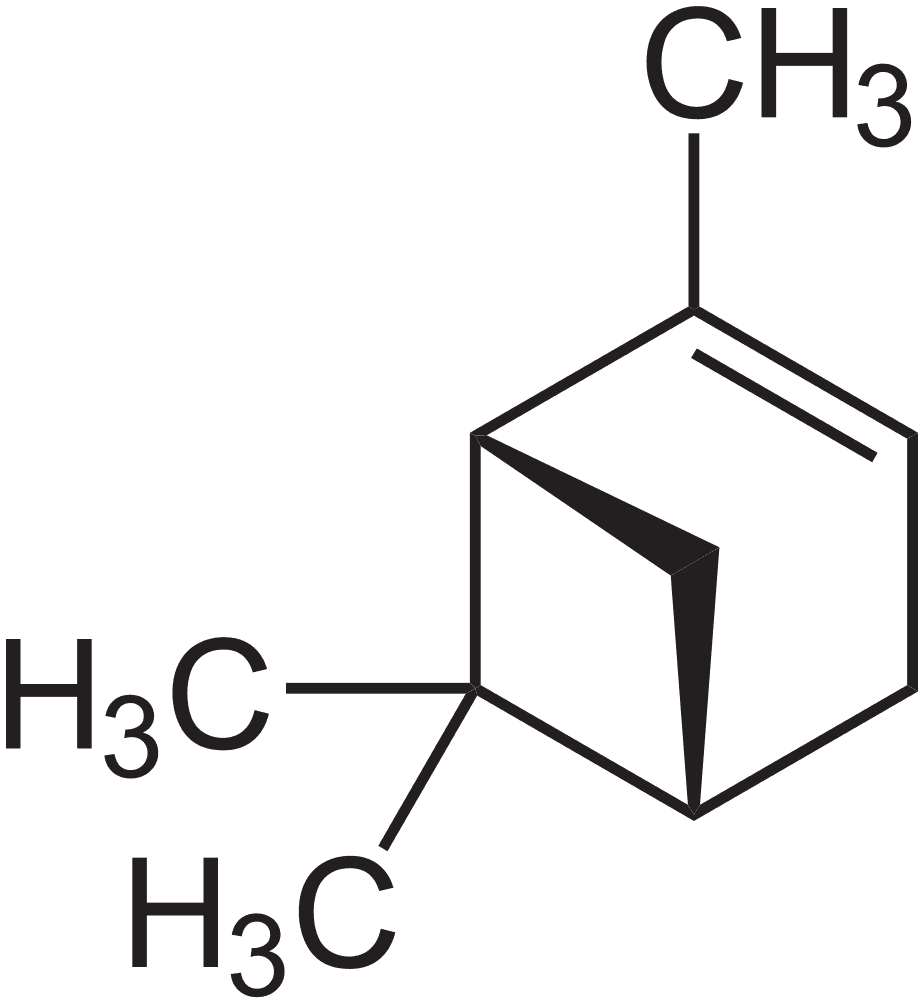
Walk into a pine forest and the first thing that hits you is pinene. It's the most common terpene in the natural world — not just conifers but rosemary, basil, dill, parsley. In a jar it reads sharp and green, the smell of something just cut.
Pinene is the clear-headed one. Where myrcene pulls toward the couch, pinene keeps things bright, and it's the terpene most often credited with taking the edge off the foggy, forgetful side of a high. Rosemary has been the folk shorthand for alertness for centuries, and pinene is what's doing the work.
It's also among the first to go. At 155°C / 311°F pinene is lighter than most of what it shares a jar with, and a warm dry strips that sharp green top note first, leaving the heavier earth underneath. If a strain has ever smelled brilliant at chop and flat two weeks later, pinene is usually the difference.
Middling. It survives a careful dry and quietly disappears from a hot one.
Camphene is the damp one — wet fir needles and camphor. Pinene is dry and resinous, the smell of a cut branch rather than the forest floor.
View terpeneTerpinolene has pine in it, but there is a floral note sitting on top. Pinene is straight conifer, no flowers.
View terpeneBoth read clean, but eucalyptol is cold and minty in the sinuses. Pinene is resinous and dry.
View terpene