Boron is a micronutrient essential for cell wall formation, sugar transport, and reproductive development. It helps move sugars from leaves to actively growing regions and developing buds. Boron works closely with calcium in building cell walls — the two are partners — and is critical for pollen development and seed formation. It also plays roles in hormone regulation and membrane function. Small player, important job.
B deficiency is uncommon, but when it does strike there's usually a specific trigger: humidity drops below 25%, chronic underwatering, or sandy soils leaching B out quickly. Here's the mechanism you have to understand: boron travels exclusively in the transpiration stream, so if water movement slows, B delivery stops — even when the nutrient is sitting in the medium. High above 7.0 in soil (6.5 in coco, 6.1 in hydro) also locks B out, and excessive flushing can leach what's available. Because boron is immobile, deficiency always shows in the newest growth first. The key differentiator from calcium (which also affects new growth and can cause hollow stems): with boron, the entire leaf curls downward and stems go soft and mushy; with calcium, only the leaf margins curl and stems turn brittle. Be cautious with supplementation — boron toxicity kicks in at levels only slightly above optimal, so the margin for error is razor-thin.
Solutions
✓Add borax or boric acid very sparingly — 1/4 tsp per gallon max, never more
✓Raise humidity if below 25% and ensure consistent watering — boron only moves in the transpiration stream, so low humidity and dry soil cut off delivery entirely
✓Check pH — boron locks out above 7.0 in soil, 6.5 in coco, 6.1 in hydro
✓Verify the deficiency before treating — boron toxicity is extremely easy to trigger and the window between deficiency and toxicity is narrow
✓Most complete cannabis fertilizers already contain adequate boron — check your label before adding extra
Plant Overview
How it moves through the plant
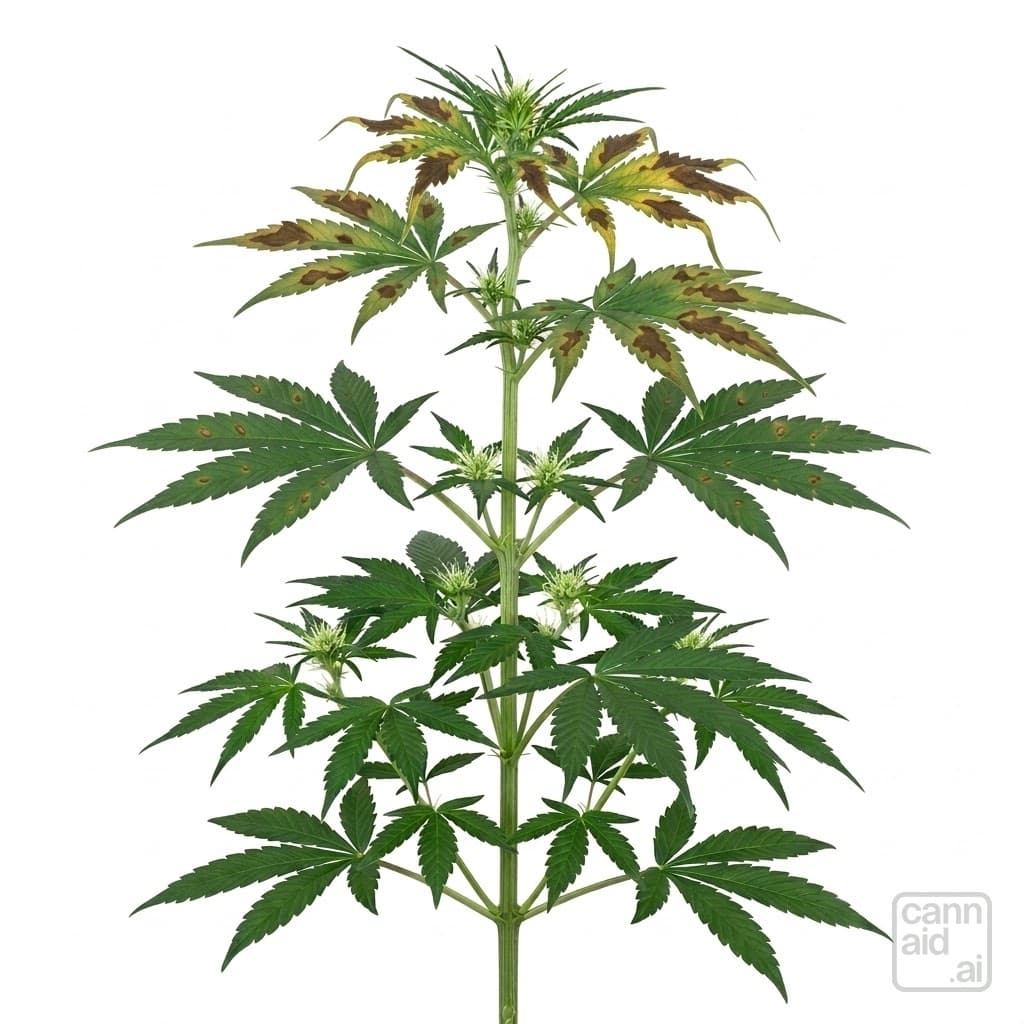
Boron is immobile and travels only in the transpiration stream, so deficiency hits new upper growth first and is amplified by anything that slows water movement through the plant (low humidity, cold roots, poor airflow). The signature visual is structural deformity at the growing tips: thickened or rubbery shoots, distorted new leaves with whole blades curling downward, and eventually soft, hollow stems. The downward curl (entire leaf, not just margins) plus soft stems is the diagnostic distinction from calcium, which causes margin-only curl and brittle stems.
Early. Only the top growing tip and the newest one or two leaves are affected. The new growth feels rubbery or thickened compared to healthy shoots — run your fingers across new leaves and you can feel the difference. The growing tip itself looks slightly distorted or off-center. The rest of the plant still looks fine. Root growth has slowed.
Mid. Multiple new shoots and now come in thickened and distorted. The growing tips look visibly twisted from a few feet away — the upper plant looks knotty compared to the still-normal lower . Whole new leaves curl downward (not just at the margins, which would be Ca). Stems near the apex feel slightly soft when pinched — the early sign of the hollowing that defines the late stage.
Late. Growing points have died — the apex is no longer producing usable new growth. The plant has bushed out instead, with secondary shoots emerging because the main tips can no longer maintain apical dominance. Stems near the apex are hollow or rough to the touch and feel soft rather than brittle (the key distinction from Ca). If the plant was in flower, buds may have failed to develop or come out severely malformed. Root tips are swollen, discolored, and fragile.
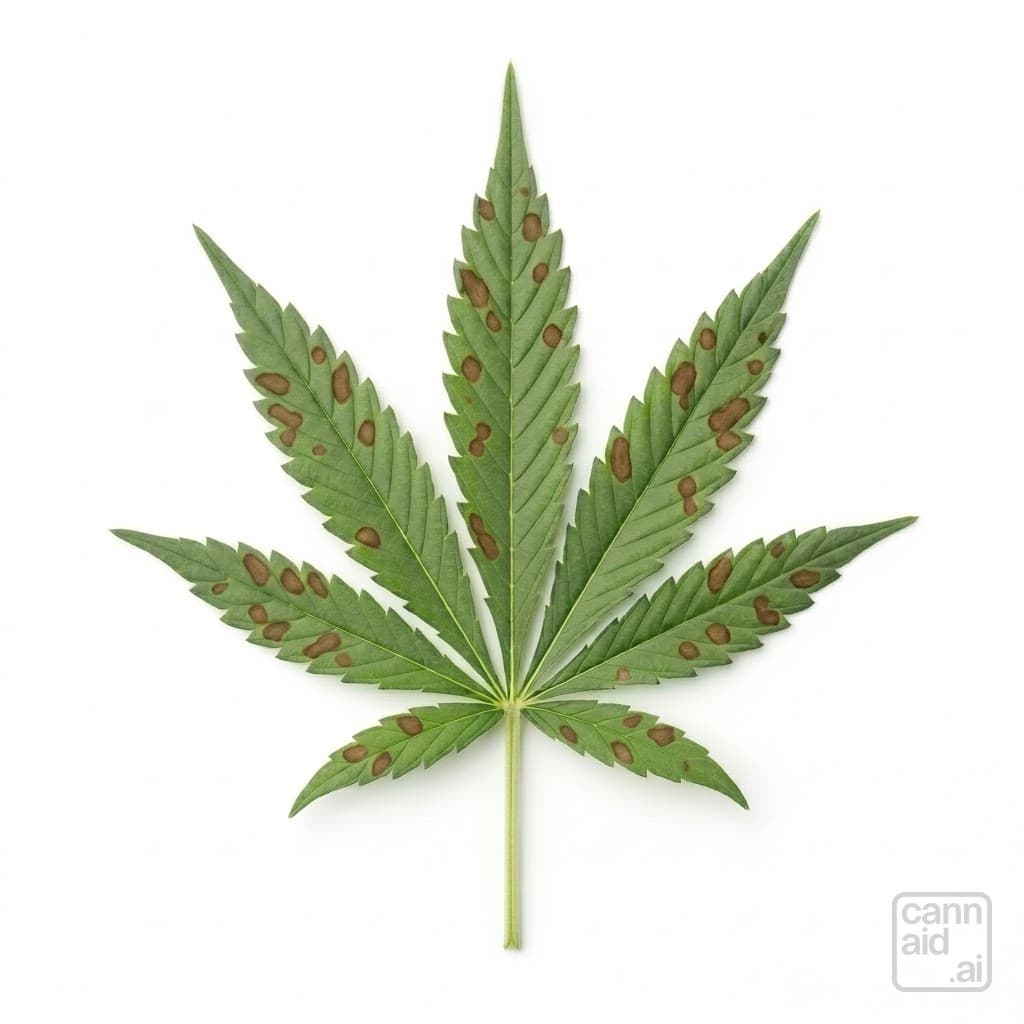
Early — how it first appears on a leaf
Pick up a new upper leaf in the early stage and you'll notice the texture before the color — the leaf feels thickened or rubbery. Run it between your fingers and it's not the same texture as a healthy leaf. The leaf may be slightly distorted or off-center, crinkled or misshapen. The newest leaves may show slight yellowing or lightening before any brown spots appear. Small brown spots can develop on the youngest leaves over the next few days.
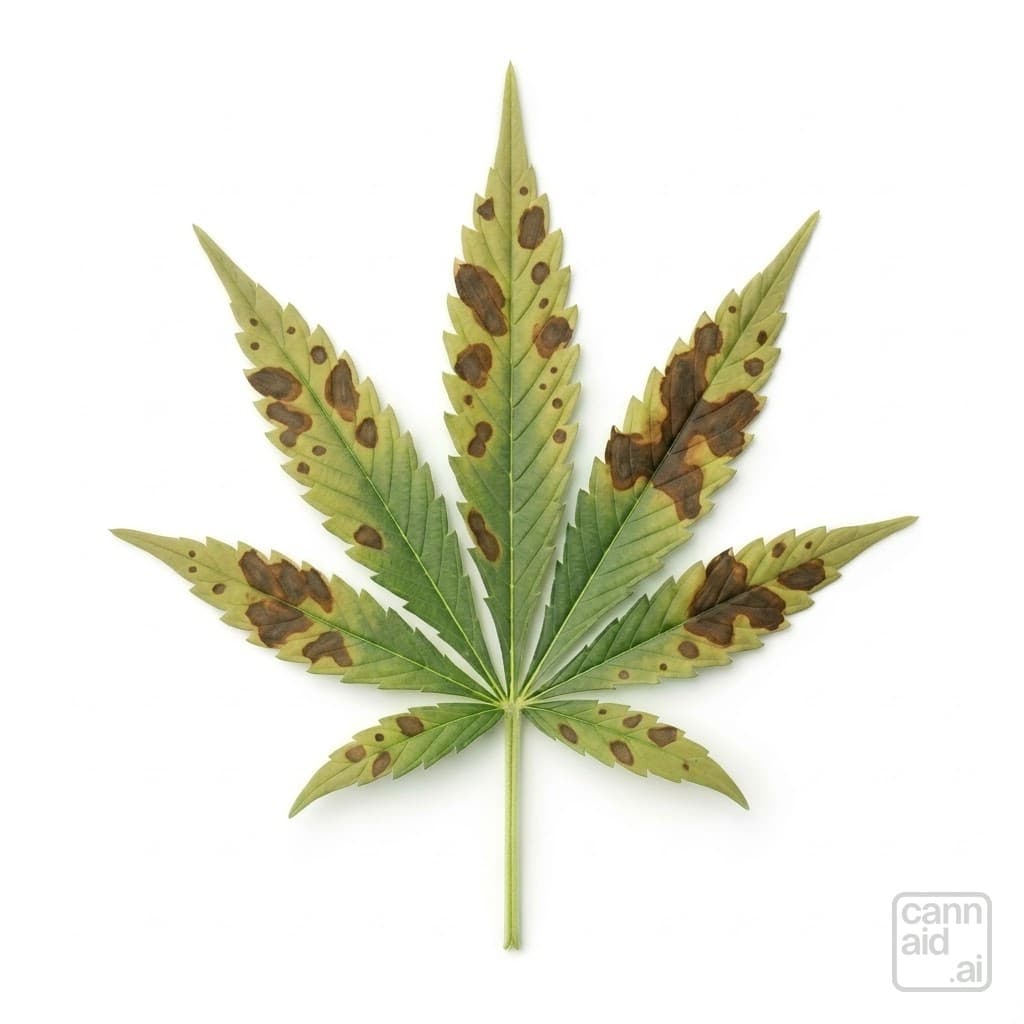
Mid — when downward curl appears
By the mid stage on the same new leaf, the rubbery thickening is pronounced — the leaf feels markedly different from a healthy one. Brown spots have enlarged and necrotic patches start forming around the edges of the worst-affected leaves. The leaf curls downward — entire leaf, not just the margins (the diagnostic distinction from calcium). The growing tip leading into the leaf looks visibly distorted, with new leaves crinkling and twisting more severely.
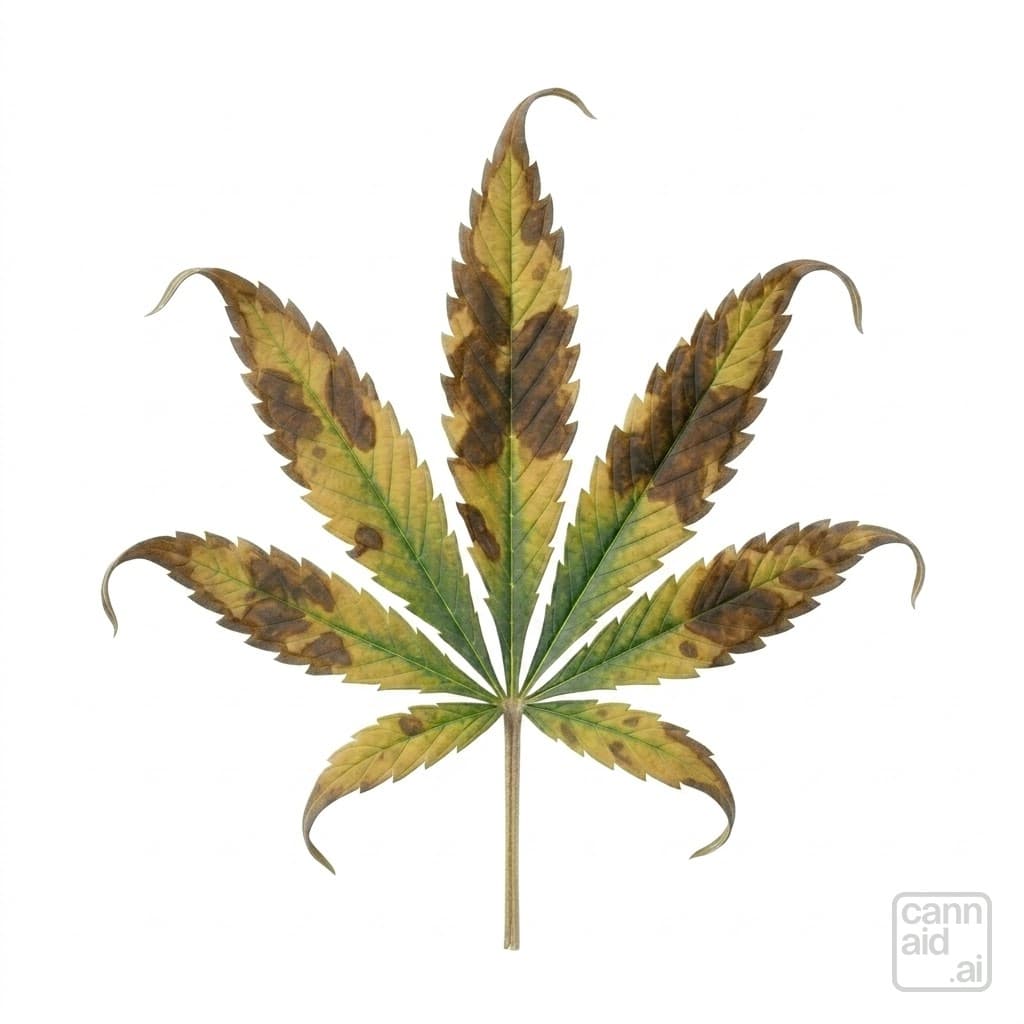
Late — past the point of recovery
By the late stage, the leaf is severely twisted, thick, and abnormal — swollen-looking. Large brown necrotic patches cover the . The whole leaf curls downward. The connecting it to the plant is hollow or rough and feels soft, not brittle (this distinguishes B from Ca). The growing point above the leaf may be dead. Root tips swell and discolor in tandem.
Commonly Confused With
Calcium (Ca)
Both affect new growth and can cause hollow stems. Boron produces soft, mushy stems with tips dying back entirely. Calcium produces brittle stems with rust-edged spots. Stem texture is the key: soft = boron, brittle = calcium.
Both cause twisted new growth. Boron produces thick corky stems with growing tips dying entirely. Zinc produces small narrow leaves with shortened internodes but tips stay alive.
Both can distort upper growth. Heat stress causes upward curling that resolves when temperatures drop. Boron causes permanent thick, brittle distortion that doesn't recover.