Twisted, stunted new leaves with interveinal chlorosis
Zinc is a micronutrient that punches above its weight. It's a cofactor in more than 300 enzymes and is critical for production — the plant hormone that drives stem elongation and leaf expansion. Without adequate Zn, protein synthesis, carbohydrate metabolism, and formation all suffer. Zinc also supports seed development and helps the plant handle cold stress. Tiny amounts, big downstream effects.
Zn deficiency is triggered by soil above 7.5 (7.0 in coco, 6.6 in hydro), which locks Zn out hard, and by excess phosphorus, which antagonizes zinc at the root. Plants getting a heavy P-K boost during flowering are especially prone to Zn if Zn isn't supplemented alongside. Because zinc is immobile, deficiency always shows on new upper growth first. The key differentiator from iron and manganese (which also cause interveinal chlorosis on new growth) is structural deformity: zinc is the only one of the three that warps the leaf shape itself. New leaves come in small, wrinkled, twisted, and bunched together at the top of the plant — the classic "little leaf" and "rosetting" patterns.
Solutions
✓Add zinc sulfate or chelated zinc (Zn-EDTA) to your feeding schedule
✓Lower pH to 6.3–6.8 in soil, 5.8–6.0 in coco or 5.5–6.0 in hydro — zinc locks out hard above 7.5 in soil, 7.0 in coco, 6.6 in hydro
✓Reduce phosphorus if you've been running high P — excess P is the most common cause of zinc lockout
✓Check for copper excess, which competes with zinc for uptake
✓Foliar spray with a dilute zinc solution for fast relief while root-zone corrections take effect
Plant Overview
How it moves through the plant
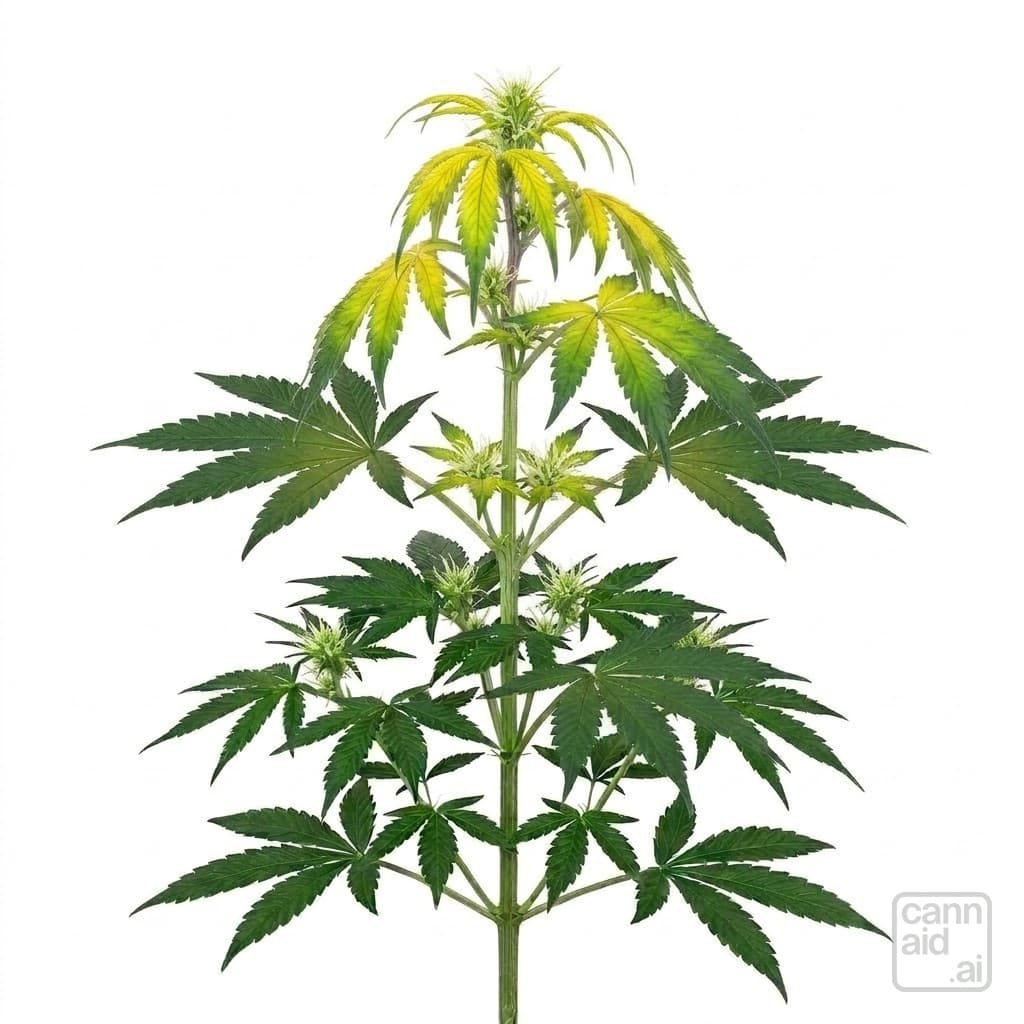
Zinc is immobile, so new upper growth is the first to suffer when supply runs short. The signature visual is structural deformity: new leaves come in markedly smaller than expected ("little leaf"), often wrinkled and twisted, with internode spacing compressed so the new growth bunches up at the top of the plant ("rosetting"). This structural distortion is what distinguishes Zn from iron and manganese, which produce similar interveinal yellowing but leave leaf shape alone.
Early. Only the top one or two new leaves are affected — and they come in noticeably smaller and more wrinkled than the previous leaf set. That's the classic "little leaf" sign. Internodes at the apex have started to shorten compared to the spacing below. The lower still looks fine. Growth at the top continues but the new growth is visibly off.
Mid. Multiple new leaves at the apex now come in undersized and wrinkled. The "little leaf" is unmistakable — from a few feet away the top of the plant looks like the leaves are shrinking with each new set. Internode compression is obvious: new growth is bunching together rather than spreading apart. Some leaves have started twisting on their . The contrast against the still-normal lower and mid canopy is sharp.
Late. The top of the plant has gone into "rosetting" — new growth is so compressed and stunted that it bunches into a tight cluster of malformed leaves at the apex. Some leaves rotate up to 90° on their petioles. The plant looks visibly stunted at the top while the lower canopy still holds on. Maturity is delayed; bud development is severely impaired with reduced flower sites and poor fill.
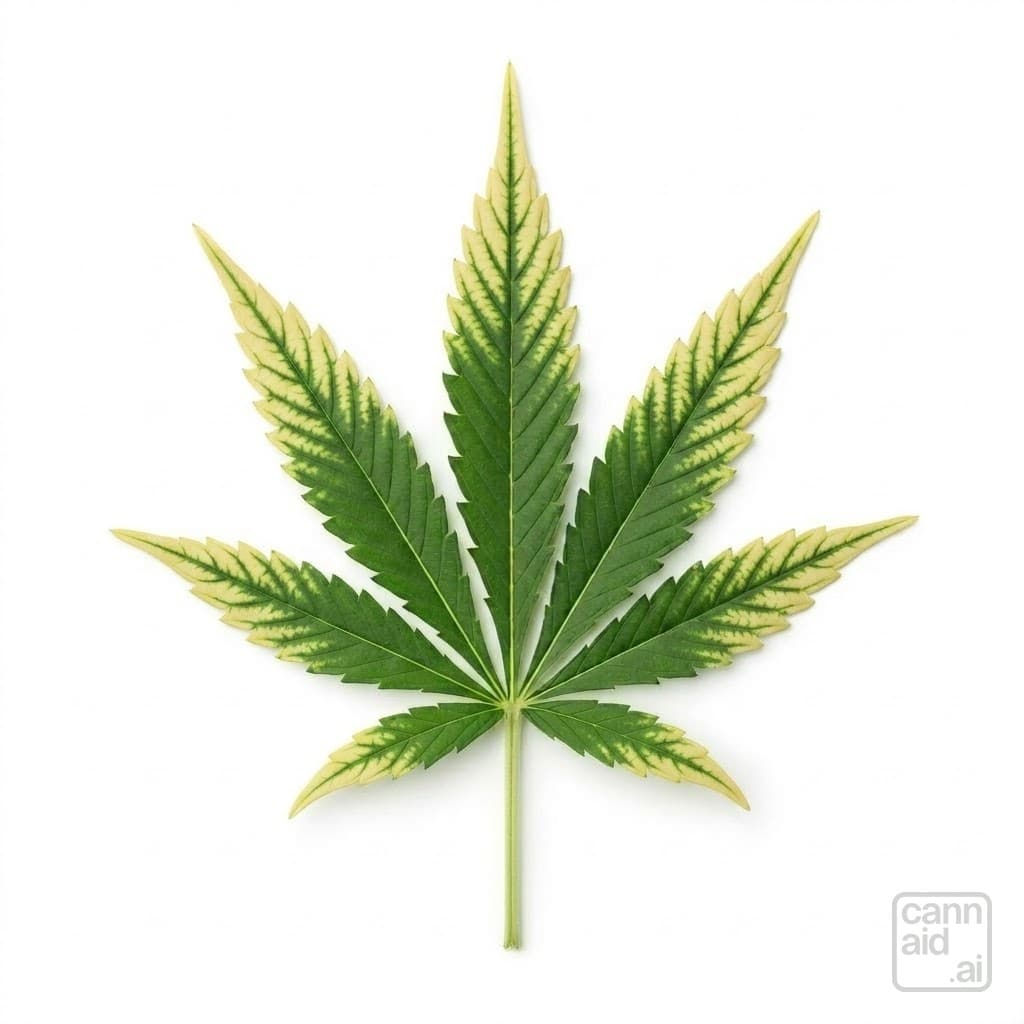
Early — how it first appears on a leaf
Pick up a new upper leaf in the early stage and the first thing you'll notice is the size — it comes in noticeably smaller than the previous leaf set. That's the "little leaf" diagnostic. The leaf looks slightly wrinkled or puckered rather than smooth and flat. Mild interveinal develops on the , with yellowing starting at the margins and tips first. The tips may twist or curl slightly. The and stem spacing leading into the leaf are noticeably shorter than to healthy leaves.
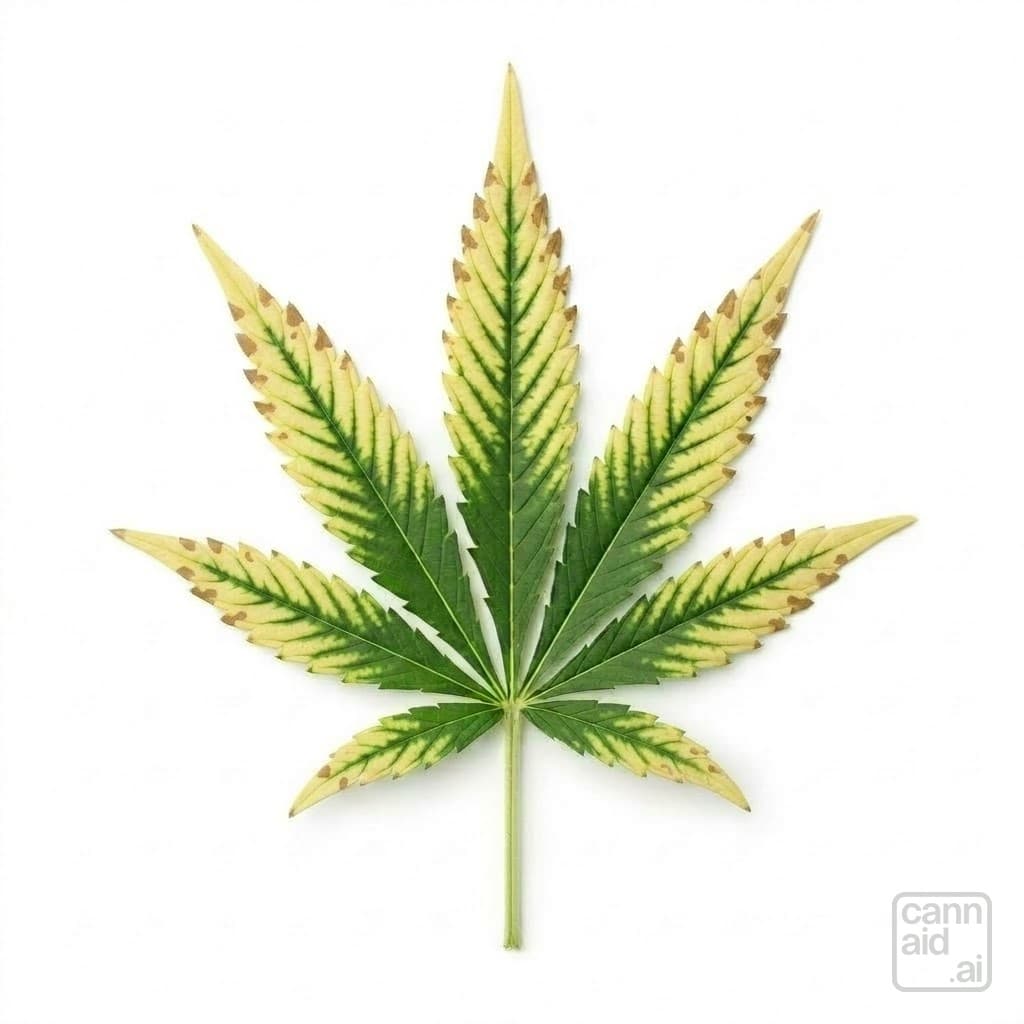
Mid — when "little leaf" is unmistakable
By the mid stage on a single new leaf, the "little leaf" is pronounced — the leaf is distinctly undersized and visibly wrinkled. Interveinal chlorosis has spread from the margins inward across the blade. The tips and margins are developing the first tan necrotic patches. The leaf may have twisted on its petiole, and the stem leading into it is compressed compared to healthy growth.
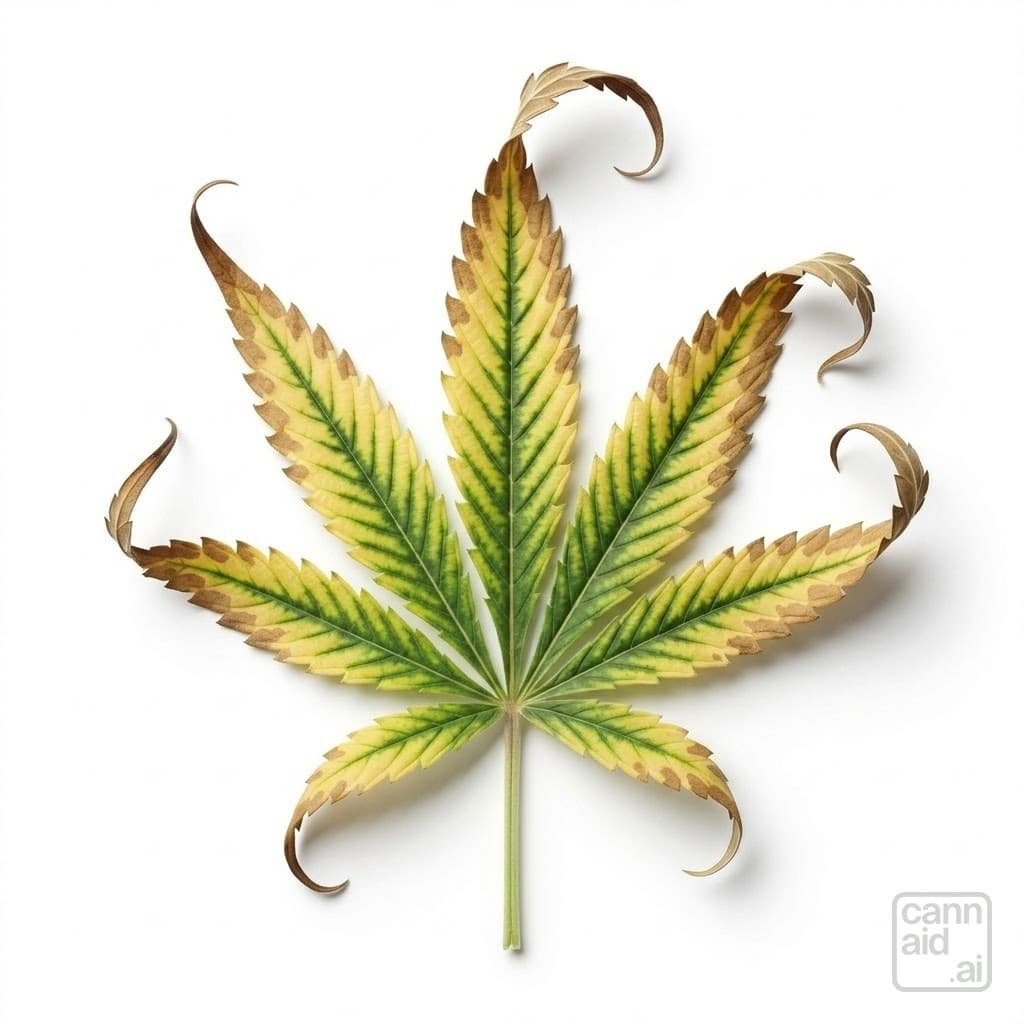
Late — past the point of recovery
By the late stage, the leaf is severely stunted, twisted, and crinkled. Interveinal chlorosis is pronounced — pale yellow tissue between green . Margins and tips show tan necrotic patches. The leaf may have rotated up to 90° on its petiole. The internode leading into this leaf is drastically shortened, so the leaf sits much closer to its neighbors than it should. Eventually the leaf yellows completely, browns, and drops.
Commonly Confused With
Broad Mites
Both cause twisted new growth. Zinc produces small, narrow leaves with interveinal chlorosis. Broad mites create a glossy wet or blistered look with white specks — no interveinal pattern.
Both are immobile with interveinal chlorosis on new growth. Zinc causes structural deformity — small twisted leaves with shortened internodes. Iron is color-only — clean interveinal yellowing to white with normal leaf size and shape.
Both affect upper growth. Zinc produces small twisted leaves with compressed internodes. Manganese produces mottled spots on normal-sized leaves. Structural deformity = zinc; spots on normal leaves = manganese.