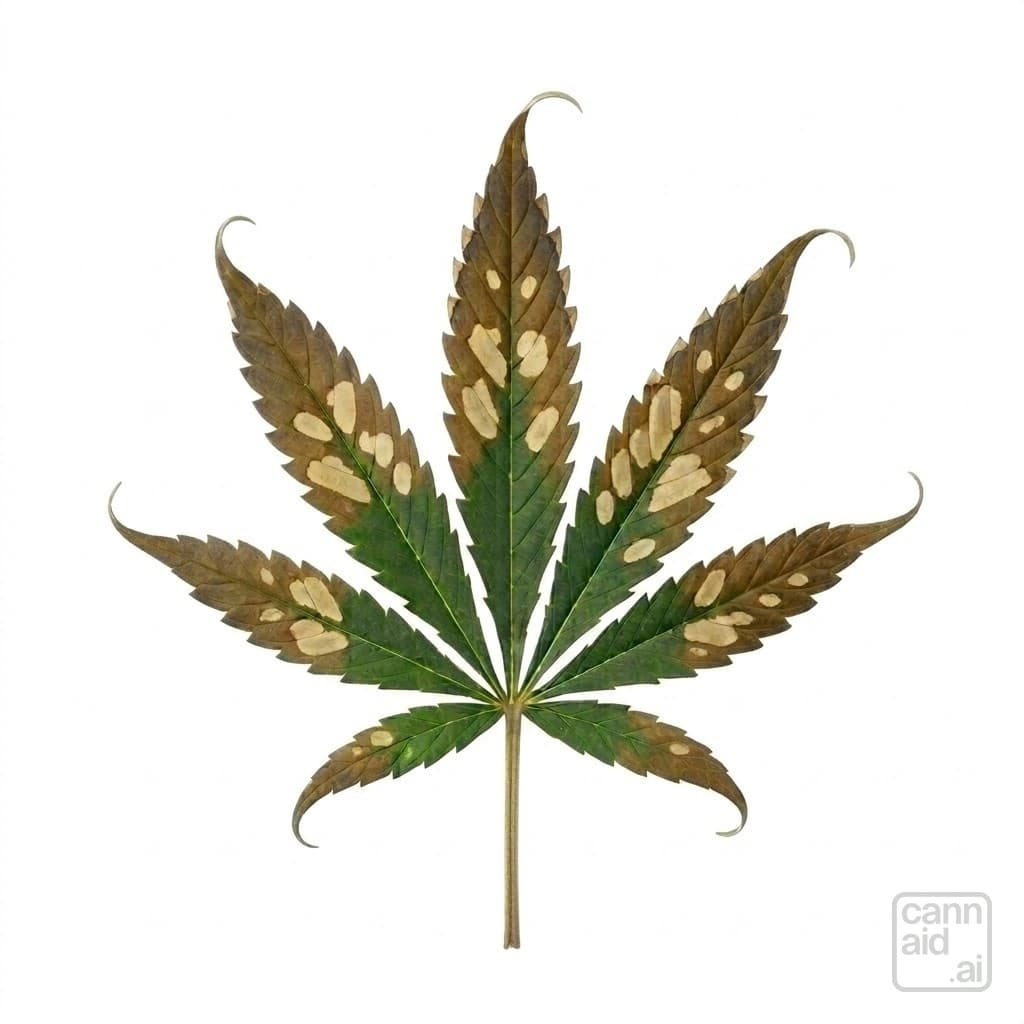
Chlorine is a trace micronutrient — the plant uses tiny amounts of it, but those tiny amounts are non-negotiable. As chloride (Cl⁻, the dissolved form), it's a cofactor in the part of where water gets split apart to release oxygen — plants are essentially tiny oxygen factories, and Cl is what keeps that machinery running. Chloride also helps the leaves' stomata open and close properly, keeps cells turgid (firm with water pressure), activates a handful of enzymes, helps move calcium, magnesium, and potassium around the plant, and even contributes to disease resistance. The kicker: plants naturally accumulate far more chloride from the environment than they actually need, which is why deficiency in cannabis is essentially unheard of.
Cl deficiency is essentially never seen in cannabis. Plants accumulate 10 to 100 times their minimum chloride requirement from tap water alone — never mind atmospheric deposition, soil reserves, and fertilizer residues. The only theoretical scenario would be using pure reverse-osmosis or distilled water with chlorine-free nutrients in a completely sealed system, which essentially no grower does. The far more common concern is chlorine toxicity from heavily chlorinated municipal water. If you're seeing symptoms that look like the Cl pattern below, the much more likely cause is potassium or magnesium deficiency wearing a similar mask — check those first.
Solutions
✓Usually not an issue — Cl is present in tap water
✓If using RO water, mix 10–20% tap water in
✓Add potassium chloride if deficiency confirmed
✓Check water source and nutrient content
✓Virtually impossible to encounter in normal growing conditions
Plant Overview
How it moves through the plant
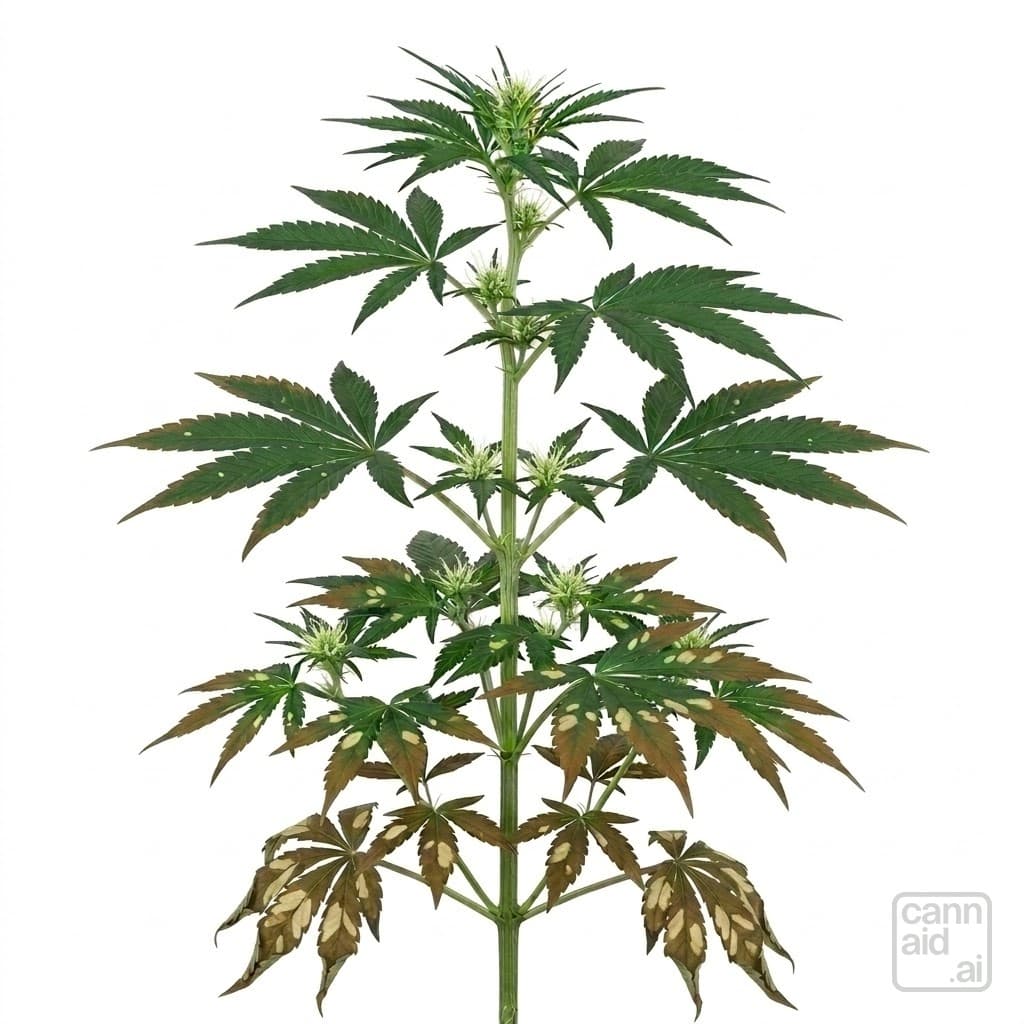
Chlorine is technically a nutrient, so deficiency would walk bottom-up if it ever actually occurred. In practice, Cl deficiency is essentially never observed in cannabis grown with tap water or normal nutrient solutions. What you'll read below comes from the limited horticultural literature rather than common grower experience — treat it as theoretical.
Early. Only the bottom leaves are affected, taking on a faint bronze or tan cast with blotchy pale spots scattered across the blades. The rest of the looks unchanged. Mild margin-wilting on the lower leaves doesn't recover when you water — a sign things aren't right in the root zone — and root growth itself has slowed noticeably. (Again: in practice this is essentially never seen — if you're seeing symptoms like these, it's almost always something else.)
Mid. The bronze cast has spread across the lower third of the canopy. Wilting persists regardless of watering — those lower leaves stay soft and tan-tinted even with a wet medium. From a few feet away the contrast between the bronzed lower foliage and the still-normal upper canopy is visible. Root development continues to lag, and the plant overall looks stunted.
Late. Pronounced bronze coloring spreads to more of the plant, with the worst lower leaves curled, shriveled, and showing sharp boundaries between healthy and dead tissue. Severe wilt persists regardless of how she's watered. Growth is visibly stunted. Roots, if inspected, show stubby club-shaped tips, and the plant becomes more susceptible to fungal disease at this point. (Once more: in practice this progression is essentially never observed in cannabis — see the hero text above for what to actually check first.)
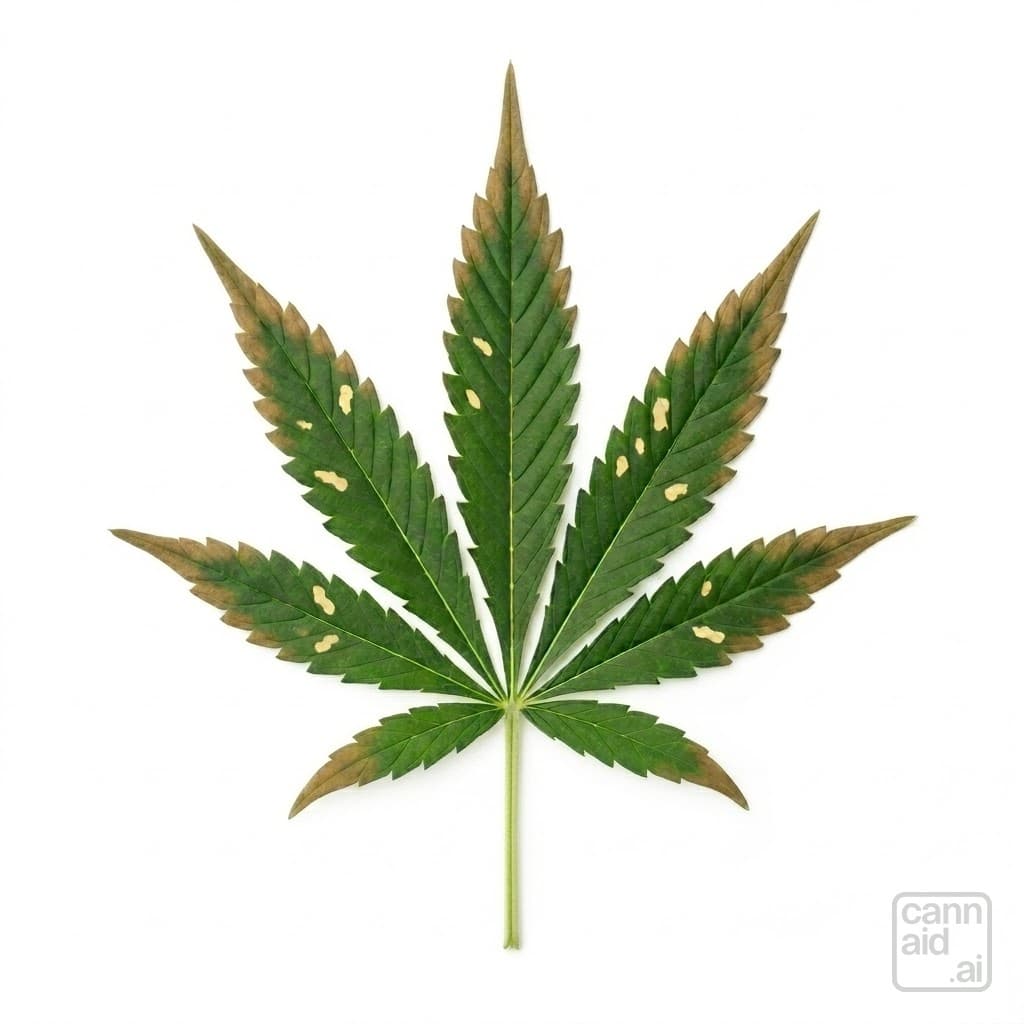
Early — how it first appears on a leaf
Pick up a single lower leaf in the early stage and the visual is a slight bronze or tan coloring, often with blotchy or patchy pale spots scattered across the . Mild wilting starts at the leaf margins and notably does not recover when you water — that's the detail that distinguishes it from underwatering. The leaf looks dull or faded. Root growth slows even though everything else looks normal.
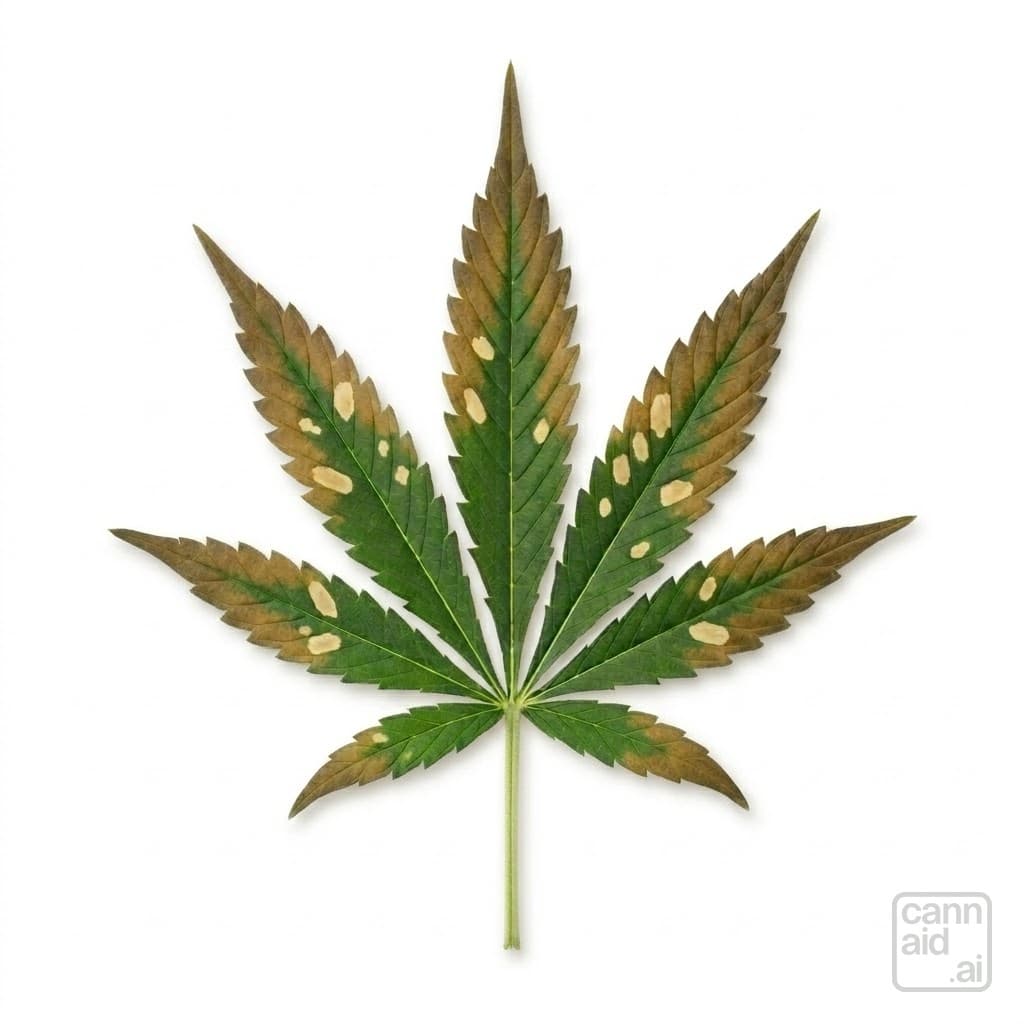
Mid — when the bronze pattern spreads
By the mid stage on the same lower leaf, the bronze coloring has spread inward from the margins across more of the blade. Wilting persists regardless of how well the plant is watered, and the leaf stays soft and tan-tinted to the touch. The blotchy chlorotic patches grow larger and develop sharper boundaries between healthy and unhealthy tissue. Leaf curling and shriveling begin on the worst-affected leaves.
Late — past the point of recovery
By the late stage, bronze coloring is pronounced across the leaf. Wilting persists no matter how the plant is watered. The chlorotic patches have sharp boundaries between healthy and dead tissue. The leaf curls and shrivels, with necrotic edges. Roots show stubby, club-shaped tips. The plant becomes more susceptible to fungal disease and overall growth is stunted.
Commonly Confused With
Potassium (K)
Both cause margin yellowing and browning on lower leaves. Chlorine deficiency is extremely rare — if you're using tap water, it's almost certainly not chlorine. Check potassium first.
Both can cause lower leaf interveinal yellowing. Chlorine deficiency is exceedingly rare in any normal growing setup. Magnesium deficiency is far more likely — try Epsom salts first.