
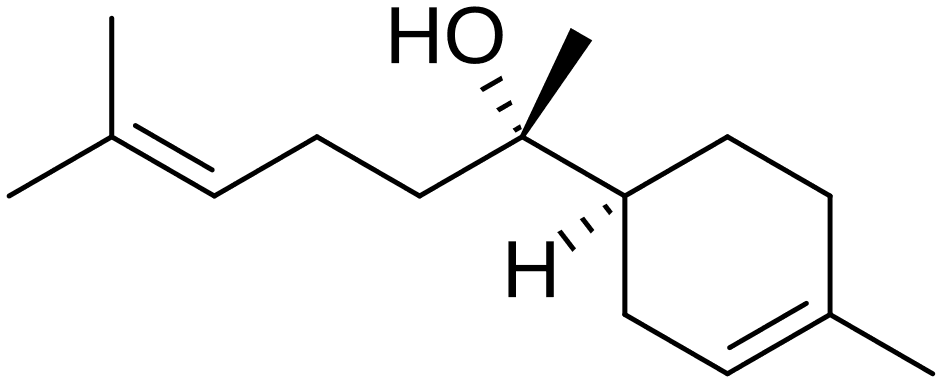
Linalool
Chamomile against lavender. Bisabolol is the quieter, powdery one; linalool is unmistakably lavender.
View terpeneBisabolol is chamomile — the tea, and the smell of it steeping. It comes from only two notable sources, chamomile and the Brazilian candeia tree, which makes it the most narrowly sourced terpene we list. In cannabis it's soft, sweet and faintly floral, and easy to miss under louder company.
It's a gentle one. Outside cannabis, bisabolol is best known as a skincare ingredient valued for being soothing and unreactive, and its reputation inside cannabis runs along the same line — calm without weight. It rarely leads a profile; it rounds one off.
At 153°C / 307°F it sits mid-range, but bisabolol's real fragility is that it's quiet. It doesn't leave faster than the rest — it's that once the louder terpenes go, there's too little left to notice. A careful dry doesn't just preserve bisabolol; it's the only way you'll ever know it was in there.
Middling. It survives a careful dry and quietly disappears from a hot one.
Chamomile against lavender. Bisabolol is the quieter, powdery one; linalool is unmistakably lavender.
View terpeneGeraniol is sweet like rose. Bisabolol is sweet like tea — lighter, drier, far less perfume.
View terpeneBoth soft and calming, but nerolidol carries wood under its flowers. Bisabolol stays light and dry, closer to chamomile tea.
View terpene