Hermies: When She Turns Upon Herself
Why a female makes her own pollen, the two shapes it takes, and what to do before a single sac opens.
What you'll learn
- Why a female makes her own pollen: the insurance in the genes, and every way the season can seem to fail.
- The two shapes she turns in, born to it and driven to it, and when in the cycle each one shows.
- The pollen sac, the nanner, and the two false alarms: a swollen calyx and a foxtail.
- When to cull, pluck or harvest early, and how to keep the next grow dark, cool and on time.
Cannabis is an annual that the wind pollinates, and its sexes grow on separate plants. Everything a female does in flower, she does for one reason: seed. The white hairs rising from every are receivers, held out to catch pollen on the wind. The resin poured over them is armour against sun and insects. The buds a grower prizes are, to the plant, a season of waiting. In a tent, every male is pulled at the first sign of him, so the pollen never comes. The female waits anyway, the sativa longer and the indica less, still building flowers for a visitor who is not coming.
But the plant carries an insurance policy older than any grower, written into the genes. Sometimes she comes to believe the season is failing. The dark is broken by light, or the heat is wrong, or the roots are in trouble. Or the flowers ripen past their time with no pollen in sight. Then the waiting is over. She turns upon herself, makes the pollen and seeds the harvest, so that something, at least, lives on. That is all a is. It is not a malfunction but a last resort. And it comes in two shapes: the one in the blood, and the one stress brings on.
The stakes are the whole harvest. One open sac can seed a tent in an afternoon. A seeded bud is smaller and harsher, and full of seeds that carry the habit forward. Caught early, the same story ends with a pair of tweezers, a mist of water and a zip that lets in no light. The craft is in the reading: which shape the plant has taken, and how far along it is. That matters because the shape decides everything you do next.
When she turns
Set the two lines side by side, and the first question answers itself: when did you find her? A plant born to it shows early. The sacs are there at pre-flower, beside the first white hairs, and they stay. A plant driven to it turns late, after weeks of good behaviour. Something in the room told her the season was failing. So the later you find a nanner, a bare yellow anther, the more likely the cause was you or the calendar, and not the genes.
Born to it, driven to it: when each shows
Two ways she turns
Take the two apart, and they are almost different problems wearing one name. The first is a fault in the plant's line. She was always going to do this, and the only question was how soon. The second is a fault in the room, or in the calendar. This plant would never have turned, but she was told once too often that the season was ending. The first you cull. The second you catch, and then you change the room.
Born to it — the true hermaphrodite
Some plants were always going to turn. Cannabis has carried both sexes in one body since long before anyone bred it. Every so often the trait surfaces whole. A female grows real male flowers beside her own, from the first week of pre-flower. It runs in lines. Bag seed from an unknown cross carries it often. An unstable breeder's release carries it too. And , for all its convenience, was born of the same instinct. A feminized line is made by forcing one female to make pollen and dusting another female with it; dusting the same plant gives selfed seed. So the habit is never far away. A careful breeder spends generations selecting it out, where a careless one simply sells it. Buy from a house with a reputation to lose.
This plant declares herself early, which is the one mercy in it. Look at the at , where the first white hairs appear. Beside them you will find what does not belong. First comes a smooth green ball on a short stalk, then a cluster of them. It is the grape-bunch the anatomy article shows on the male. The plant in the photo below shows it. The white-haired buds are all still there. The small green bunches low on the stem are male flowers, grown beside them, not in their place. On a true hermaphrodite they sit at the same nodes as the female , sometimes on one branch and sometimes everywhere. They are proper sacs. They swell and they hang, and when they are ripe they split and let the pollen fly.
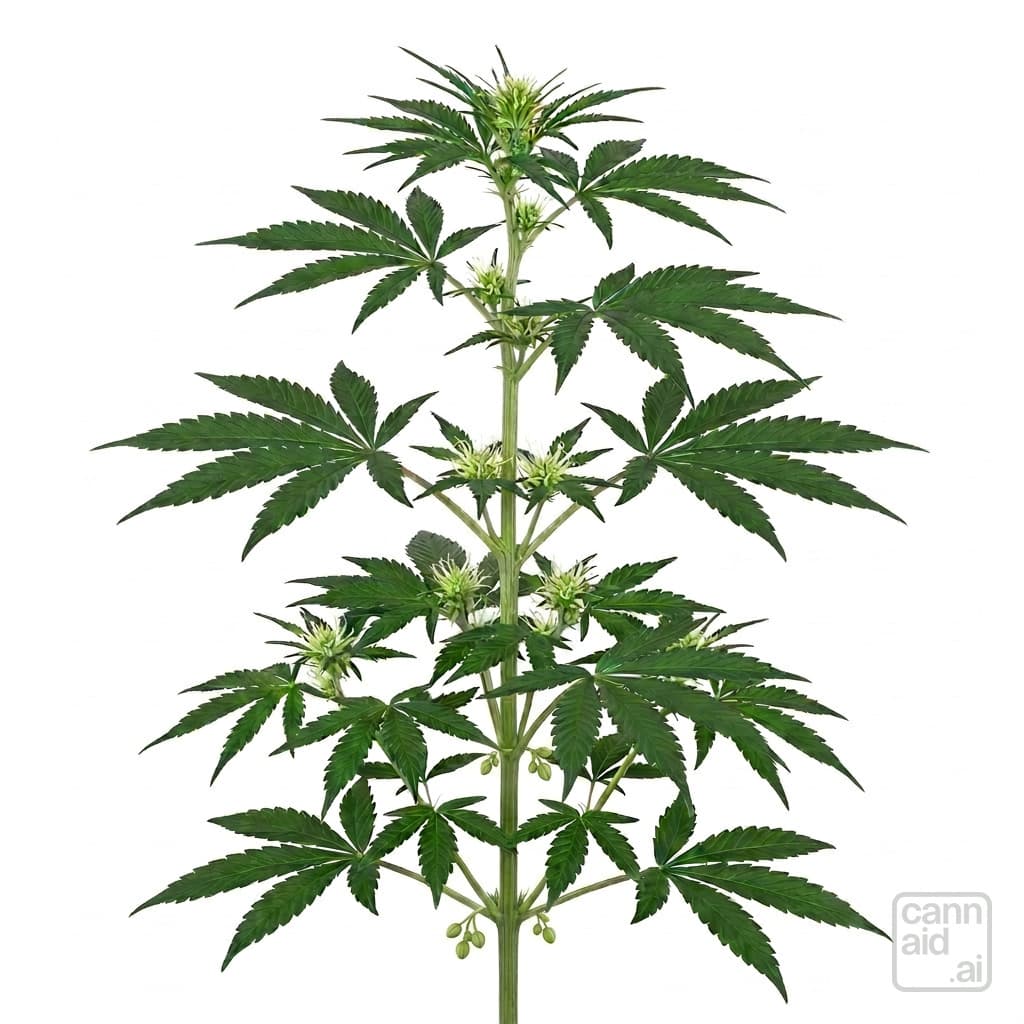
The verdict is the hard one, and it is the only one. A plant born to it does not stop. Pluck a cluster and another grows, because the instruction is in her, not in the room. One open sac can seed the tent in an afternoon, and every seed it makes carries the trait forward. Pull the whole plant the day you are sure. Then, for a week, check the neighbours' nodes and mist their buds. Anything the pollen reached will show swelling calyxes within a fortnight. It is a loss. It is a smaller loss than the harvest.
Driven to it — the stressed female
The other shape is the one you can prevent, because you cause it. A plant that was never going to turn can be told, often enough, that the season is failing. And she will believe it. The oldest messenger is light. It might be a leak in the tent, or a timer that slipped. It might be a door opened for a quick peek during the dark hours, or the glowing light on a fan or a controller. Twelve hours of unbroken dark is what she flowers by, and keeps that count. Anything that breaks the dark reads as days lengthening again, a season gone wrong. Heat says the same thing. So do roots in trouble, in a pot kept soaked or a reservoir gone warm. And so does time itself. A plant left past ripeness, the hairs long since rusted, will throw pollen at the end as a last try. Old growers used exactly that to make seed on purpose.
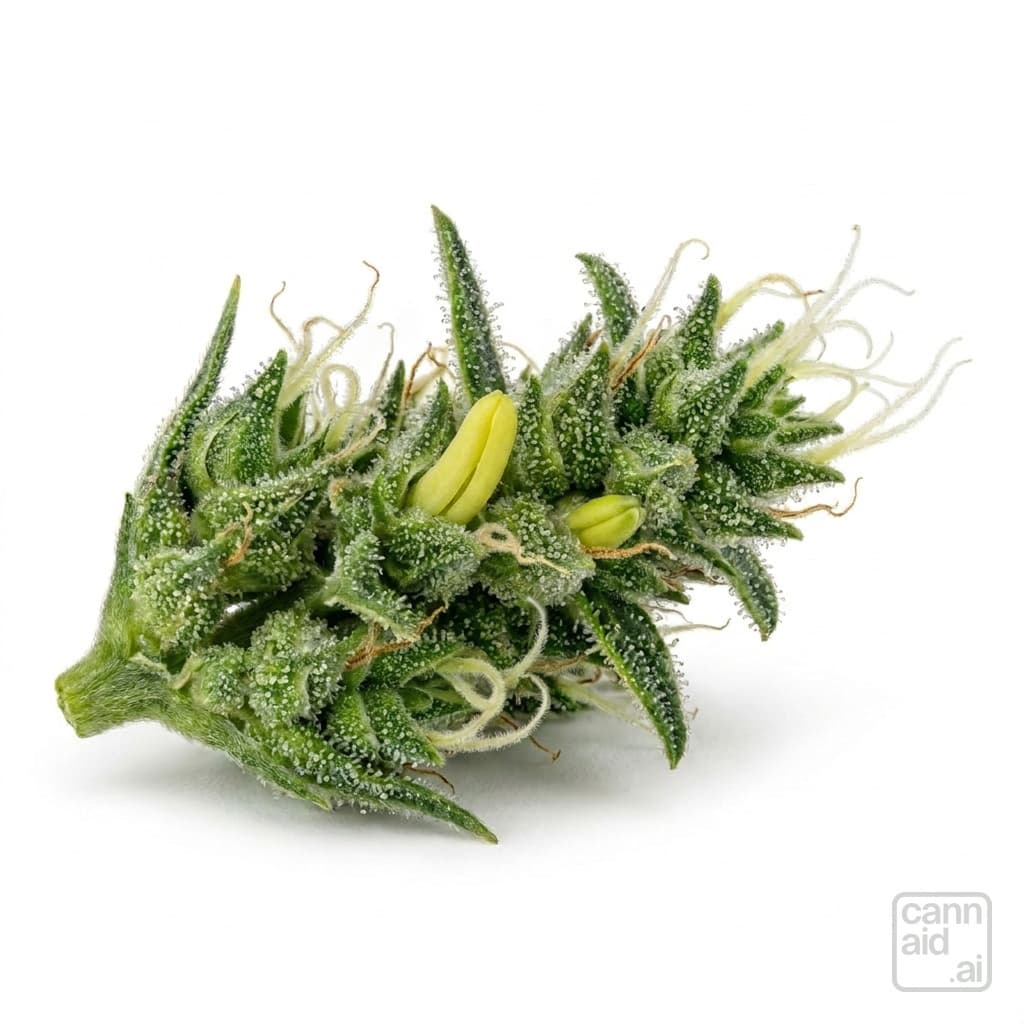
What a stressed plant grows is not a sac. It is the nanner: a bare yellow anther, the shape and colour of a tiny banana. It pushes out from between the calyxes of a bud, with no green ball around it and no stalk to hang from. It shows late, in the middle weeks of flower and after. And it hides. Look deep in the heart of a dense cola, on the shaded lower branches, and on the side of the plant that faces the wall. It turns up wherever the light is weakest and the stress lands hardest. A single nanner is already open. But it carries less pollen than a sac, and it is usually local, on one bud or one branch. That is what makes this shape the one you can fight.
Because it is a reply to the room, the room is the cure. Find the leak before you find the next nanner. Shut yourself inside the tent in the dark, wait for your eyes to adjust, and cover every pinprick of light you see. Then check the timer. Bring the heat down. Let the pot dry between waterings. And harvest on time. Read the trichomes, not the calendar, because a plant left to go amber is told, every extra day, that no pollen is ever coming. The true hermaphrodite is a fault in her blood. This one is a fault in yours, and that is the better news.
Reading her
From the third week of flower, walk the plant once a day with a loupe. Look where the light is not. Start at the lowest nodes, where sex declares earliest. Then search the inside of the dense colas. Then check the shaded side and the undersides, where a stressed plant turns first. You are looking for anything that is not a hair and not a calyx. These are the four things you will actually find.
What to do — the cut, the pluck, and the seed
Everything you do next follows from which shape you found and how far along the plant is. A plant with sacs at the nodes in early flower has made her decision. You make yours the same day. The plant leaves the tent whole, in a bag, and the neighbours get a week of suspicion. A plant with a nanner or two in mid-flower has not decided anything. She has flinched. Pull the anthers with tweezers. Mist the bud with plain water, which kills whatever pollen has escaped. Then come back tomorrow. If the count stays at a handful and the room is fixed, the plant finishes like any other, perhaps a few days early.
A plant that has turned everywhere in the last weeks is past saving as a plant, but not as a harvest. Take her down now, while the seeds are still soft and small. That is better than losing the rest of the tent to a week of pollen. And if you find seeds at trim, do not keep them. The seed of a stressed female is mostly female, which sounds like a gift. But it carries the mother's habit, which is not. There is one celebrated exception: a stray pollination that gave the world a famous glue. That is a breeder's story, not a grower's. Still unsure which shape you are looking at? A clear photo of the node on the forum will get you an answer from people who have pulled a hundred of them.