Uptake: The Unseen Exchange of Mineral and Microbe
How she actually eats, one ion at a time at the root hair, and why a third of the bottle never reaches her.
What you'll learn
- How she eats: ions only, at the root hair, and why pH is the door they come through.
- The two kitchens: mineral salts served at once, a living web that cooks for weeks, and how much of each she actually takes in.
- Why she finishes on her own reserves, why the fade is her moving food rather than hunger, and what the bloom-booster reflex gets wrong.
- Feeding for efficiency: two-thirds of the bottle, nearly all of the jar, and the signs that say you are on track.
Everything you feed her comes in through the same doorway. Below the soil line, her roots end in a fur of tiny hairs. Each hair is a single cell, a few millimetres of membrane pressed against the wet grit. Through that membrane the plant takes in food one dissolved ion at a time: a nitrate, an ammonium, a phosphate, a potassium. Almost nothing else gets through. Not a pellet, not a castings tea, not a drop of the bottle as you poured it. Whatever goes into the pot must become an ion in water before the plant can eat it. The whole difference between the mineral grower and the organic one is who does that cooking, and how fast.
Feed salts, and the cooking is already done. The bottle is ions. They are ready the moment they touch the wet root, and the plant answers within a day. Feed the soil instead, and you have hired a kitchen. Bacteria and fungi break castings, meal and old leaves down into the same ions. They take weeks to do it, and they work at their own pace and their own temperature. Both kitchens serve the same food. What differs is how much of what you paid for ever reaches the table. Neither kitchen delivers all of it, and the organic one delivers less.
That gap is what this article is about, and it cuts two ways. Read one way, it says the organic grower must feed harder for the same plant. It also says the mineral grower must respect the salt the plant leaves behind. Read the other way, it says nearly everyone feeds more than the plant can eat. A plant fed two-thirds of the full bottle through flower still gives back nineteen-twentieths of the jar. That is because she finishes on her own reserves, moving what she stored in her leaves into her flowers as they fill. Know the doorway and the two kitchens, and you can feed less and lose nothing.
What she takes in
Read the two lines against each other, and the first surprise is how low they both sit. From a mineral feed, the plant takes in barely three-quarters of the nitrogen poured into the pot. From an organic feed, it takes in little more than half. Potassium does worse than nitrogen. Phosphorus does worst of all: a quarter to a third, from either kitchen. What is left locks into the grit or washes out below. This article explains why, and what you can do with a number that low. That turns out to be a great deal.
How much of the feed reaches her
The exchange, in three parts
Three things decide how much of a feed becomes plant. The first is the doorway: the root hair, and the pH it opens at. The second is the kitchen. The food arrives either as salt already dissolved, or as matter a living web has to cook. The third is the appetite: how much the plant can eat at all, and what she does with it once the flowers start asking. Take them in that order.
The doorway — the root hair, and the pH that opens it
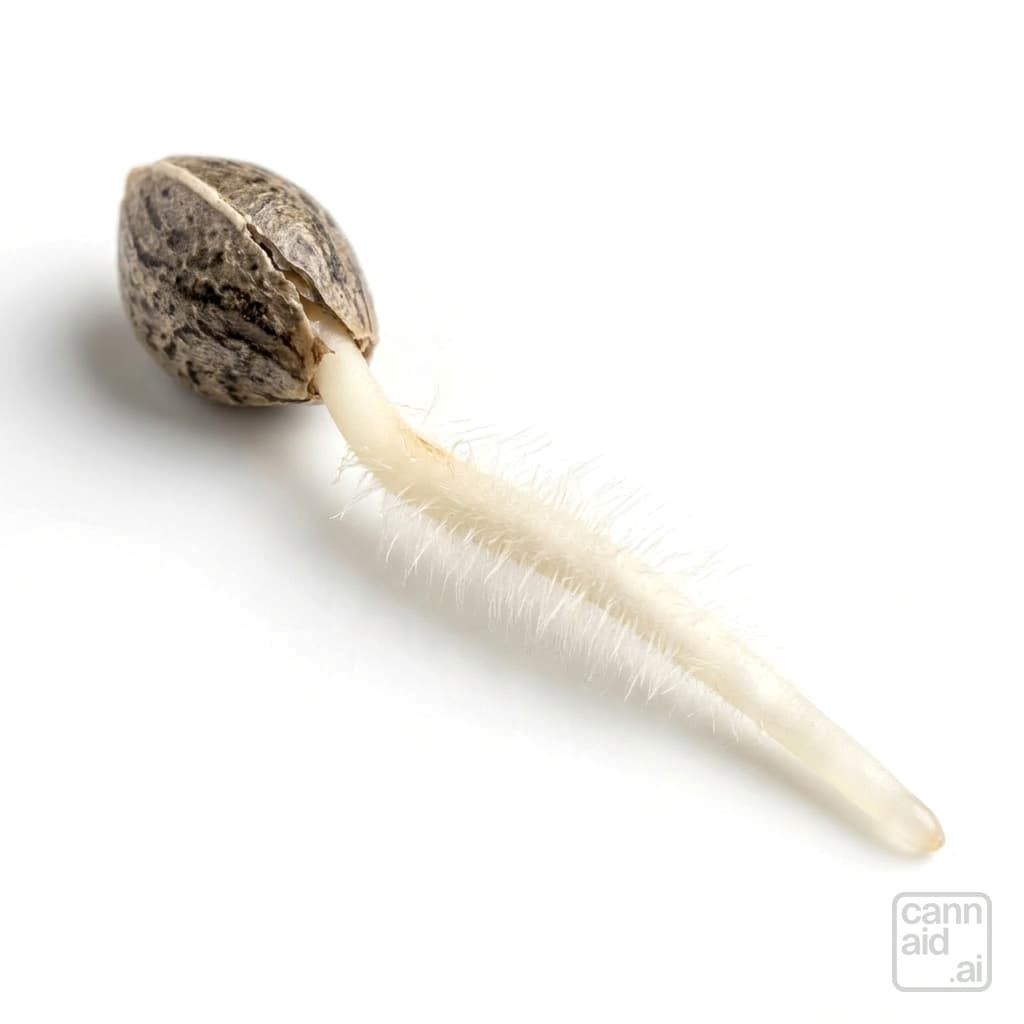
A root hair is a single cell grown out sideways into the wet grit. It is the only part of the plant that eats. Ions reach it in three ways. Most of the nitrogen arrives carried in the water the plant drinks. Phosphorus and potassium drift the last fraction of a millimetre through the film of water around the grit, slowly, from very close by. The third way is the root simply growing into new ground. That is why phosphorus is the hardest to take in. It barely moves, so the root has to go to it. It is also why the only soil that matters is the , the thin sleeve of soil the root actually touches. widen that sleeve enormously. They thread out where root hairs cannot go, and they trade the phosphorus they find for the plant's sugar. A living soil that has them feeds her from ground her roots never reach.
But the doorway has a lock, and the key is . Each ion crosses the membrane only within a band of acidity. Too acid, and phosphorus binds to the aluminium and iron in the grit and never dissolves. Too alkaline, and iron, manganese and zinc fall out of reach, while calcium and magnesium are still easy to take. There is a narrow window where every door is at least half open. Each medium has its own window, because its chemistry shifts it: a little higher in soil, a little lower in coco and water. Miss it, and the plant starves with a full plate. That is . The health library lists it as a deficiency, because that is exactly what it looks like from above. Half the deficiencies a grower ever chases were a job for the pH pen.
The grit itself takes a side. Soil and coco carry a negative charge on their surfaces, so they hold positive ions, the . These are calcium, magnesium, potassium and ammonium. The grit holds them the way a magnet holds filings, and lets them go to the root as it draws the water down. That holding is the buffer the Mediums article praised. It is also the trap. Fresh coco grabs calcium and magnesium so greedily that your first feeds go to the fibre, not the plant. That is why a coco grower feeds from the first day, while a soil grower barely thinks of it. It is also why calcium trouble is the classic coco complaint of the first month. Water holds nothing, buffers nothing and locks nothing. Every ion in the tank is at the door, and so is every mistake.
The pH door: three nutrients, one window
Two kitchens — the salt and the living web
A mineral feed is cooked before it leaves the bottle. Its salts dissolve into the very ions the root hair takes in. They are at the door the moment the water reaches the grit. Give a hungry plant mineral nitrogen, and the new leaves darken within a day or two. That speed is the whole case for salts. It means precision, quick correction and a plant that answers. It is also the whole danger, because nothing stands between the dose and the root. Whatever the plant does not take stays in the pot as salt, and where water evaporates. First comes a white crust on the rim. Then the of the climbs past the EC you poured. Last come the crisp leaf edges of a burn. It looks like hunger, but it is too much food.
The living web cooks the other way. Castings, meals, old leaves and the sugars a root leaks on purpose are not food yet. Bacteria and fungi first have to break them down into the same ions, and they only work when the soil is warm, moist and breathing. In a cold or sodden pot the kitchen stops, and the plant can sit hungry over a full plate for a week. So the organic grower always feeds next week's plant, never this one. The graph at the top shows what that patience costs. To get the same ions inside the plant, an organic feed must be about half again as strong, because so much of it is still cooking when the plant needs it. The web pays that back in two ways. Organic matter steadies the pH and softens swings in salt, so less of it reaches the root at once. And the bed improves with time: one in its third or fourth cycle feeds better than one in its first, because the kitchen has grown.
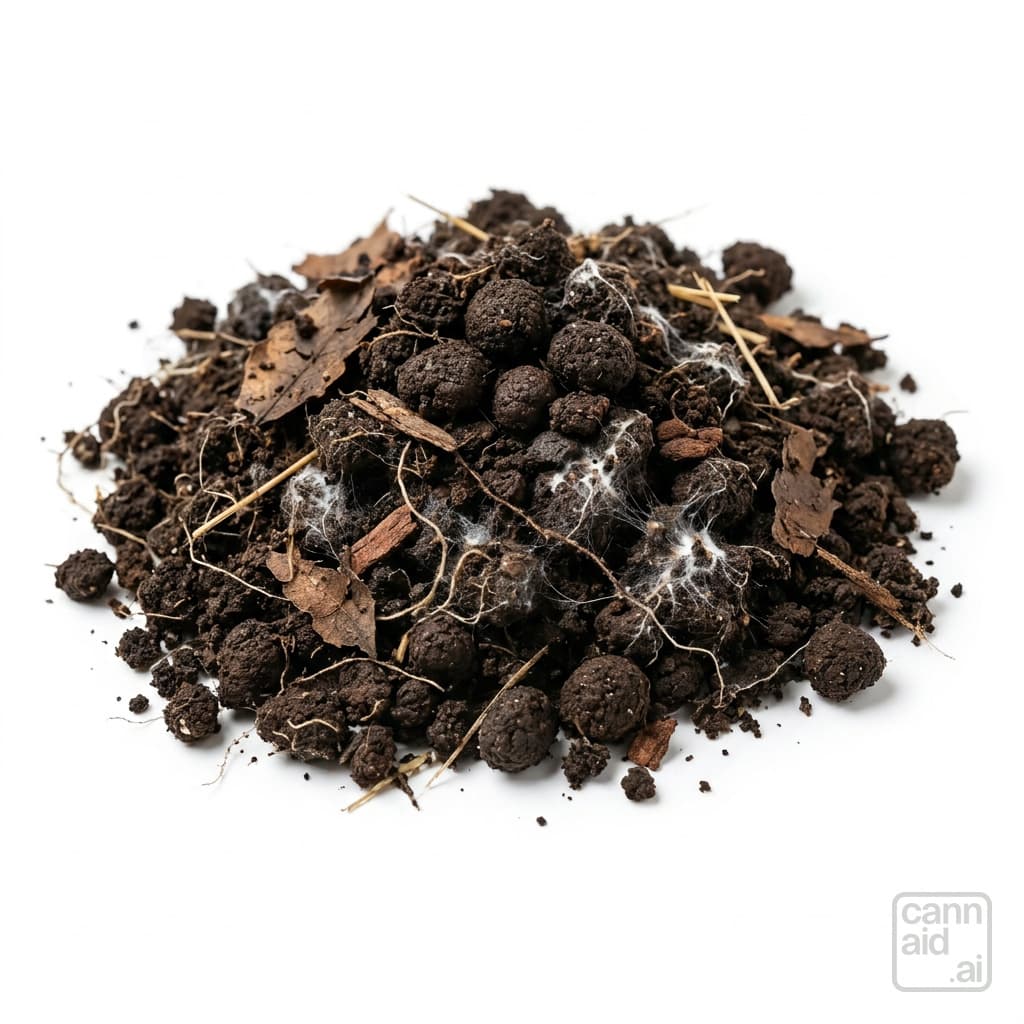
There is one more difference at the door, and it hits the organic grower first. Nitrogen arrives as two ions. The plant drinks nitrate freely, but takes ammonium only in a modest share. Keep ammonium under about a third of the nitrogen. Past half, the leaf tips burn and growth stalls. Organic feeds run high in ammonium, because that is what the web makes first. So the same nitrogen can be a meal from one kitchen and a scorch from the other. The fix is not less nitrogen but a better balance: mature compost, a brewed long enough, or a bed alive enough to turn the ammonium into nitrate itself. Neither kitchen is right. Salt is faster, cheaper per ion delivered and easier to correct. The web is slower, gentler, and gets better with age. The Mediums article told you which one suits your patience. This one only tells you what each is doing at the root.
Less bottle, same jar — feeding for efficiency
Now the part that pays for the article. A trial compared three feed strengths through flower. Plants fed two-thirds of the full bottle gave back nineteen-twentieths of the cannabinoid yield of plants fed all of it. That is a third less fertiliser for a twentieth less jar. The lightly fed plants grew a little less flower. But what they grew was stronger per gram, and the two nearly cancelled out. Plants fed a third of the bottle lost a real third of the harvest. The sweet spot is restraint, not starvation, and it works the same in both kitchens.
Why it works is the fade you have watched at the end of every grow. As the flowers fill, they draw on everything the plant has. When the roots cannot keep up, she does what a allows: she empties her leaves. Nitrogen goes first, out of the old fan leaves. Potassium follows from the stems, then whatever phosphorus the plant can spare. The lower leaves yellow from the bottom up, and the flowers swell on what they gave. A plant fed to the brim never needs to do this, and never does. Its leaves stay green to the last day, and its reserves go into the compost. A restrained feed makes her spend them. The plant is thriftier than the bottle in one more way. Her flowers fill to a fixed level of phosphorus and then stop, however much you pour. That is the quiet verdict on the reflex. The extra never enters the plant. It locks up in the pot and the zinc and iron she does need.
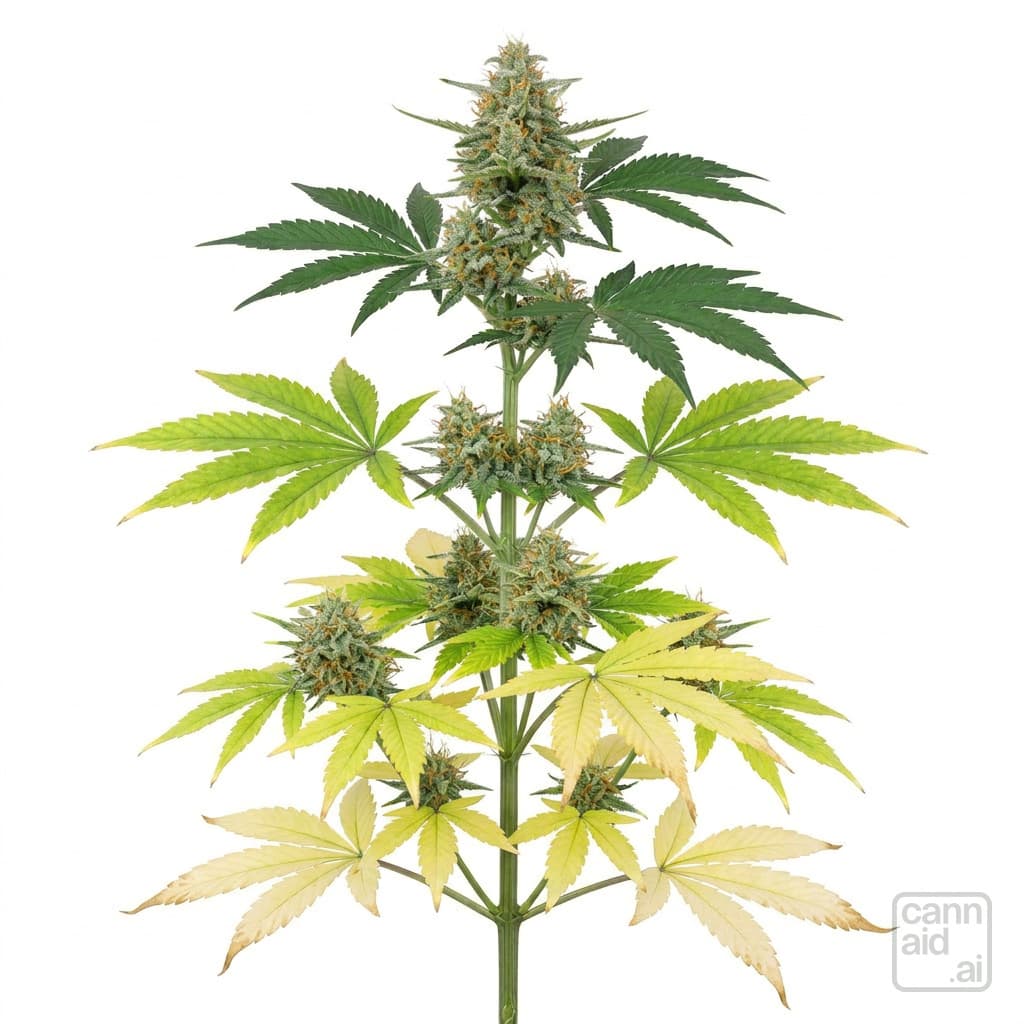
So the practice is a taper, not a flush, and the difference matters. Feed fully through veg and the first weeks of flower, while the frame and the bud sites are being built. Ease to two-thirds through the middle weeks. Let the last stretch run on half strength and then on plain water, and watch the fade climb the plant from the bottom. That is efficiency. It is not what makes the smoke smooth. The harvest article is right that the cure does that, not a rinse. A real flush, a heavy rinse with plain water, helps in one case only: a plant that enters her last week still overfed, dark, clawed and glossy. The signs to read are simple. A fade that starts low and climbs late means she is eating her reserves. Yellowing that starts at the top, or arrives in early flower, is a real shortage, and the pH pen comes out. Leaves still deep green at the cut mean you bought more bottle than she could eat.
Two-thirds of the feed, nineteen-twentieths of the jar
The uptake sheet
The figures behind the prose, all on one page: the windows, the ratios and the taper. The pH windows are the same ones the rest of the library and the journal's alerts use.
Feeding by kitchen
Which kitchen you run decides how these numbers land on you. The salt grower can measure everything, and should. Measure the EC going in and the EC coming out. The gap between them is the salt the plant did not take. The web grower can measure less and must trust more: the bed's warmth, its moisture and its age. Both can taper. Both should, because the reserves she spends in flower are the same whichever kitchen cooked them.
And both should read the fade before reaching for the bottle. A plant emptying her leaves into her flowers is doing the last and cheapest feeding of the grow for you. The grower who cannot bear a yellow leaf in the ninth week feeds the plant out of it, and buys nothing but darker compost. Let her eat what she stored. The survey reads a shortage by where it sits on the plant, at the bottom or the top. That is the same reading this article has taught all along.