A grower's guide to soil, coco, and water — through her four stages.
What you'll learn
✓How soil, coco, and water differ as growing mediums — buffer capacity, response speed, attention rhythm.
✓What she needs from you at each of her four stages — seedling, vegetative, early flower, late flower.
✓The pH and EC ranges that work for each medium across the life cycle.
✓What to watch for at every stage × medium intersection — and what to do when something looks wrong.
Cannabis is a plant of stubborn roots. Give her a bag of dirt, and she'll send threads down into it for weeks before she even thinks about flowering. Give her a pot of coco fiber, and she'll lace it through in days. Give her clean nutrient solution with no dirt at all, and she'll grow a white tangle so dense it looks like coral. The three places she can root — soil, coco, and water — are the three relationships you can build with her, and each one teaches a different lesson about what growing actually is.
The choice of medium decides how often you'll touch her, how forgiving she'll be of your mistakes, and how quickly she'll respond when something changes. Soil holds water for days and shrugs off a missed feeding. Coco holds water for hours and asks for daily attention. Water holds nothing — every value you set, she feels within minutes. Each medium is a different rhythm of paying attention, and the right one for you depends as much on your schedule as it does on your plant.
This guide walks her from seed to harvest in all three. Same plant, same biology, three different journeys — and at every stage, the same handful of decisions in slightly different forms. By the end you'll know which medium suits you, and what she'll need from you at every step.
The Three Mediums
Before we walk her through her stages, here are the three mediums she'll root in, side by side. The differences are easiest to feel by comparing how forgiving each one is — how long you have before a mistake catches up with you.
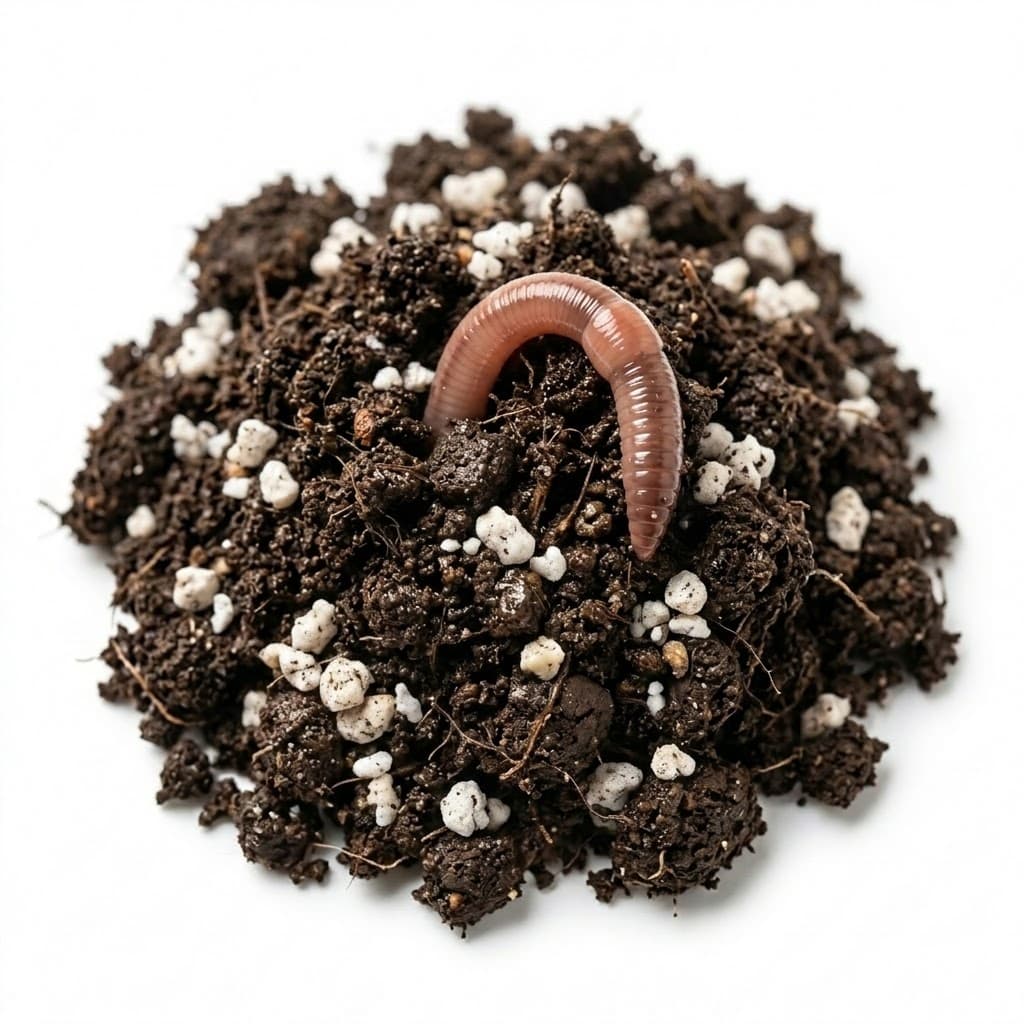
Soil
Earth, organic matter, and time — the oldest way to grow her.
Soil is the slowest medium and the most forgiving. The organic matter buffers pH on its own, holds water for days, and feeds the plant a little nitrogen even when you forget to. She grows a touch slower in soil than in the other two — but if you ever miss a watering or get a pH reading wrong, soil is the medium that lets you off the hook.
Forgiveness
High
Difficulty
Easy
Care
Rare
Setup cost
Low
Speed
Slow
Yield
Good
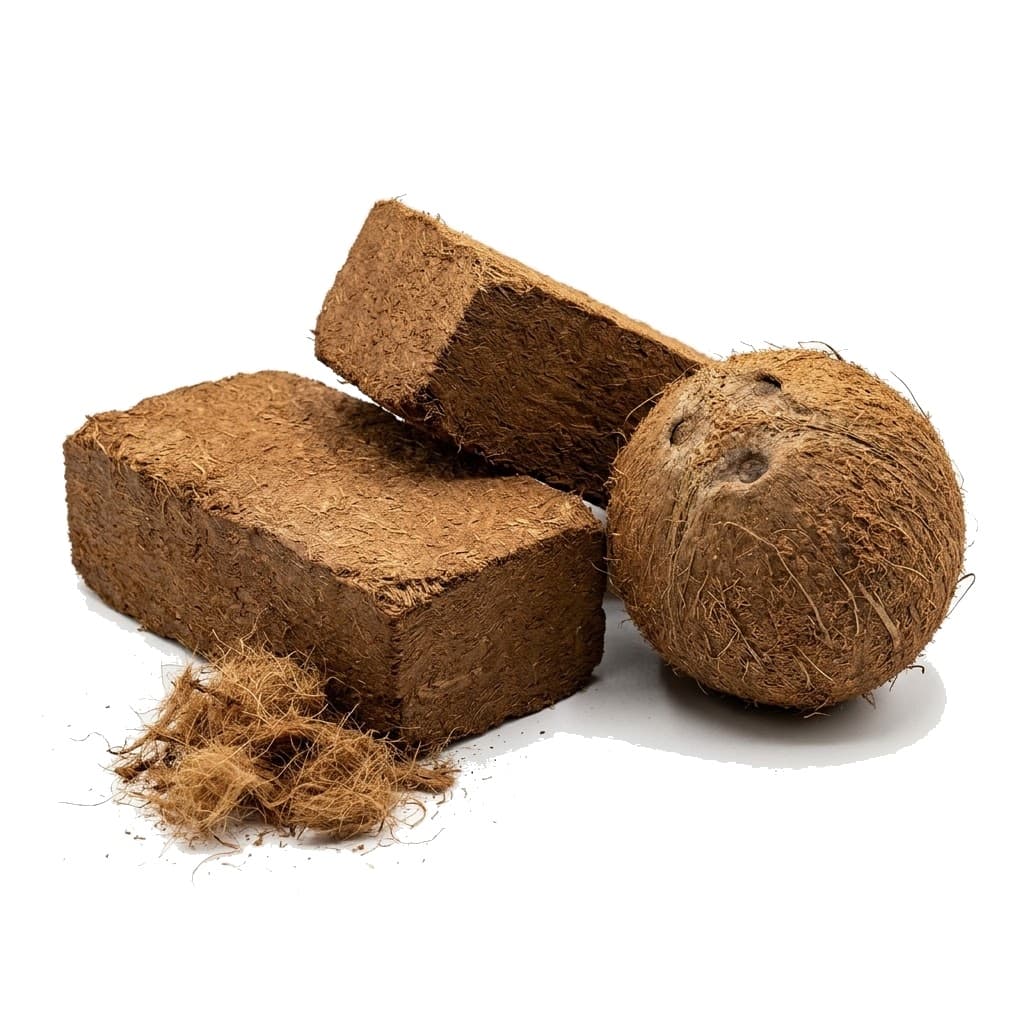
Coco
Coconut fiber — clean, inert, and faster than soil.
Coco fiber holds water like a sponge but contains no nutrients of its own — every feeding is something you provide. It dries faster than soil and demands a daily check, but her roots fill it twice as fast, and she'll grow noticeably bigger than the same plant in dirt. Coco is the bridge between soil's forgiveness and hydro's speed.
Forgiveness
Medium
Difficulty
Medium
Care
Daily
Setup cost
Mid
Speed
Medium
Yield
Better
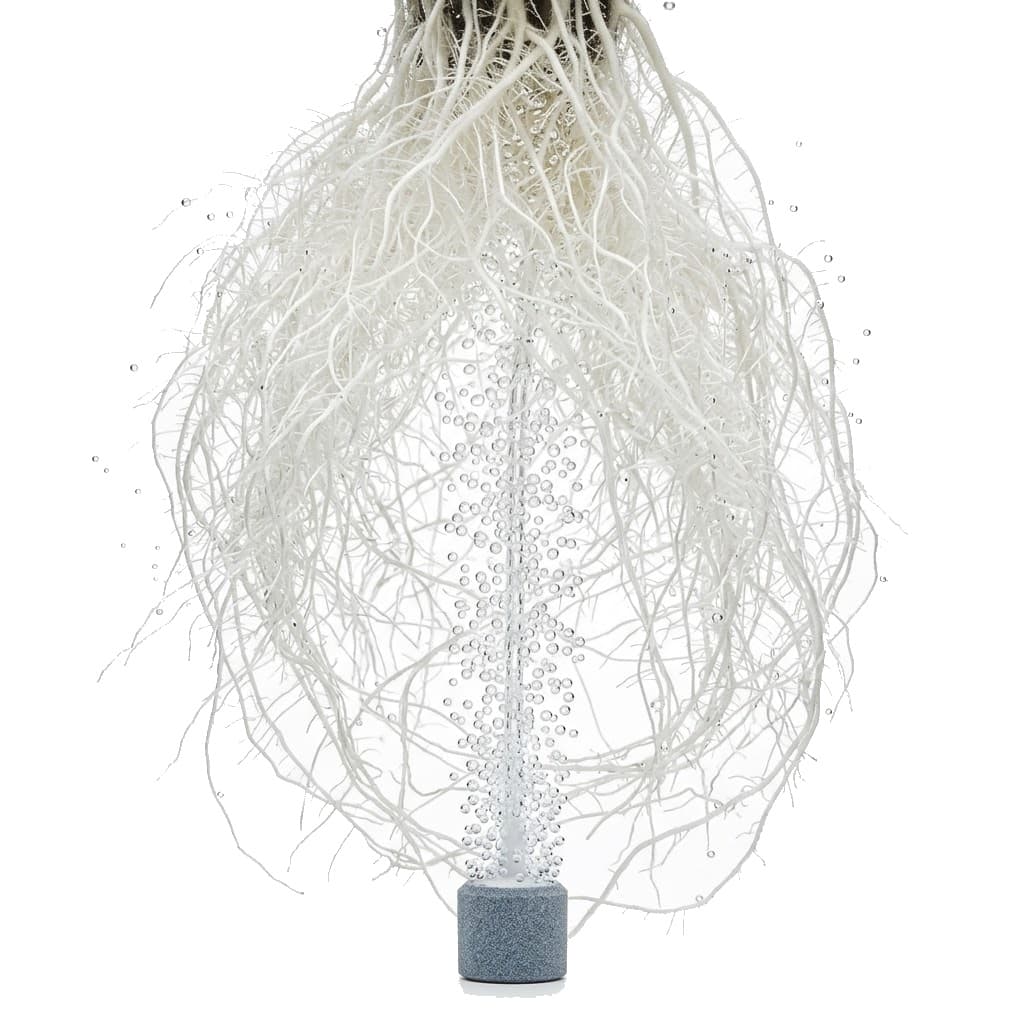
Water
Hydroponics — her roots in pure nutrient solution.
In hydroponics there is no medium between her roots and her food — just water, dissolved minerals, and oxygen. She grows faster here than anywhere else, but every value you set, she feels almost instantly. There is no buffer, no slow correction, no margin. Hydro is the most powerful relationship and the least forgiving.
Forgiveness
Low
Difficulty
Hard
Care
Always
Setup cost
High
Speed
Fast
Yield
Best
Soil, Coco, or Water — Through the Cycle
Now that you have met the three mediums, the easiest way to keep them straight is to ask one question of each: who feeds the plant? In soil, you feed the soil — it is a living, buffered medium with its own reservoir, and you tend it indirectly so the microbes hand her food on demand. In coco and water, nothing is alive underground and there is no reservoir to lean on, so you feed the plant directly, mixing mineral salts to a measured strength every time — which makes you the buffer the medium isn't. Hold that one distinction in mind and the rest falls into line: how you gear up for each stage, why the feed has to change at the flip into flower, and how much each medium will forgive. Here is all three, side by side, across her whole life.
Gearing Up, Stage by Stage
The first decision you make for her is the one that shapes everything after: do you feed the soil, or do you feed the plant? In soil, the medium is the reservoir, so the gear is the lightest of the three. She starts as a seedling in a small starter cup, and you pot her up as her roots fill each container — a modest move in veg, a bigger one for early flower, and a final roomy pot for the long haul of late flower. That gradual ladder matters: a tiny plant swimming in a huge wet pot drowns, so you give her only as much room as she has earned. Fabric pots let air into the root zone and make each move cleaner; autos are the exception, planted once into their final home and never lifted again. And here you tend the soil, not the plant — a pre-amended or living soil already holds weeks of food on slow release, and the crew underground passes it to her on demand. Your job is to keep that crew fed, with a top-dress, the odd compost tea, or a gentle organic liquid, rather than dumping anything sharp at her roots. A pen is handy but not mandatory, and you can skip the pen entirely. A watering can and the pots are most of the kit.
Coco climbs the same ladder — solo cup to roomy final pot, potting up as her roots colonize each one — because it is still a substrate she roots into, not a tank she floats in. Many coco growers move her a little sooner, or start her closer to her final pot, since coco's airy structure shrugs off the overwatering that soil punishes. But here the whole relationship flips: coco holds almost no fertility of its own, so you feed the plant directly, and every watering carries a full mineral solution to her. The one rule you cannot skip is Cal-Mag — coco's exchange sites quietly bind calcium and magnesium out of your feed before she ever drinks them, so you supplement from her very first seedling watering or the deficiencies surface within a few weeks. That hands-on feeding makes both pens part of the job, not the wish list: you mix to a target EC and pH every single time. Fabric pots drain best, and because she likes to be fed often through veg and flower, many growers hand her over to an automated drip — though a patient hand and a watering can will carry her just as well.
Water asks for the most gear and hands you no buffer in return. There is no soil and no pot ladder at all — just a small net pot of clay pebbles or rockwool suspended over a reservoir, her roots hanging straight down into oxygenated nutrient solution. That same little net pot serves her from seedling to harvest; you scale her by reservoir volume and feed strength, never by potting up. Because there is no medium to lean on, the solution is the medium — you mix complete mineral salts to a target EC and pH right in the tank, and her roots sit in it around the clock. The pens here are not optional; they are constant. So is the air pump and air stone, because dissolved oxygen is life or death for submerged roots, and warm, still water is how a healthy plant turns to brown slime. Add the reservoir, the net pots, and ideally a chiller to hold the root zone cool. It is the highest setup cost and the most moving parts — the price of feeding her in the purest, fastest form there is.
Container size, stage by stage
Soil and coco climb a transplant ladder — you pot her up as her roots fill each container, and soil runs a size larger because the medium is also her reservoir. Water never pots up: the same bucket holds her from seedling to harvest.
at Seedling
When the Feed Has to Change
The biggest turn in her whole life comes at the flip into flower, and it lives in the feed. Through veg she ran on a nitrogen-rich diet — plenty of N, less of everything else — because nitrogen is what builds leaf and frame. Once she begins to flower, that hunger inverts: nitrogen comes down hard while phosphorus and potassium climb, because now she is building buds, not branches. Her body does the same thing in every medium. What changes wildly is who does the buffering — and that comes straight back to whether you are feeding the soil or feeding the plant.
In soil, the medium carries her through the turn. A living soil holds a bank of already-released nitrogen on its organic matter and exchange sites, so when you switch to a bloom feed, she does not drop off a cliff — she burns through that residual nitrogen first and pivots gently, over a week or two, while the soil keeps trickling N regardless. That residual is normal here, and the buffer absorbs it. Coco and water give her none of that grace. They are inert, so the day you change the feed is the day her root zone changes — there is no reservoir trickling anything behind the scenes, and the ratio she gets is exactly the ratio you mixed. You are the buffer the medium isn't, which means cutting the nitrogen on schedule is your job, not the soil's.
That is where the trap springs, and it is an easy one to walk into. If leftover veg-nitrogen lingers into flower — because you didn't deliberately cut it in coco or water, or because a soil was over-amended and runs hot — she reads the signal as keep growing leaves. Three things follow. She stretches taller than she should. Her buds come in airy and loose instead of dense. And flowering drags out for a smaller payoff. Worse, while all that surplus nitrogen is telling her to keep vegging, the phosphorus and potassium she actually needs to pack on flower run short — so the bloom she is trying to build gets starved at the exact moment it matters most. Soil's buffer forgives a slightly late cut. In coco and water, the schedule is on you, and a missed turn shows up in the harvest.
Feed strength (EC) across the cycle
Soil stays lowest and flattest — the medium itself feeds her, so you add little. Coco and water climb higher into flower because the feed is all she gets, then taper for the finish.
at Early Flower
Hardiness and Reward
The same trait that makes a medium forgiving is the one that makes it slow to talk back, and the trade runs in a clean line across all three. Soil is the most forgiving by a wide margin — the buffer soaks up dosing slips and pH wobbles and meters food out slowly, so an overfeed or a missed watering rarely shows the same day. The catch is that the answer comes just as slowly: a deficiency or a fix can take days to a week to register, so you fly partly blind and you cannot undo a mistake on the spot. Water sits at the opposite pole. There is no buffer of any kind, so a pH swing, an EC error, or a dead air pump reaches her roots within hours — but that same directness means the feedback is instant, and an attentive grower reads the tank and corrects it in real time. Coco lives in the middle of every one of these: substrate enough to steady her moisture and root temperature, but almost no nutrient reserve, so mistakes surface fast — in days, not in the same hour as water, but quickly. More speed and yield costs you margin for error; more forgiveness costs you speed. Pick the rhythm you can actually keep up with.
The reward ladder climbs the other way — soil slowest and a touch lower-yielding, coco faster and bigger, water fastest and biggest of all — which is why the right medium is the one matched to how closely you will watch her, not the one with the tallest yield bar.
SoilFor beginners and hands-off or organic growers — the widest safety net there is, and the hardest medium to actually kill a plant in. She fails slowly and quietly here: a dense wet mix that suffocates her roots and breeds fungus gnats, or an over-amended soil already running hot — made worse when a grower piles on more before the lagging feedback has shown the first move.
CocoThe sweet spot for the grower stepping up — most of hydro's speed and yield with a wider margin than bare water, and the natural second medium after one soil grow. She fails here on the things you forget: a skipped Cal-Mag dose that brings on the classic calcium and magnesium pattern, or salt stacking in the root zone when runoff runs too low and the EC creeps up until it burns her.
WaterFor experienced, attentive, gear-comfortable growers chasing maximum speed and yield — highest reward, highest risk, daily vigilance, and explicitly not a first medium. She fails fast and total here: root rot in a warm, under-oxygenated reservoir, or a runaway pH and EC swing — a dead pump or an unchecked tank is the classic way a whole crop is lost overnight.
The Cheat Sheet
One-page reference covering every stage × medium intersection — what pH and EC to target, how often to water, and the one thing most likely to go wrong at that point.
Soil
Coco
Water
Seedling
pH
6.3–6.8
EC
0 → 0.5 by day 14
Water
Every 5–7 days
Watch
Overwatering. The cup feeling heavy is the only signal.
pH
5.8–6.0
EC
0.4–0.7
Water
Light, daily
Watch
Calcium deficiency. Pre-buffer the coco or feed cal-mag from day 1.
pH
5.5–6.0
EC
0.3–0.6
Water
Continuous capillary
Watch
Root zone too cold. Keep above 18°C.
Vegetative
pH
6.3–6.8
EC
0.8–1.4
Water
Every 3–5 days, to runoff
Watch
Root-bound plant. Up-pot when growth stalls.
pH
5.8–6.1
EC
0.8–1.6
Water
1–2× daily, 10–20% runoff
Watch
Runoff EC climbing above feed EC — salts stacking; leach with plain water to reset.
pH
5.5–6.0
EC
0.8–1.8
Water
Continuous; reservoir every 7–10 days
Watch
Reservoir temp above 22°C. Pathogens take hold fast.
Early Flower
pH
6.3–6.8
EC
1.2–1.6
Water
Every 3–4 days
Watch
pH drift down. Root exudates acidify the soil during early flower.
pH
5.8–6.2
EC
1.8–2.2
Water
1–2× daily
Watch
Lockout — lower-leaf yellowing that does not look like N deficiency.
pH
5.5–6.0
EC
2.0–2.4
Water
Continuous; res every 5–7 days
Watch
Stretch outrunning the structure. Net or stake before week 3.
Late Flower
pH
6.3–6.8
EC
0.6–1.0 (eased back)
Water
Every 4–6 days
Watch
Yellow fan leaves — normal. Watch trichomes, not foliage.
pH
5.8–6.2
EC
1.2–1.6 (eased back)
Water
1–2× daily, lighter feed
Watch
Bud rot in dense colas. Drop humidity below 50% for last 2 weeks.
pH
5.5–6.0
EC
1.0–1.4 (eased back)
Water
Continuous; lighter reservoir to finish
Watch
Reservoir warmth in the final stretch — pathogens damage finished bud.