
Stages: Through the Life Cycle of Cannabis
Open this at the stage you are in: how to tell where she is, every job in her order, and the sign that the next stage has begun.
What you'll learn
- How to tell which stage she is in from what she shows you, not from the date.
- Every job of each stage, in the order she asks for it, from the sprout to the last week of flower.
- The sign at the end of each stage that the next has begun, and what it asks of you.
- Every number gathered on one checklist, stage by stage.
A cannabis plant works in an order of her own, and the grower's work follows it. The seed sends a root down before anything green shows. The seedling makes leaves. In veg, the leafy growing stage, the plant puts up a frame of stem and branch. In flower, she fills that frame with flowers and then lets her leaves go. A quick autoflower runs the whole course in ten weeks, and a slow sativa takes twice as long. The order never changes, and nor does the list of jobs each stage brings.
Most of a grower's questions are one question, asked in different weeks: she is doing this, so what do I do now? The answer changes with the stage, and a job that saves a plant in one stage harms it in the next. The water a flowering plant drinks would drown a seedling. The bend that shapes a young plant snaps one in bud. The feed that builds a frame in veg is the feed she does not want in her last weeks. So here is the grow laid out as a manual, one stage at a time.
Knowing the stage also tells you whether to act at all. A plant that stops growing taller is a worry in veg and the whole point of late flower. A pot that goes light in two days is thirst in a seedling cup, and a good sign under a flowering canopy. The First Grow guide walks a new grower through the whole grow ahead of time. This page is for the grower in the tent, with a plant in front of them. The drying room and the jar belong to the Harvest article, so this manual ends at the cut.
Where she is: the signs, and roughly when
Before the jobs comes the reading. Each stage shows itself in the plant, and the calendar only agrees or disagrees. Find her on this sheet first, then go to her row below. The sign is what you can see. The timing is only what to expect from a plant under a lamp, or an on her own clock. The grow journal draws the same lines: a seedling for two weeks, veg until the turn, then flowering, with its last third called late.
The four stages, and the jobs in each
Four stages, with veg and flower each split in two, because their early weeks and their late weeks ask for different things. Each row begins with where she is, and ends at the crossing into the next. The numbers wait on the checklist at the end.
Sprouting — the root before the shoot
A seed wakes to water, warmth and the dark, and the first thing it makes is a root. The shell cracks along its seam, and one white taproot pushes through and turns down. Only then does a stem climb for the surface, hooked over to shield the leaves it carries. In the light it straightens, and two round leaves open. These are the cotyledons, and they look nothing like cannabis. Often the split shell rides up on them like a helmet. Everything the plant needs for now was packed inside the seed, so asks only that the ground be moist and warm.
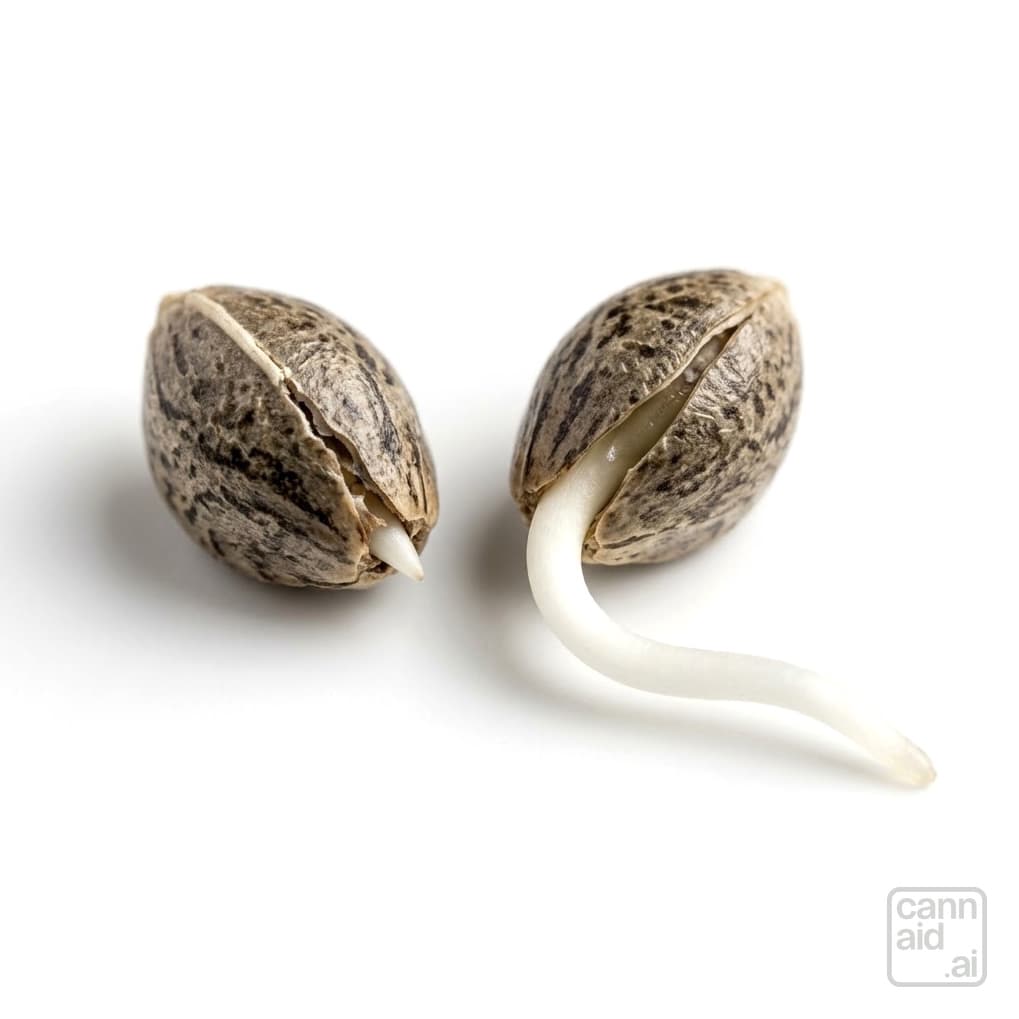
The jobs are few, and the hardest of them is the waiting. Wet the seed and keep it warm. Start it in a damp paper towel folded between two plates, or sow it a fingertip deep in moist soil, root-end down if it has shown one. If the room runs cool, give it gentle heat from below. Look once a day, no more. When a towel-started seed has a root the length of a grain of rice, plant it that day, before the root grows into the towel and tears. Keep the surface moist but never sodden, and keep the lamp high or off until she is up. If the shell still caps the leaves a day after she surfaces, mist it and ease it off with a fingernail. Pulled dry, it takes the leaves with it. Then leave her be.
The crossing is the two round leaves opening flat and turning to the light. From that morning, she is a seedling. What goes wrong before then is one mistake made from either end. A seed left sitting in water rots before it opens, and a cracked seed left to dry dies with its new root in the air. A seed that is still a seed on the tenth day will not change its mind, so plant the next one. Nothing in the health library reaches back this far, because there is no plant yet to fall ill. What the seedling asks of you next is the hardest thing in the grow: almost nothing, for a fortnight.
Seedling — the fortnight of restraint
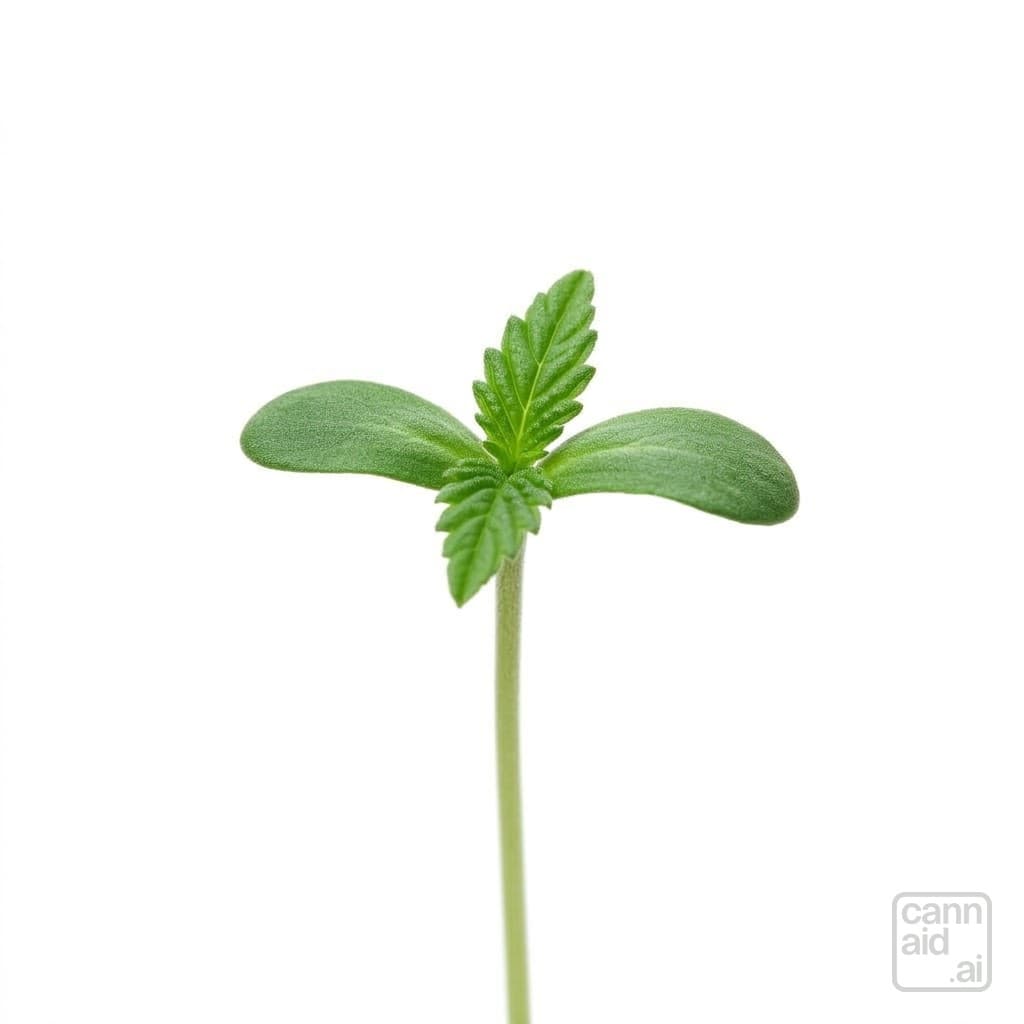
For two weeks or so, all you can see is a matchstick stem and two round leaves. Below ground, a root system far bigger than the top is spreading for the sides of the cup. The cotyledons feed her until the true leaves can take over. The true leaves come with one blade at first, then three, and then five. When the ends, there is a small but recognisable cannabis plant, with its first two or three nodes set. This is the fortnight when she is easiest to kill.
Warm, humid air comes first. Then a lamp that is soft but close, so the stem has no reason to reach for it. A tall, pale, leaning seedling means the lamp is too dim or too high: lower it, and never feed to fix it. Water by weight. When the cup feels light and the top of the soil is dry to a knuckle, give a small drink in a ring around the stem. Then give nothing until it is light again. If she started under a dome, open it for a little longer each day after the second or third set of true leaves, then take it away. Set a small fan to stir the air across the tent, not at the plant; a leaf that trembles builds a stem that holds. And feed nothing. A soil with food already mixed in (an amended soil) holds more than a seedling can use in its first month. In a plain mix, start at three sets of true leaves, or when the cotyledons turn yellow, and even then give a quarter dose.
The crossing is a leaf with five blades and a stem thickening at the base. From here she spends the root she has built. The seedling killer is overwatering: a small plant in a big wet pot, watered by the calendar, until the roots suffocate. The leaves droop, yet still feel firm and heavy. Overwatering has two cousins. One is damping off, when the stem pinches and folds over at the soil line overnight. The other is the fungus gnats that breed in soil kept wet. Letting the soil dry between drinks prevents all three. What veg asks of you next is a rhythm, not restraint: weight, appetite, light and the pen.
Light, stage by stage
Veg — she builds, then she fills the space
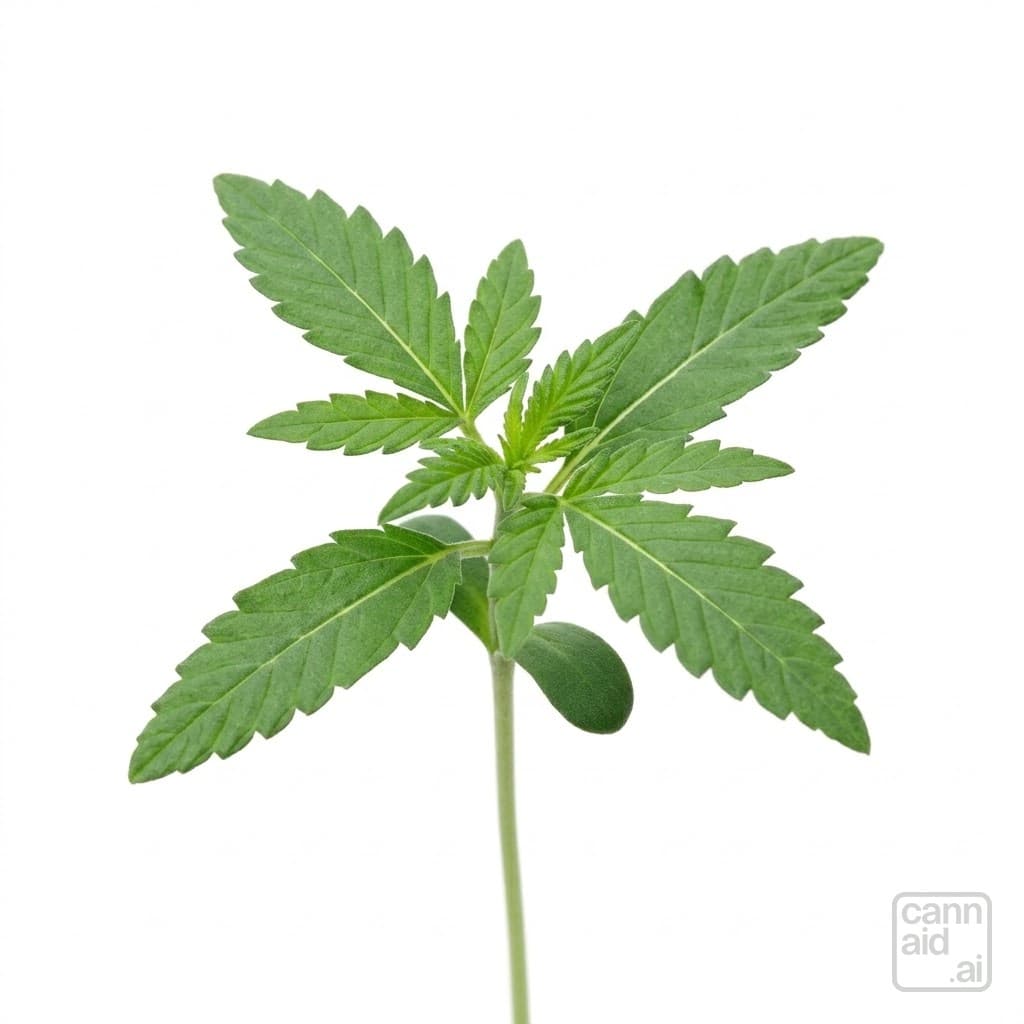
Early veg. Under long days the plant grows, and that is all it does. A fresh pair of leaves unfolds at the crown every few days, and every below sends out a side shoot. Four habits begin here and last the whole grow: weight, appetite, light and the pen. Weight: lift the pot to judge it. When it feels light, water until a little drains out, then leave it until it is light again. Appetite: feed only when she asks, and she asks by paling at the lowest leaves once the soil's own store runs out, a few weeks in. Then give a veg feed, one that leans toward nitrogen, well under the label's full strength, every other watering. Plants grown in coco or in water are fed at every watering; the Mediums article explains why. Light: give her more of it a little at a time over a week, never all at once, by turning the dimmer up or bringing the lamp closer. Watch the tops for cupping or bleaching. The pen (a pocket meter for pH and feed strength): test the of everything you pour in, and of the runoff now and then. In soil, roots can feed only while the pH sits inside a narrow window. Outside it, the food is there but out of reach, which growers call lockout.
Two jobs come once each. Pot up on the day roots circle the bottom or show at the holes. At four to six nodes the plant is old enough to shape. it above the fourth or fifth node, or bend the main stem down to the rim and tie it there: that is , or LST. An autoflower is bent only, never cut, because her clock will not wait for a cut to heal. And every week or so, turn a few leaves over. Mites, aphids and thrips start underneath. A pest caught now is a nuisance; the same pest in flower is a loss.
Late veg. Around the fourth to sixth week from sprout, if she has had the time, her new nodes stop coming in mirrored pairs. They start to alternate up the stem, and soon the base turns firm and faintly woody. The plant is now old enough to flower, and shows it with where branch meets stem. Check each node every few days; the sheet above tells the two sexes apart. The jobs now are about the space she will flower in. Tuck the big fan leaves aside, or thin a few, so light reaches the lower shoots, but never more than a fifth of her leaves at once. If you use a screen, a net for the shoots to grow through, it goes on now, a forearm above the pot; weave the shoots through as they come. Let her fill about two-thirds of her space and no more; the turn adds the rest. Stop topping two clear weeks before the flip, so no cut is still healing when she stretches. Bending and tying can carry on into the stretch itself. Each technique has its own timing, and the Training article gives them all. In the last week, strip the wispy growth at the bottom that never sees light. If she needs a bigger final pot, move her now; a transplant in flower costs buds. An autoflower gives you less of this half. She flowers by her own clock, about five or six weeks from sprout, so shape her gently and early, or not at all.
For a photoperiod plant the crossing is yours to make; an auto makes it herself. The timer goes to twelve hours of lamp and twelve of true night, and the night must be complete. A pinhole in the tent, a timer that has slipped an hour, a door opened for one look at midnight: to the plant, each reads as a season that cannot make up its mind. Mixed signals like these can send her back into leafy growth, or make her grow pollen sacs of her own. Sit in the closed tent with the lights off until your eyes adjust, and tape over every point of light you find. What goes wrong in veg is nearly always too much of something, and the leaves say which. Crisp brown tips are nutrient burn: feed less. An even paling that climbs from the lowest leaves is nitrogen hunger: the soil's store is spent, and it is time to feed. New tops that turn bright yellow while their veins stay green are neither. The pH has drifted, and the roots cannot reach the iron sitting in the pot; the pen will tell you. Tops cupping and bleaching under the lamp mean light burn: lift the lamp higher, or dim it. In veg she is hard to kill, though easy to stunt, and she still has time to grow out of a mistake. A flowering plant does not. The flip waits until she is ready, not until you are. What flower asks of you first is room, because she is about to grow much taller.
Feed strength in soil, stage by stage
Flower — the stretch, the fill, the fade
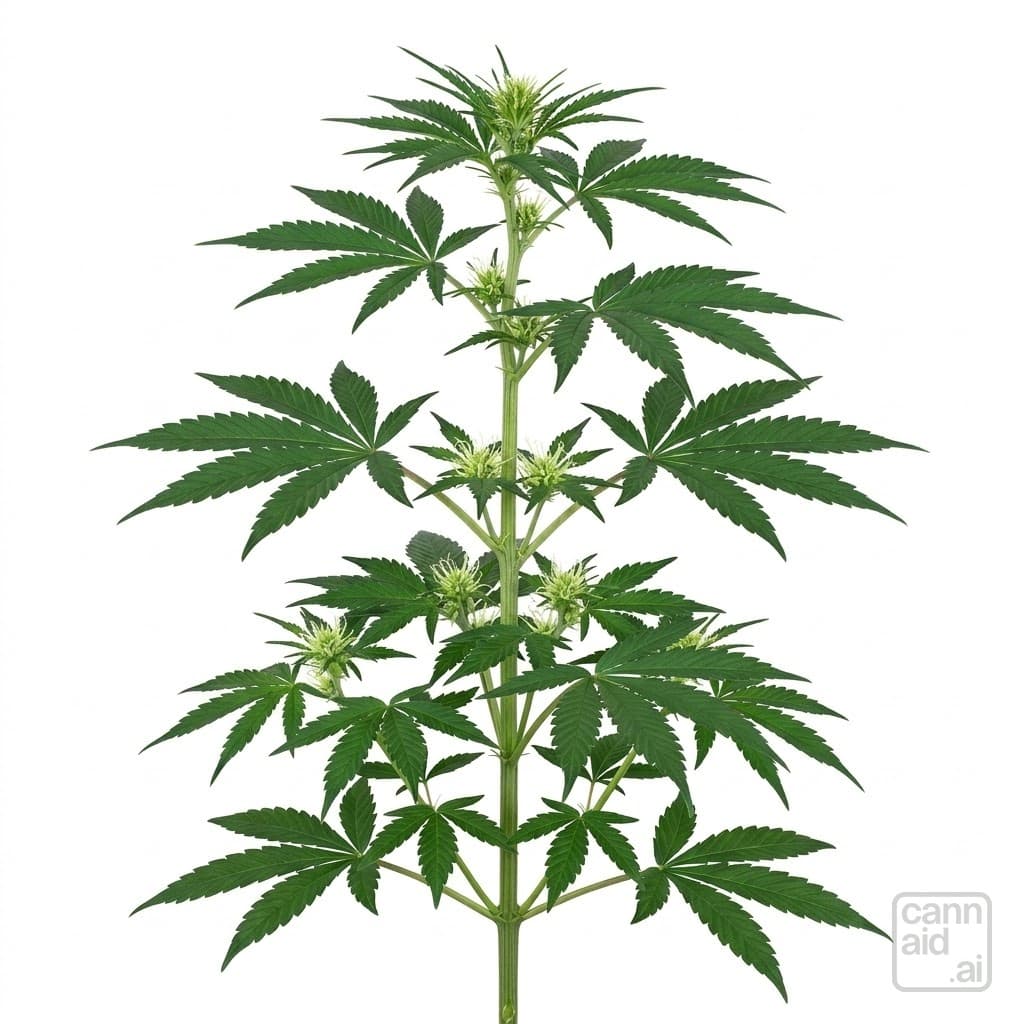
Early flower. Once the nights run longer than half the day, on your timer or her own clock, the plant stops building frame and starts building flower. She does it in two movements. The first is the : two or three weeks of sudden height, every branch reaching for light and moving air. The second is the fill. White hairs, the , gather in clusters at every node. The tiny teardrops under them fatten into buds, and the buds on each branch merge into . One morning a smell arrives, and it stays. The first fortnight has its own jobs. Tie the tallest tops down, and stake or net anything leaning. Raise the lamp before she reaches it, not after: heat pooling at the top of the tent adds heat stress to the stretch. Ties and gentle tucks are all she will take through the second week. From the third, no more bending, though a cola sagging under its own weight can still be tied up. Check her sex at every node in the first week or two, and pull any plant with balls the day you are sure. One open sac can seed a whole tent in an afternoon. Lower the humidity and keep the fan sweeping the canopy, because the damp a swelling bud breathes out is what mould waits for. Move her onto a bloom feed, on the same rhythm veg ran on: feed, then plain water, then feed again. Ease the nitrogen, but never to nothing, and let potassium and phosphorus lead. The Feeding article explains the change. Give her one last thorough pest check while spraying is still safe; once the buds fill, whatever you spray stays in them.
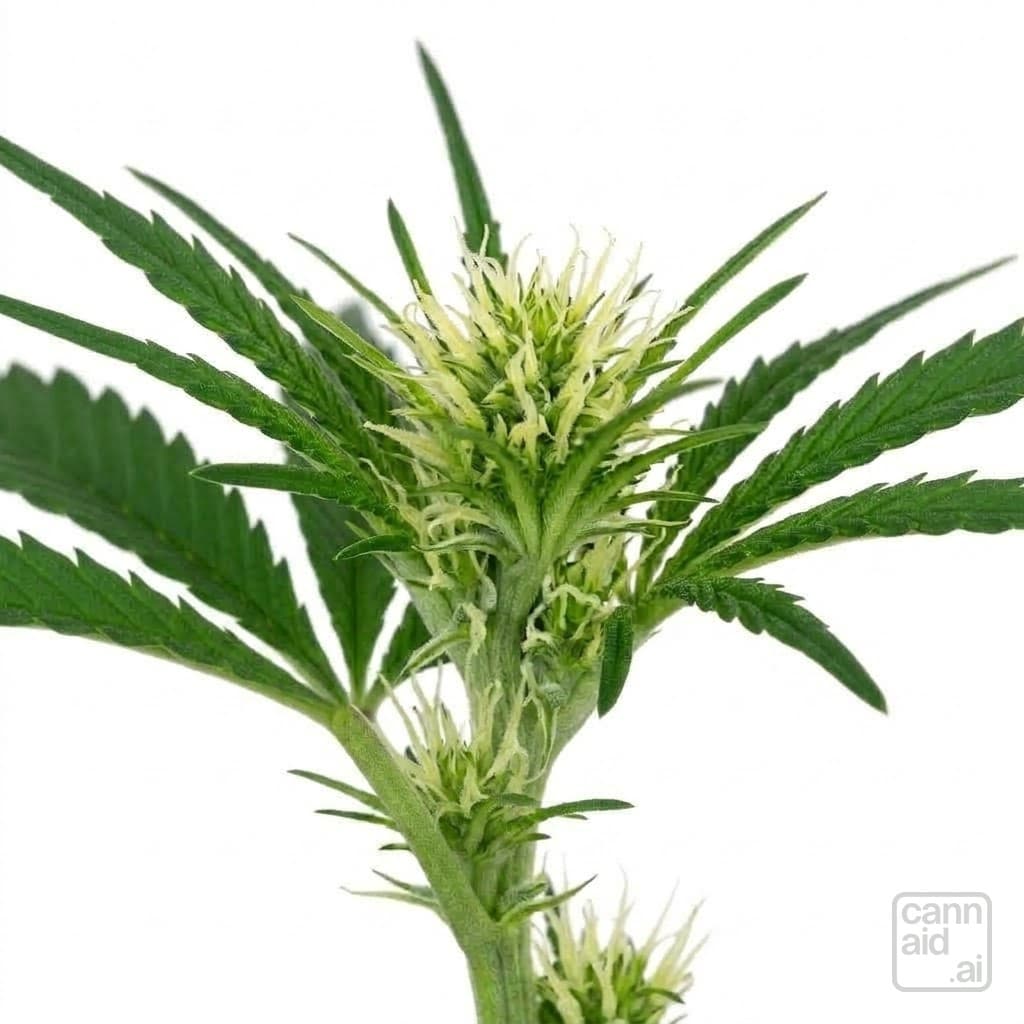
Then come the middle weeks, when little seems to happen and the weight arrives anyway. Watch for the two hungers a bloom feed crowds out. Hooked, twisting new tops are calcium; rusty freckles between the veins of older leaves are magnesium. If bud sites are buried, thin a few leaves, never more than a fifth. Burnt tips on an unchanged feed mean salts are building in the pot; a few plain, pH-corrected waterings rinse them out. Feed a little stronger through these weeks, easing back if the tips turn crisp. From about the third week, walk her daily with a loupe, a jeweller's pocket magnifier, held to the and not the . Look for a green ball on a stalk where a hair should be, or a yellow banana pushing out of a bud; the Hermies article shows both. From the halfway mark, use the same loupe to read the as they turn.
Late flower. In the last third, which the journal calls late flower, the growing stops and the ripening begins. Height is finished, and the buds put on weight instead. The white hairs turn rust-coloured and shrink back into the flower. The oldest fan leaves yellow and let go, as the plant draws what they hold into the buds. Under the loupe, the glassy trichomes cloud over to milk, and then, head by head, to amber. None of that is a deficiency, so do not chase the yellow with feed. It is the plant finishing, and the job of these weeks is to let it. Bring the humidity down another step; a tight-budded indica wants it a little drier than an airy sativa. Keep the air moving through the canopy, hard enough that a dense core cannot sweat. Keep her cool, with nights a few degrees below the day, but never cold enough to stall her. Keep nitrogen low: dark, glossy leaves clawing at the tips this late mean too much of it, and it smokes harsh. Ease the feed back as she fades, but keep feeding her. There is nothing to out of her. Plain water at the end strips nothing, and the cure is what smooths the smoke. The one plant that earns plain water for a few days is the one overfed into nitrogen toxicity. A scatter of fresh white hairs at the very end is normal; a steady stream means light is leaking into her nights, so check the tent. Get the drying room ready before you cut. And in the last days, go cola by cola, spreading the big ones, because one hidden spot of bud rot spreads through a jar.
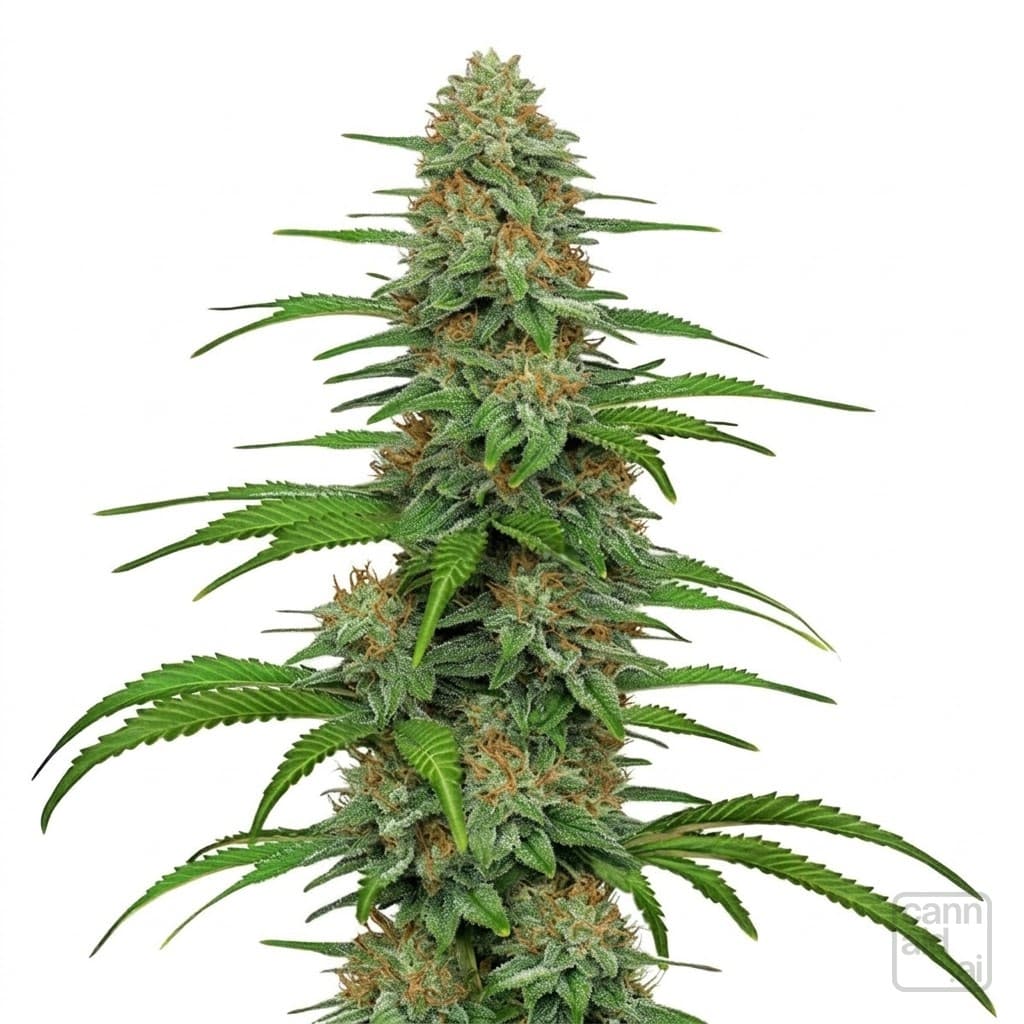
The crossing out of flower is the harvest, and she announces it in a language you read with a lens. Most heads have turned cloudy and a scattering amber, and the hairs have mostly darkened and curled in. The inner buds always run a few days behind the tops. An indica wants a little more amber for a heavy finish; a sativa is happier cut cloudy. An auto is done when she is done, whatever the packet said. Cut in the morning before the lights come on, if you can. Do not let her run past a scattering of amber into a field of it: what is lost past that point does not come back. What goes wrong at the end is impatience, twice over. Cutting a week early throws away the weeks in which the buds swell and ripen. Drying too fast comes from the same haste. From the cut she belongs to the Harvest article, which walks the hang, the jar and the cure with a graph for each. The next grow begins in the grow journal, where every one of these weeks is already written down.
The stretch, week by week
The checklist: every job, with its numbers
Every figure the rows walked past, in one place, sorted by stage rather than by topic. If the plant in front of you does not match its row, the diagnosis tool below this article starts from the same questions the health library answers.